
The Closure of Ming Pao: Canada’s Last Chinese Language Newspaper
Written by Fête Chinoise Editorial Team (Kayla Lo, with notes from our Editor-in-Chief Deborah Lau-Yu)

Today marks the final day of Ming Pao Canada as a daily newspaper. After decades of serving and delivering news in Chinese to the community, Canada's last Chinese-language newspaper has decided to shut down, with the company officially ceasing operations by the end of this month.

The decline of print newspaper volume has been an ongoing trend, with shrinking readership in specific demographics, and a shift to digital platforms. In an era where news is instantly available with a tap on your phone, traditional printed daily or weekly newspapers simply can't compete with the speed and convenience of online media. Along with the rise of digital media, the general narrative of environmental concerns over paper usage and printing have contributed to the gradual fading of printed newspapers.
Ming Pao began its Canadian operations in 1993, becoming an iconic presence in the Chinese-speaking community. Backed by its parent company in Hong Kong, Ming Pao was a trusted and credible source of news for over 60 years in Asia. It was the go-to outlet for mainstream interviews and breaking news within the Canadian Chinese community, with many stories often exclusively accessible through its pages. As reported by CP24, the newspaper had approximately 130 unionized staff in Toronto in 2014, reflecting its strong and thriving operations at the time.
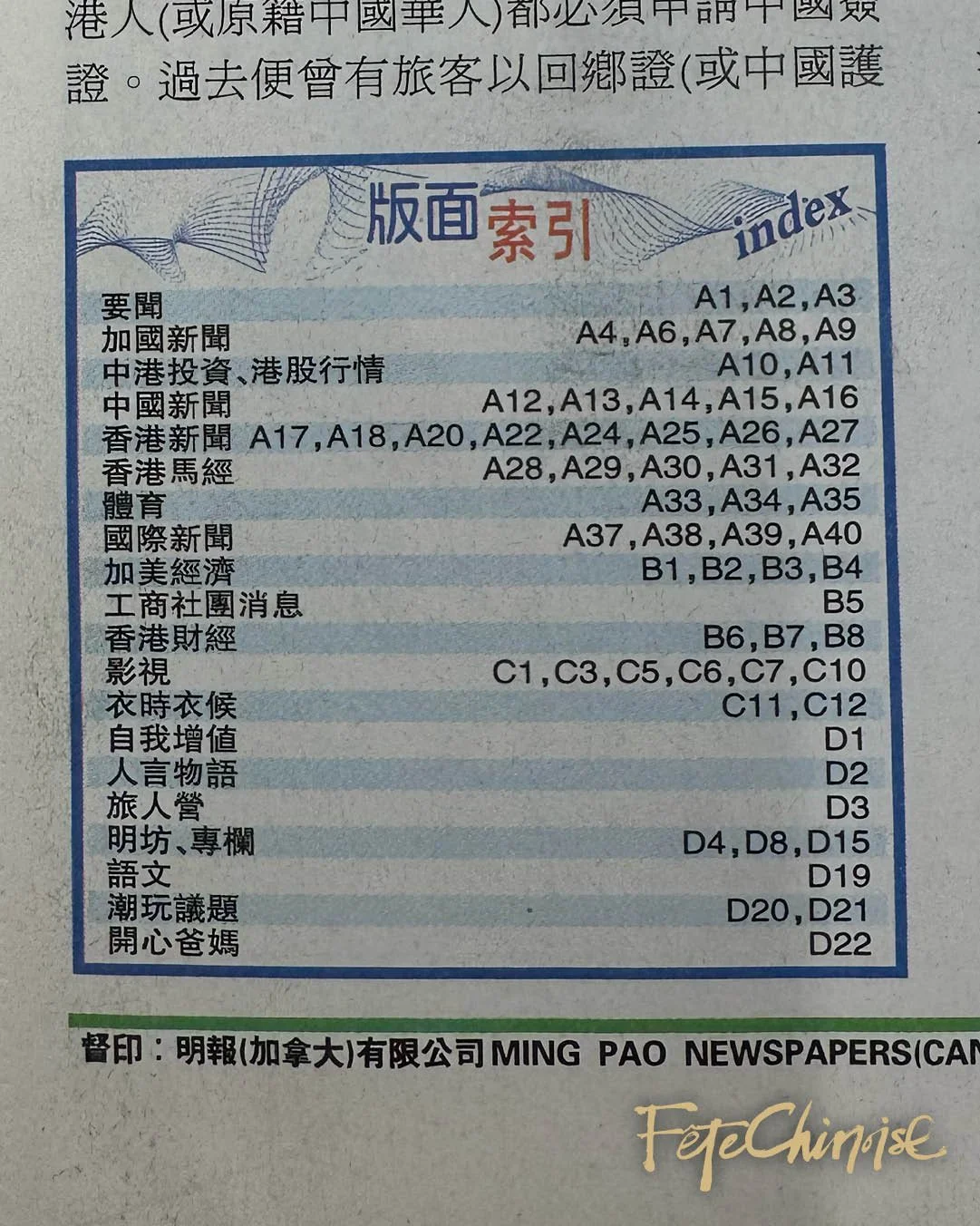
The index of an old Ming Pao newspaper, highlighting sections such as Canada, China, Hong Kong, International News, Sports, Finance, Television & Drama, Fashion, Travel, Columns, Languages, Parenting, and Trending Topics.
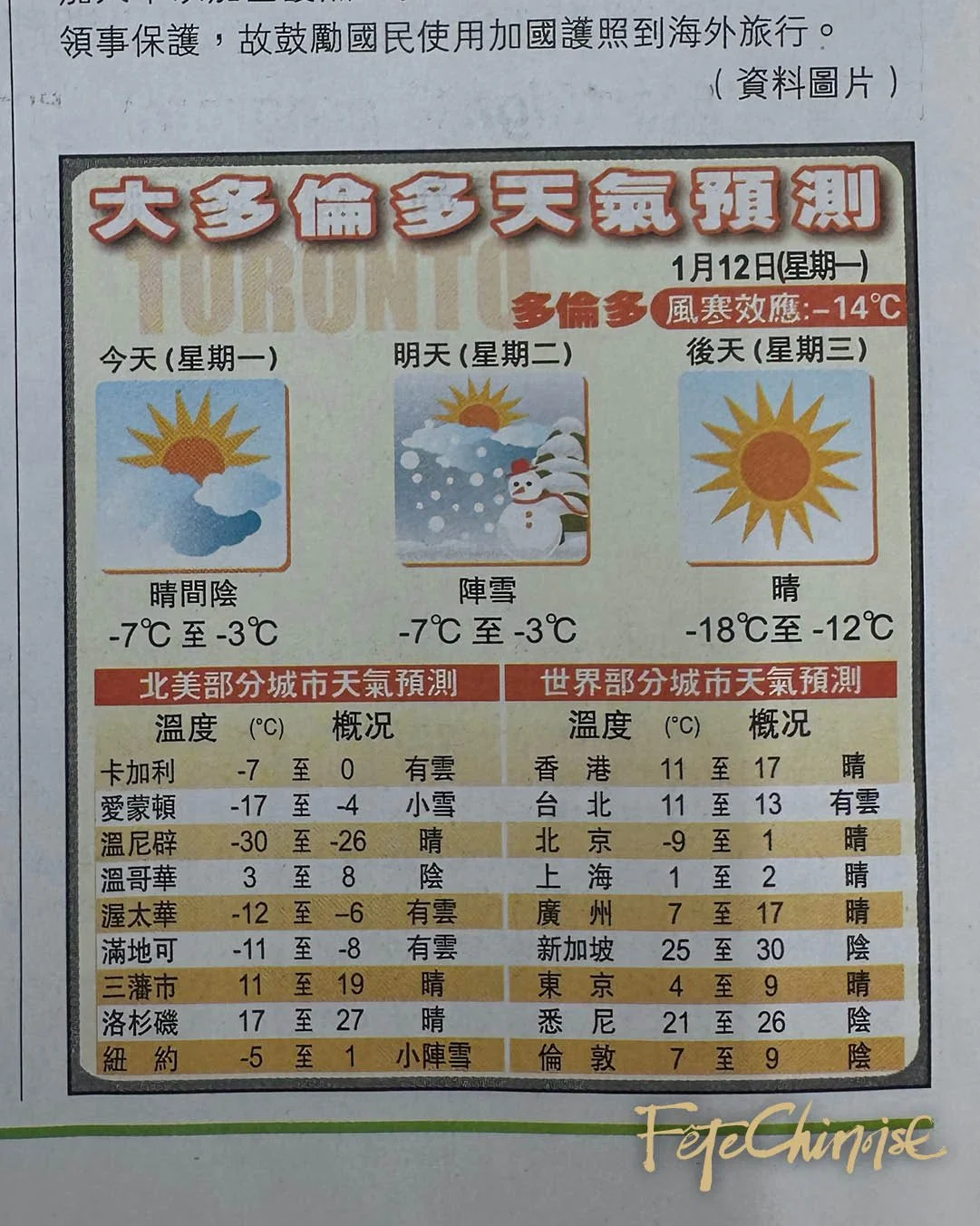
The Weather Corner in an old Ming Pao issue.
In Canada, the newspaper provided essential information on housing, employment, health, and business, all while bridging language barriers by delivering content in Traditional Chinese. For many immigrants during that period, especially those unfamiliar with English in the 90s, Ming Pao was a vital connection for immigrants to the greater Canadian community and the world around them. Its classifieds, job ads, and other listings were often the best way to access information, community services and to find employment opportunities within the Chinese diaspora. The paper was so thick with content and ads, often reaching 1.5” in thickness; in recent years, it's become a shadow of its former self.
The golden years of Ming Pao lasted through the early 2000s. In a recent radio interview, one of the key figures in the company shared that their editorial team once gathered around three ping-pong tables in the office, brainstorming, debating news topics and developing ideas, which would push the work to be at its best and provide authentic, in-depth coverage for the Chinese-Canadian audience. It was a unique time of comradery in journalism that he will cherish forever. But as digital media grew, so did the challenge posed to the newspaper’s print circulation. While the closure of Ming Pao feels inevitable, it is still deeply saddening, and something that many traditional newspaper readers are coming to terms with.

The cover page of Ming Pao in 2016, reminding the public about special measures for renewing Chinese passports and covering the University of Toronto student union election.
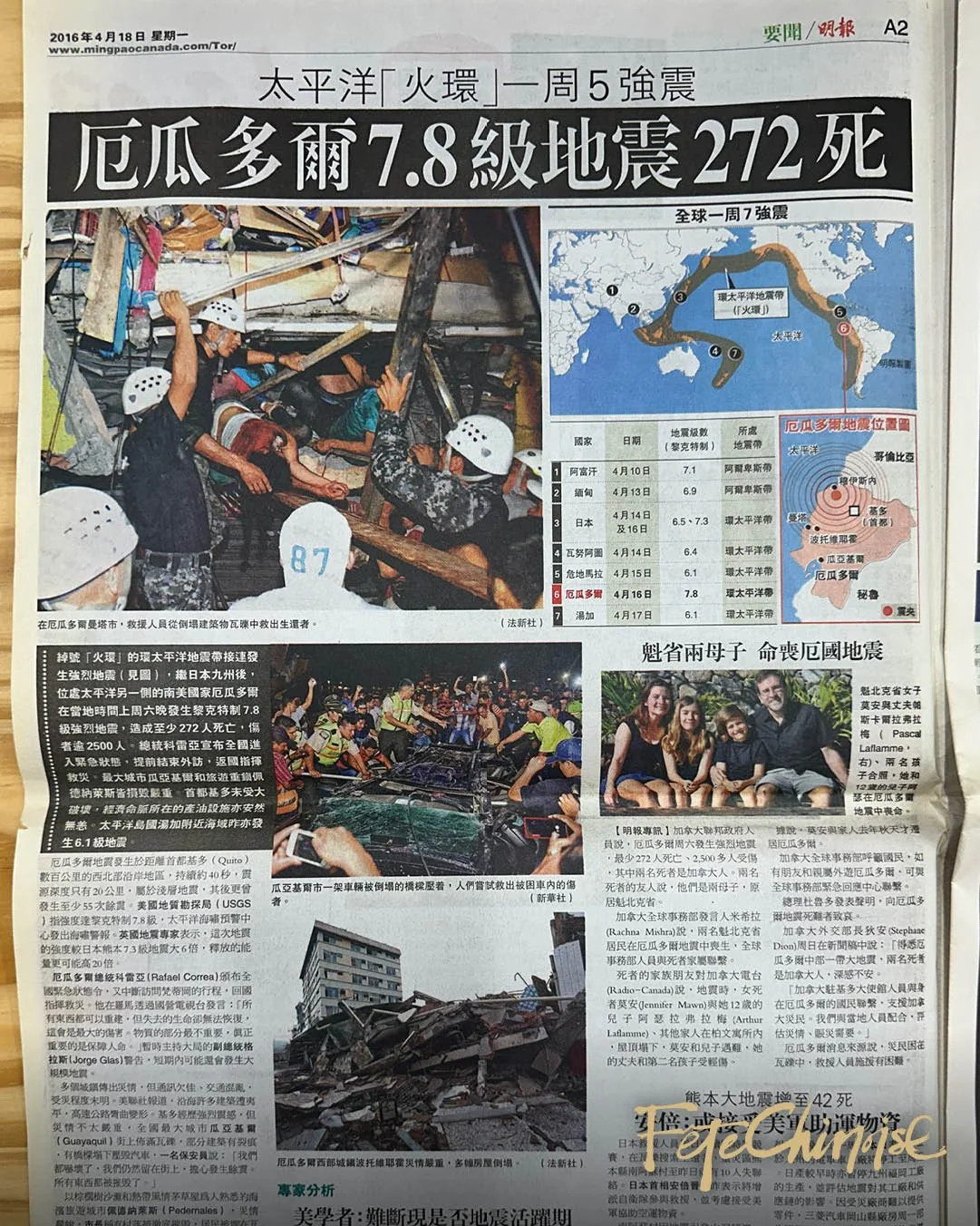
Full-page coverage of the 2016 Ecuador earthquake in Ming Pao.
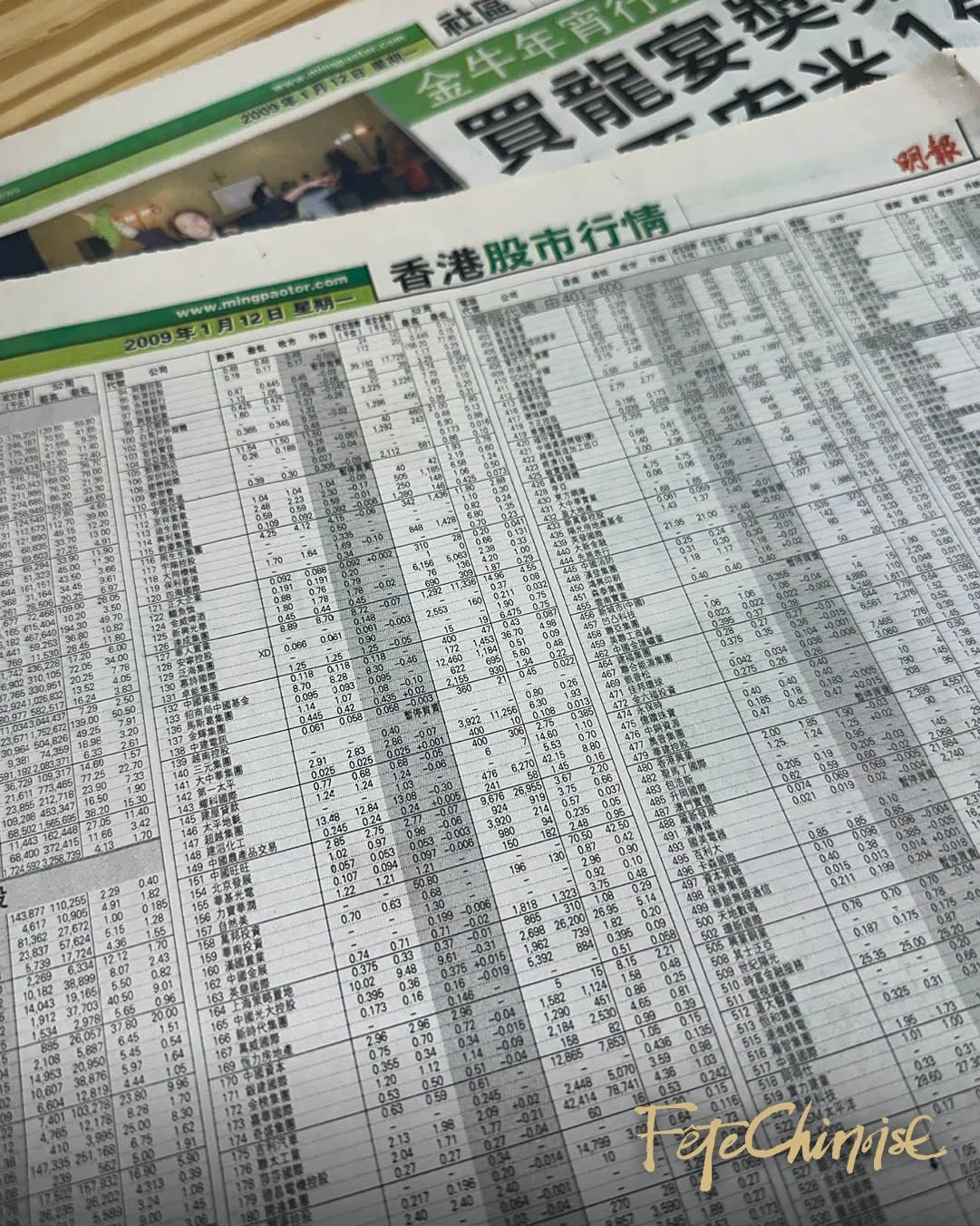
A page showing Hong Kong’s stock market information in Canada’s Ming Pao newspaper.

An advertisement for Silk Touch in Ming Pao, promoting products “suitable for Asian hair types.”
Do people still believe in the power of the media today? In the past, readers eagerly anticipated every story, column, and magazine issue. But now, the weight of those same stories seems much lighter and less impactful due to the easy access to information, shortened attention spans, and the rapid pace of our digital age. The way we consume news has changed drastically, and with it, the influence of traditional formats like print media.
As a publication, we recognise the value of print and believe that our work can serve as a keepsake for future generations. There is an undeniable thoughtfulness behind each printed issue (whether of a newspaper or a magazine or book) that’s often overlooked and undervalued: everything from the photo size, column layout, to the number of pages is carefully considered, and every word and image must deserve to be on the page when there is a cost to physically manifesting it. When a major news story breaks, and the entire front page of a newspaper is devoted to it, readers instantly understand the gravity of the situation, or at least the weight that the Editors want us to feel about its importance. These are conscious decisions made by humans, and that’s one example of how digital media cannot compare to a printed (newspaper).
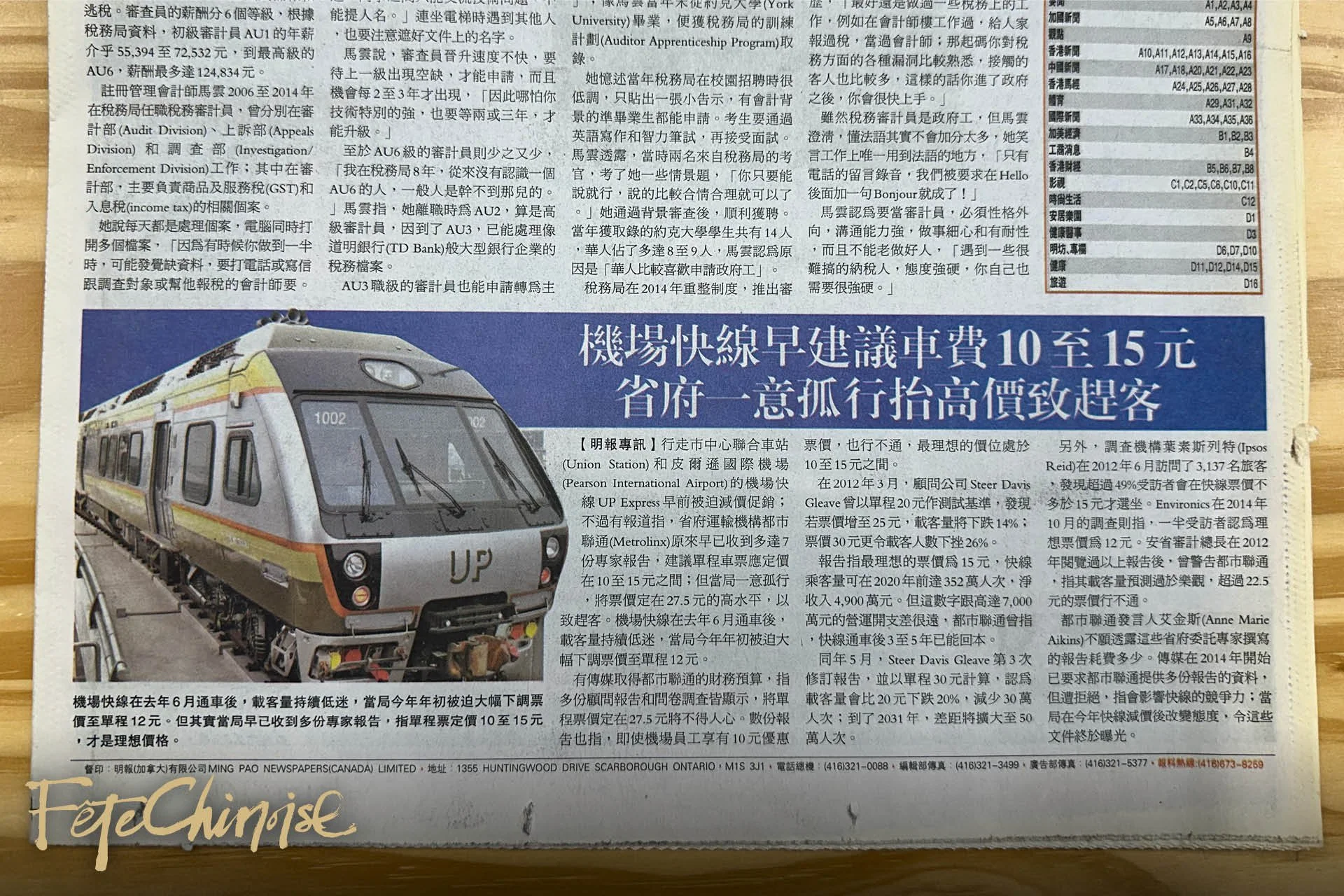
Reporting on the fare increase of the UP Express.
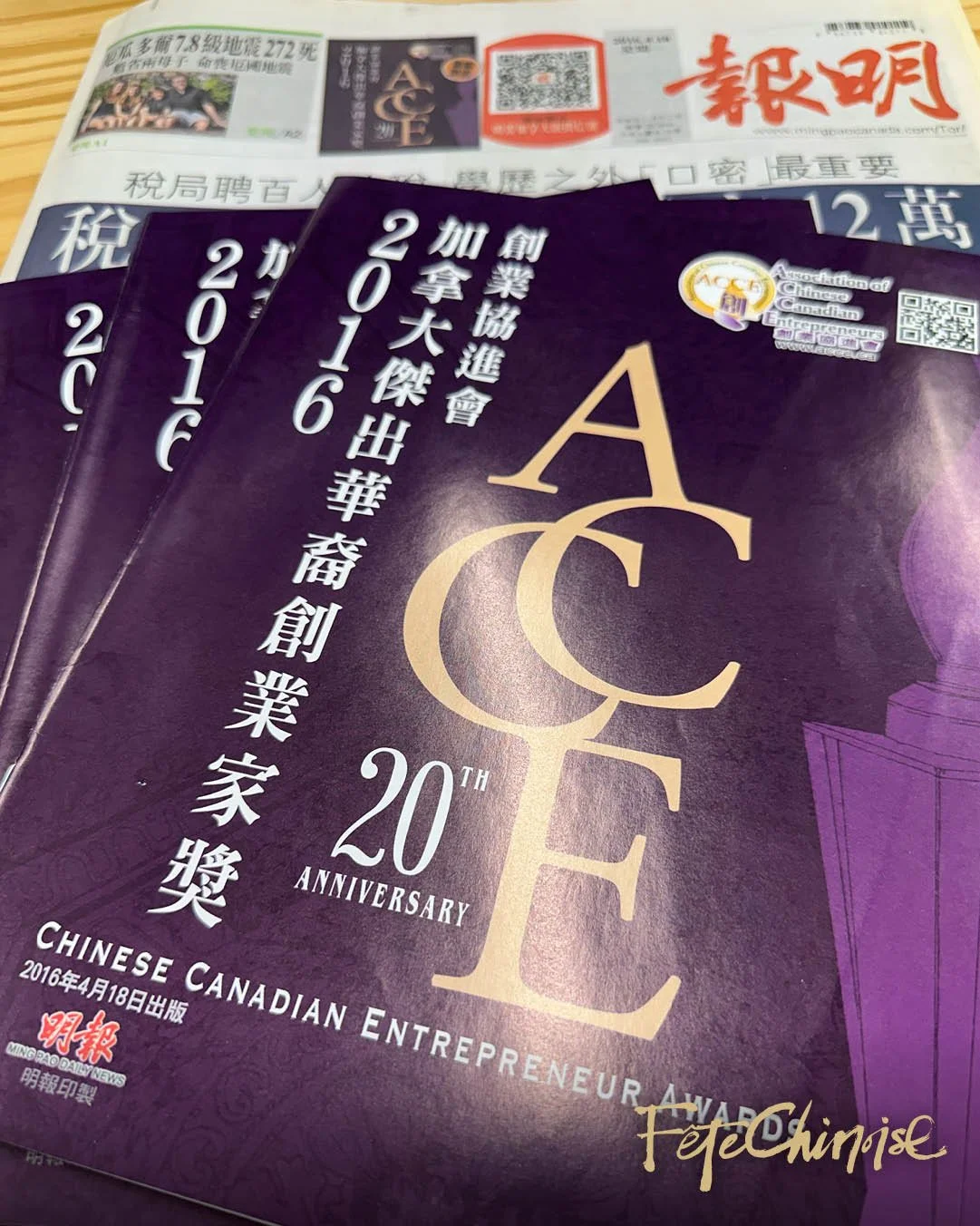
Ming Pao’s support of the ACCE Award in 2016, with each reader receiving a small booklet with the newspaper.
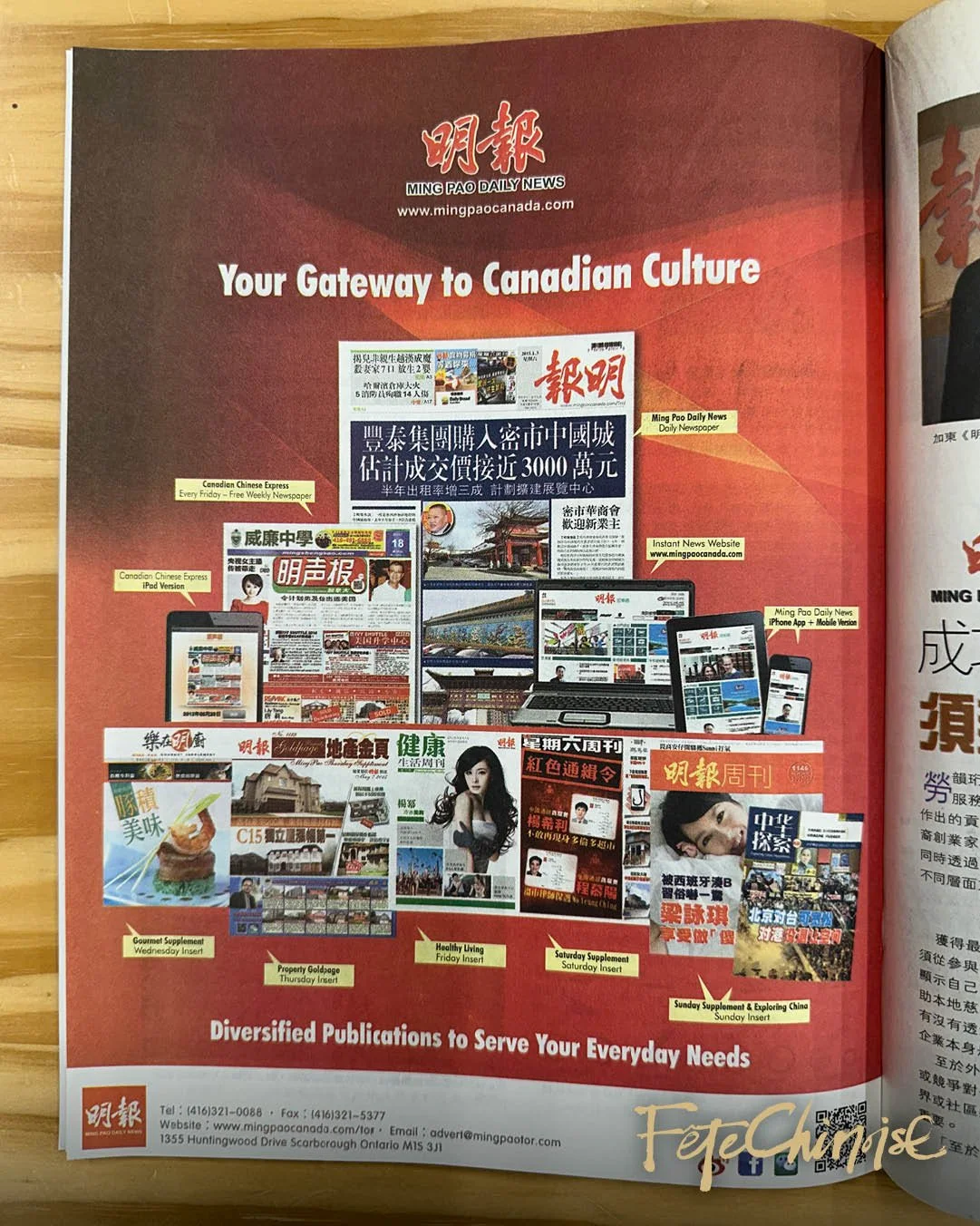
Ming Pao’s advertisement in the ACCE Award booklet, featuring the tagline: “Your Gateway to Canadian Culture.”
Today, Ming Pao’s closure is part of a broader trend affecting all printed media, even those of great content quality. Chinese-language media, in particular, faces its own unique set of challenges. The loss of Canada’s last Chinese-language daily marks the end of an era, and with it, a significant piece of the community’s voice in Canadian media. Be sure to pick up a copy of Ming Pao today — a historic piece of Chinese-Canadian print media.
Recognising these challenges, it's crucial that the community continues to support each other. As a platform that publishes our own premium, collector’s quality publications, we remain committed to publishing in print and providing valuable, thoughtful content to our readers, telling important stories that matter. The legacy of Ming Pao and its decades of service to the community will always be cherished. This big change in the landscape is a stark reminder of the importance of preserving and supporting diaspora media, and of the collective effort needed to ensure our voices remain strong in an ever-changing media landscape.
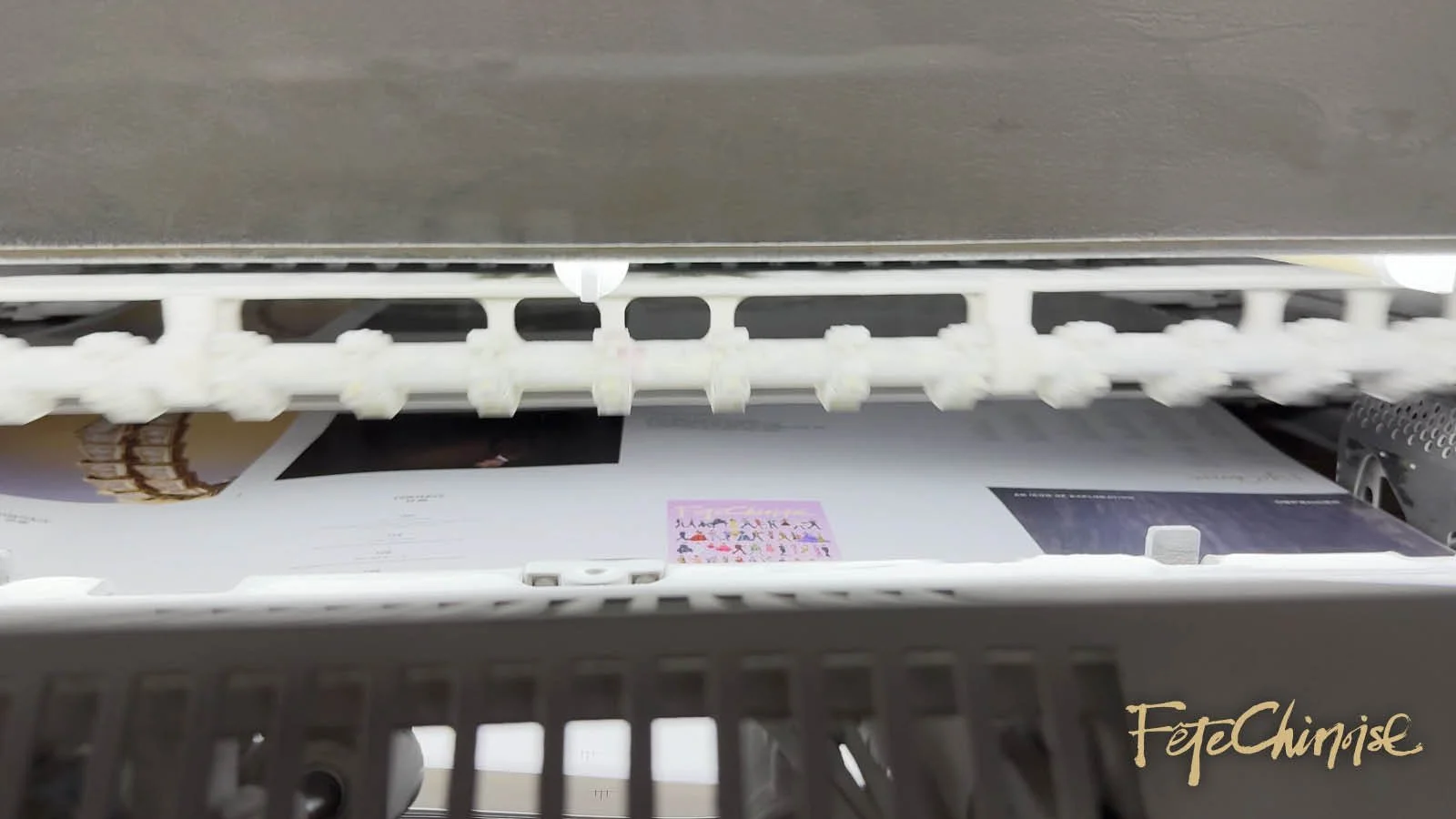
Photo of our Annual Book of Incredible People Edition No.11 in production, 2025.

More from Fête Chiniose






Hong Kong-Canadian playwright Jeff Ho speaks with Fête Chinoise about his new sequel to As You Like It, growing up between Cantonese and English, and bringing inclusive, park-side theatre to Toronto with Shakespeare in the Ruff.