Modern Dah Kum: Tradition Keeper and Show Runner 大妗姐
Written by 撰文: Maggie Ho
Photography: The Fête Chinoise Team and courtesy of Ginny Chung
As Featured in The Art of Celebration Annual Edition No.2

In the intricate world of Chinese weddings, few roles carry the weight of heritage, superstition, and social etiquette like the Dai Kam (大妗)—a traditional female wedding emcee and consultant often tasked with orchestrating rituals, offering blessings, and ensuring customs are upheld properly. Literally known as “the elder auntie” (Dai Kam Jie 大妗姐), the Dai Kam is considered the indispensable soul of a Chinese wedding, a role traditionally filled by an older woman entrusted with guiding the couple through the complex rites. Once a figure closely associated with older generations and conservative values, the Dai Kam has evolved in recent years.
In this feature, we speak with Ginny Chung, a seasoned Dai Kam who has coordinated over 1000 weddings across Toronto, Hong Kong, and other international destinations. She goes in depth about the key roles and insights of this unique profession.
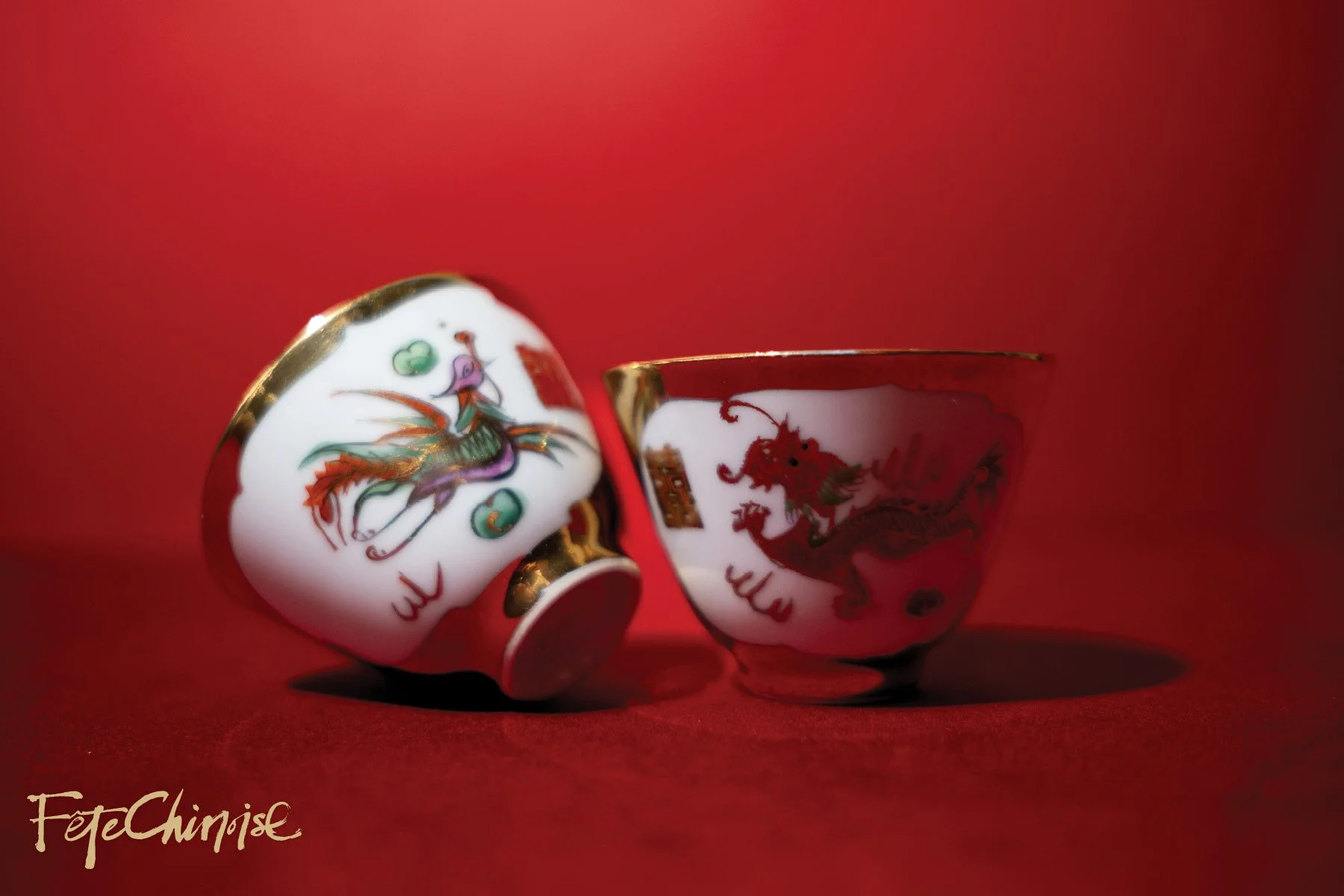
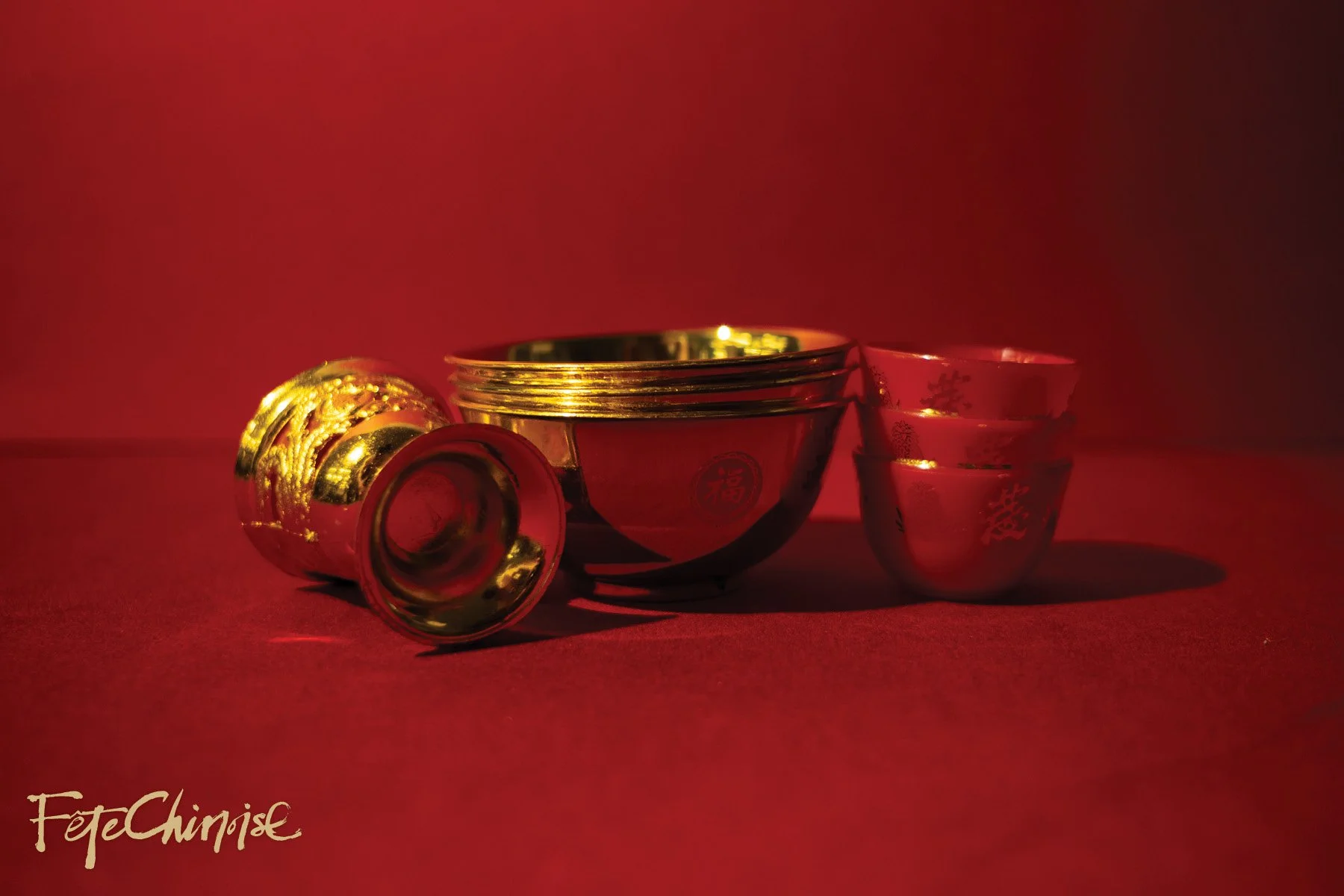
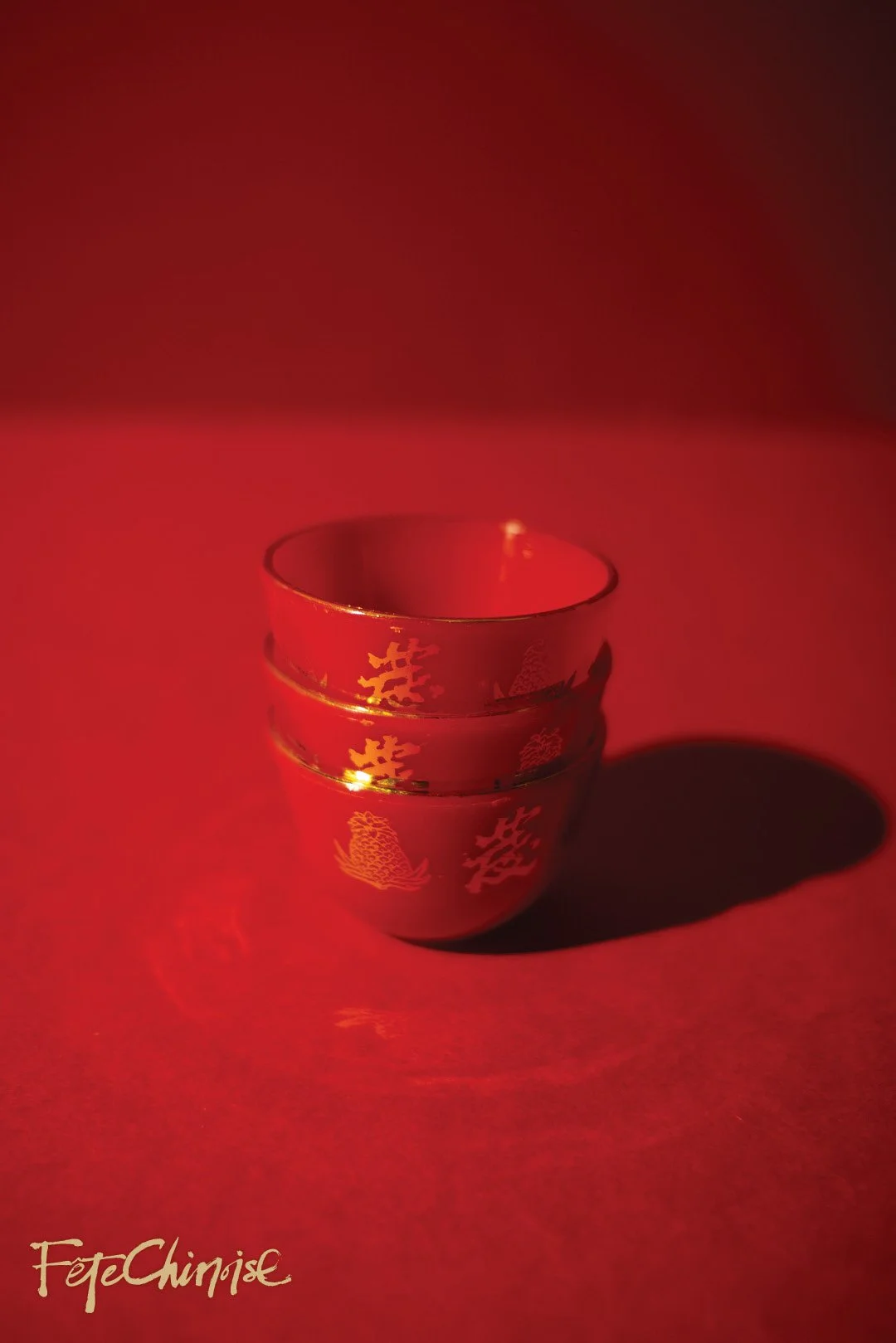
Dragon and phoenix tea cups.
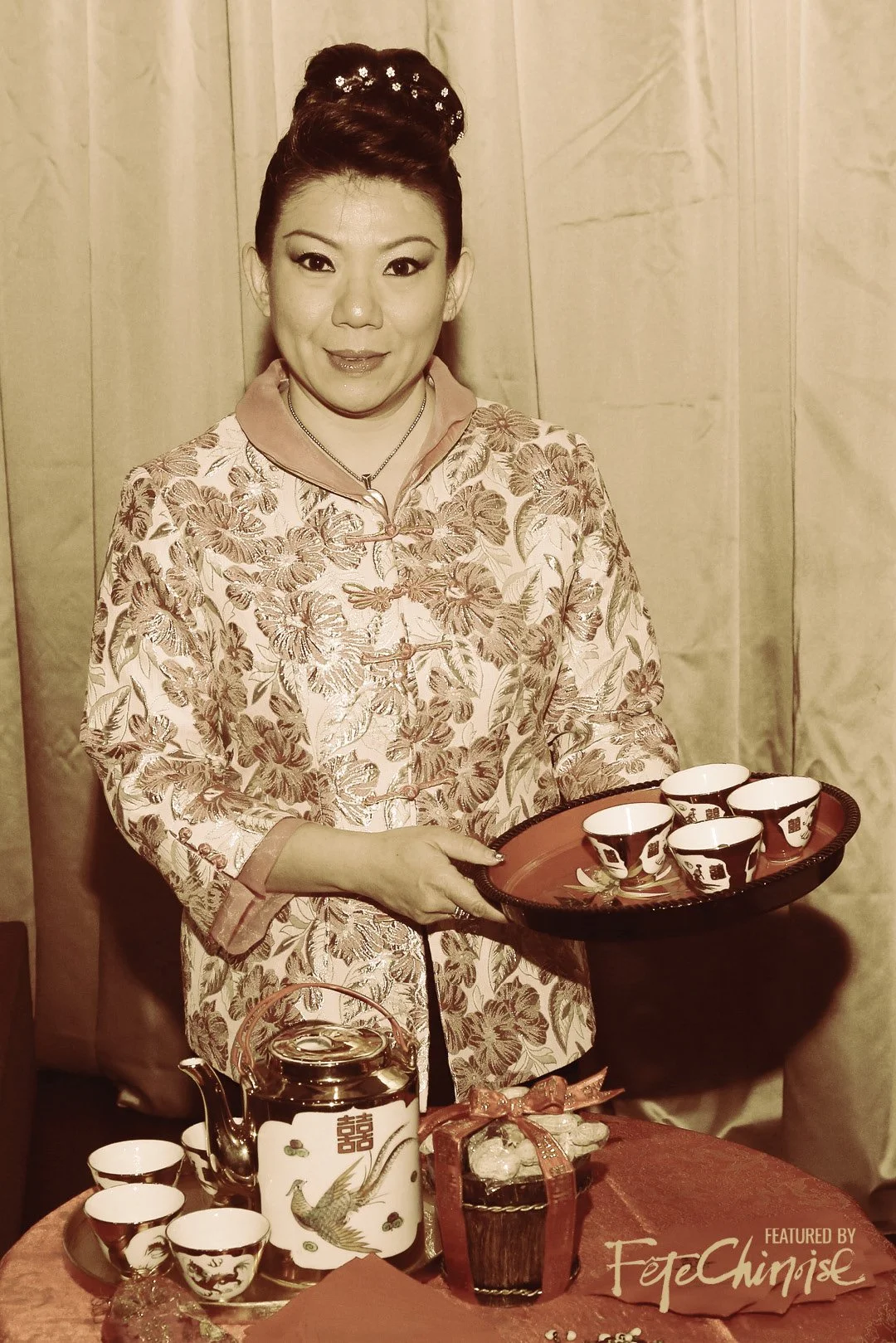
Image Courtesy of Ginny Chung.
摩登大妗
對比西式婚禮,中式婚禮繁複而且細節龐雜;新人們若不知道該如何入手,身兼婚禮司儀、保姆、文化顧問的「大妗姐」將會是他們的好幫手。大妗是中式婚禮中不可或缺的靈魂人物,因為傳統由年長女性擔任,因此統稱為「大妗『姐』」。大妗擁有豐富傳統知識,熟悉各種文化、習俗與人情世故,在大日子中連繫不同背景文化的新人、長輩及親友,確保大小禮節得以圓滿進行。本章,我們特別請教曾於多倫多、香港及海外等地協調過千個中式婚禮的資深大妗姐 Ginny Chung,為大家逐步講解大妗的工作及心得。
注:婚禮習俗應因人而異,本文內容僅供參考,建議新人按個人需要選擇最合適的安排。
The Enduring Role of the Dai Kam
The role of the Dai Kam dates back to around 1100 AD, first documented during the Song dynasty. Particularly popular in southern China, where weddings were often grand and lavish, the Dai Kam traditionally officiated wedding ceremonies and cared for the bride throughout the day. In ancient times, after bidding farewell to her parents, the bride was carried to the groom's home by a sedan chair, her feet never touching the ground. Upon alighting, the Dai Kam would lovingly carry her across the threshold — a gesture rich in tradition and symbolism.
Today, many traditional Chinese wedding customs have been simplified, especially in North America, where many couples and their families may not be familiar with the intricate details of these ceremonies. A professional Dai Kam, well-versed in the history, procedures, and elements of Chinese weddings, can guide couples and their families in integrating meaningful traditions into a modern celebration.
傳統中式婚禮守護者
大妗一職,最早出現於西元1100年,見於宋代孟元老所著的《東京夢華錄》,在中國南方尤為流行,主要負責主持婚嫁儀式,並照顧新娘。在古代,新娘自娘家拜別父母,直至步入夫家大門之前,雙足不得落地。當新娘從花轎中下來後,便須由大妗背負進入男家。
時至今日,不少中式婚嫁傳統都已簡化。尤其在北美地區,許多新人及父母對於各項禮儀細節並不熟悉,專業的大妗通曉中式婚禮大小事務的歷史源由、程序,具備深厚知識,有助新人及其父母將中式婚禮傳統融入現代婚禮中。
大妗主要服務包括:
在婚禮前,向新人講解中式婚禮的各項儀式、細節、注意事項,根據新人需要度身定制婚禮當日的流程。
中式婚禮涉及多項傳統儀式與習俗,不同鄉下有不同習俗做法,許多細節往往有不同的解釋與見解。若新人與長輩在婚禮安排上有分歧,大妗可以從中調解。
協助訂購紅傘、茶具、跪墊等婚禮用品,或介紹可購買相關物品的店舖,以及注意事項。
大妗身兼司儀及翻譯,在主持每一部分儀式時,會因應賓客的不同語言文化而作出解說,同時亦會穿插金句賀語,增添氣氛。
中式裙褂該如何正確穿上?外籍親友不諳習俗,接過「新抱茶」(即新娘奉茶)後因為沒有準備利是而感到尷尬?家族成員眾多,不夠足夠茶具應對?這些棘手問題,大妗都能解答。若婚禮中有任何突發狀況,大妗亦能迅速應變。
Ginny 強調大妗最大的功用在於「隨機應變」,在任何突發事情中依然能穩住全場節奏。她指出,沒有任何儀式是必定要做或一定不能做的,過多的忌諱及繁文縟節只會無形中增加新人的壓力。對於受西方教育、在多元文化背景下成長的新一代而言,認識傳統、尊重父母與祖先的文化,是表達孝心與心意的方式。婚禮,畢竟是一場關於「愛」的喜慶日子,只要眾人心情愉快、儀式順利,就是「摩登大妗」最大的使命。
The essential services a Dai Kam provides:
Guiding Couples Through Tradition
Dai Kam assists couples and their families in respectfully incorporating Chinese traditions into their wedding, ensuring they honour their heritage while making the ceremony personal and relevant. She offers guidance on which traditions to include—such as door games, tea ceremonies, and the Betrothal Gifting Ceremony—and helps source traditional items like red umbrellas and tea sets, all tailored to the couple’s preferences.Cultural and Linguistic Bridge
More than just an emcee, Dai Kam serves as a cultural and linguistic bridge, connecting the couple, their families, and guests. She leads each part of the ceremony, adjusting auspicious sayings to resonate with a diverse audience, ensuring the essence of the tradition remains clear and meaningful.Handling Wedding Day Details
From fixing the bride’s Chinese wedding dress to navigating questions like whether or not to give lai-see or how to manage the tea ceremony, the Dai Kam is there to provide expert guidance. She ensures everything runs smoothly and keeps the celebration on track.
Ginny emphasizes that a Dai Kam must be highly adaptable. The ability to handle unexpected events and remain calm under pressure is essential. She believes no ritual is absolutely required or forbidden—what matters is the meaning and joy behind it. Too many taboos and formalities can overwhelm the couple and distract from the true essence of the day.
Especially in North American settings, where many couples are raised with Western values, incorporating Chinese traditions is often a heartfelt gesture to honour parents and ancestors. At its core, a wedding is a celebration of love. As Ginny puts it, if everyone is happy and at ease, then the mission is complete of the modern Dai Kam.
預約大妗及婚前諮詢
經驗豐富的大妗姐在婚禮旺季特別搶手,宜早作安排,一般需要在婚禮前六個月預約。個別日子或需要一年或兩年前提早定下。
大妗的收費按經驗、服務規模大小而定。一般專業大妗收費:三小時服務由CAD 699起。
在大日子前一至兩星期,大妗會與新人見面,深入了解婚禮當日的流程、團隊、新人雙方的資料(例如親友人數、關係、宗教信仰、家族文化等)。如有任何忌諱及須留意之處,新人應如實告之,好讓大妗有所準備。
Pre-Wedding Consultation & Dai Kam Booking
In traditional Chinese weddings, the rituals of “Three Letters, Six Etiquettes” laid out the full engagement-to-marriage process. Among the “six etiquettes” are steps such as the proposal, exchanging birth dates, betrothal gifts, and the wedding ceremony itself. However, modern Chinese weddings often condense this into three main rituals: Betrothal Gift Ceremony, Bride's Departure/arrival, and Tea Ceremony.
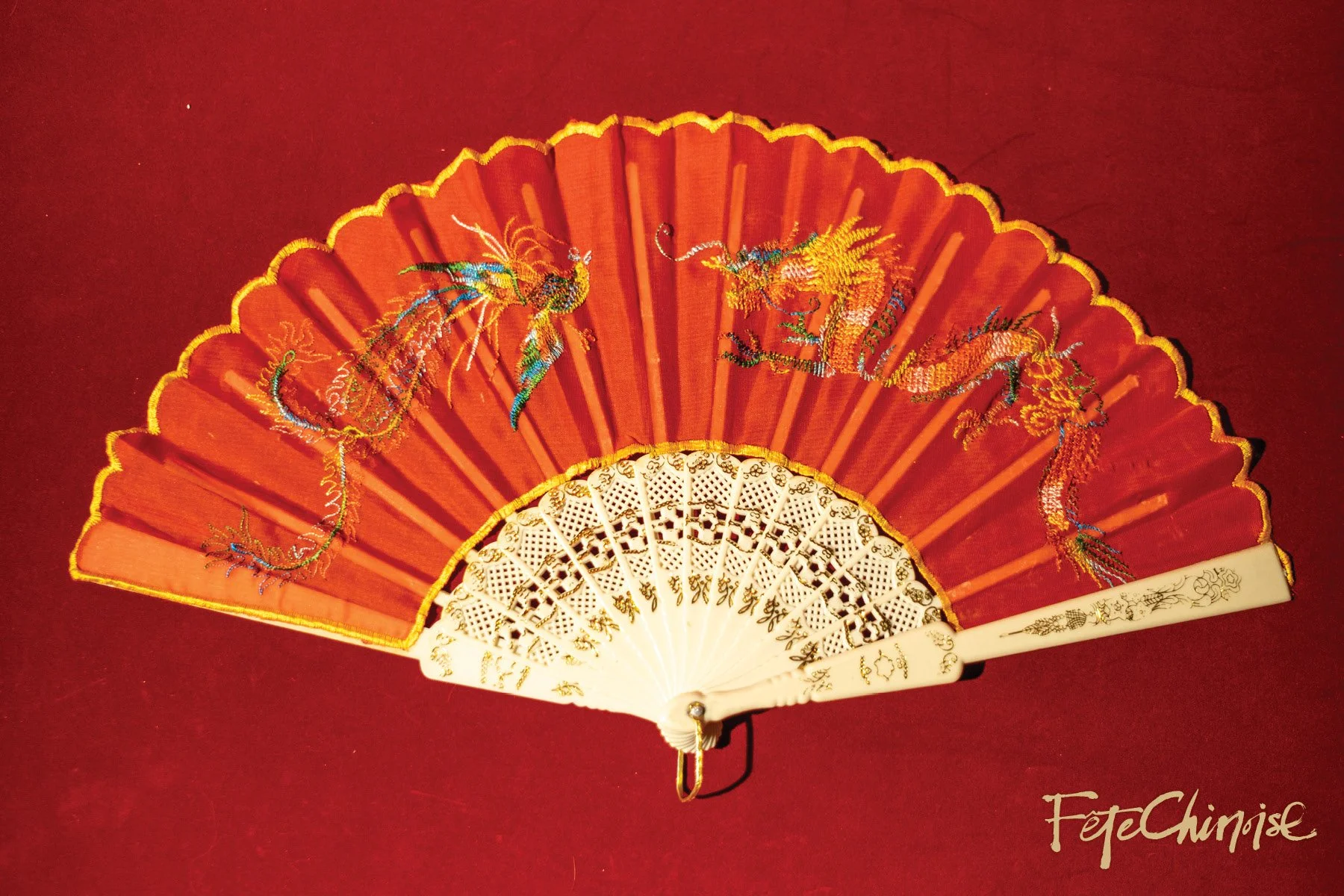
Traditional fan with Dragon and Phoenix.
中式婚禮習俗
「三書」、「六禮」是中國的傳統婚姻習俗禮儀,其中 「六禮」是指由求婚至完婚的整個結婚過程,包括納采、問名、納吉、納徵、請期和親迎(迎親)。隨時代演變,現代中式婚禮大多只集中於「過大禮」、「出門/入門」及「敬茶」三大儀式。
過大禮
男家擇吉日準備果籃、海味、禮金、椰子及喜餅等聘禮物品送到女家,以表誠意,同時答謝女家養育之恩。過大禮物品清單繁多,每樣均有不同寓意,例如:龍鳳餅代表鸞凰和鳴;茶葉寓意「一植不移」,比喻女子忠貞不二;椰子代表「有爺又有子,兒孫滿堂」⋯⋯現今不少新人為求簡便,傾向以一封「包羅萬有大利是」代替繁複禮品,雖然實用,卻也錯過了親身認識與承傳傳統的寶貴機會。
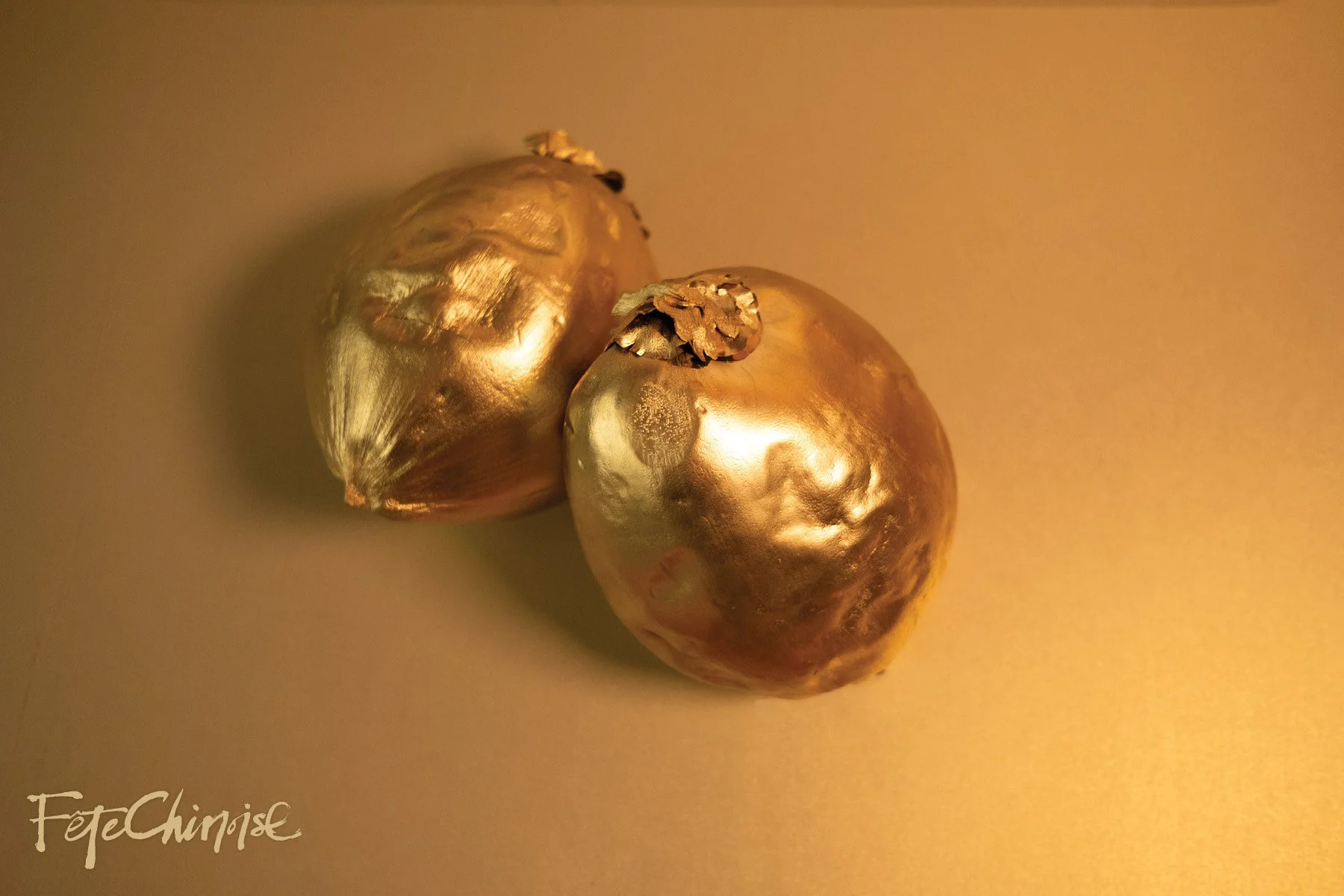
Coconuts provided by 天然椰子香辣原料有限公司.
Betrothal Gifting Ceremony
On an auspicious date, the groom’s family presents the bride’s family with baskets of fruit, dried seafood, red envelopes, coconuts, and pastries, symbolizing gratitude and sincerity. Each item holds symbolic meaning:
Dragon and phoenix cakes signify marital harmony
Tea leaves represent loyalty and steadfastness
Coconuts symbolize “having elders and children”—a wish for future generations
In modern times, some couples simplify this with a single “all-in-one red envelope,” which, while convenient, misses the cultural richness and personal meaning of traditional gift-giving.
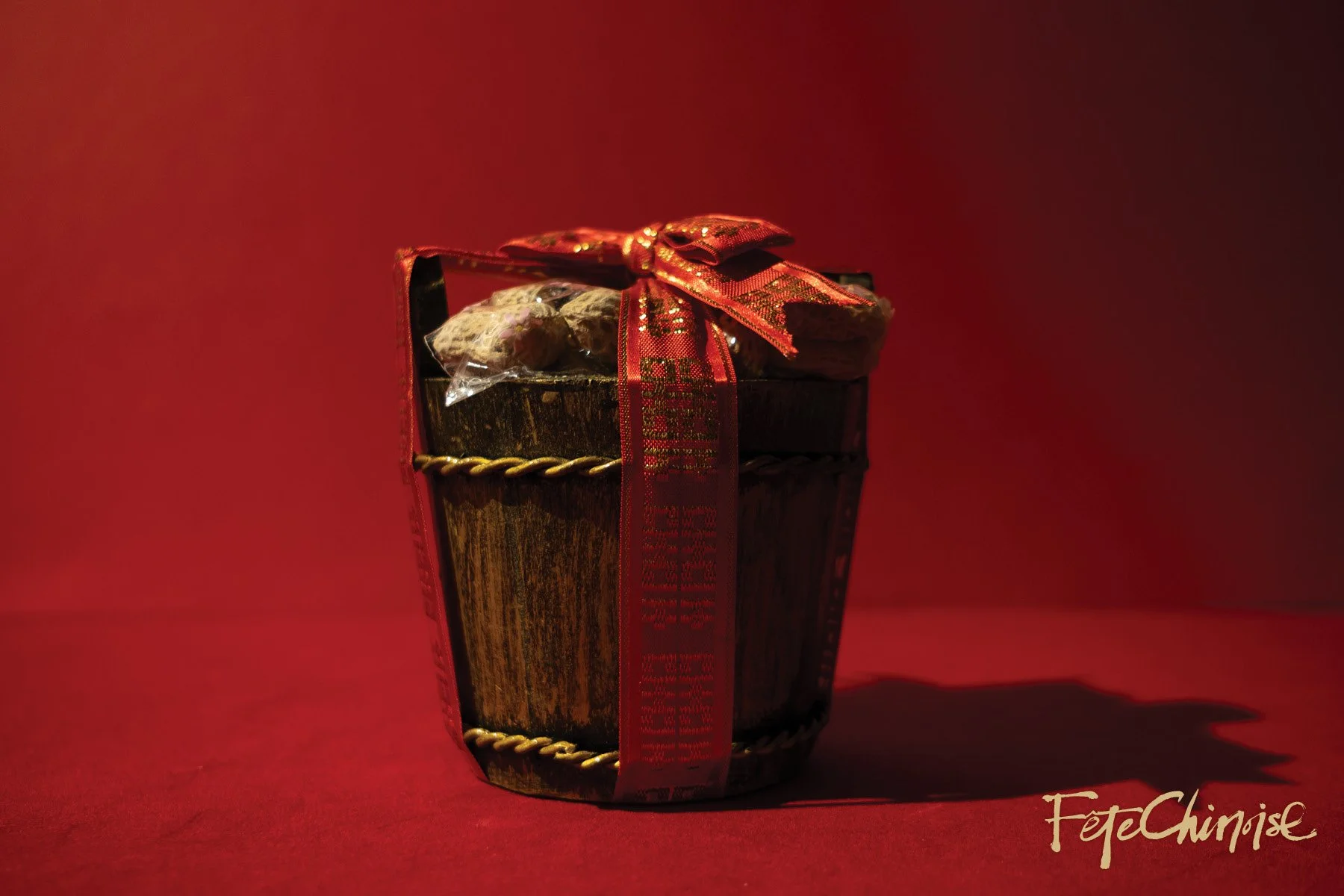
上頭
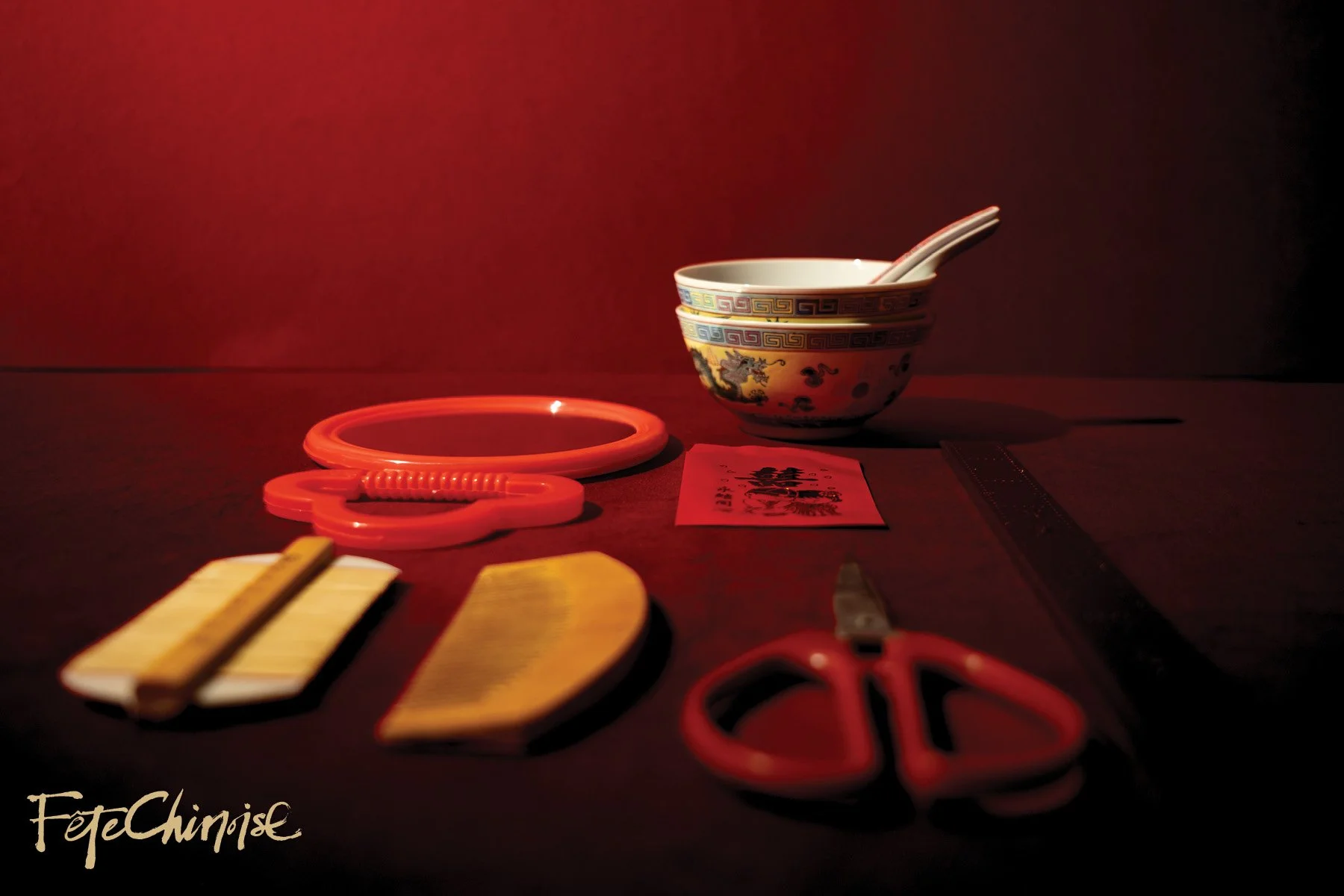
傳統的上頭儀式在婚禮前一晚進行,上頭要擇定良辰,男方要比女方早約一小時開始上頭。新人用柚葉沐浴後,穿上全新的絲綢內衣褲、睡衣及拖鞋。建議準新郎及新娘坐在窗邊,能夠看到月亮的位置上頭,祈求月老保佑婚姻美滿。傳統由好命公或好命婆負責拿起梳為新人梳理頭髮,期間每梳一下要說一句吉祥語。
Hair Combing Ceremony
Held on the eve of the wedding, the hair-combing ceremony takes place separately at the groom’s and bride’s respective homes. After bathing with pomelo leaves to cleanse away bad luck, the couple changes into brand-new silk undergarments, pajamas, and slippers. Traditionally, the bride and groom sit by a window where they can see the moon, symbolically inviting a blessing from the Matchmaker God. A “lucky elder”—someone blessed with a happy marriage and good fortune—then combs their hair, reciting an auspicious phrase with each stroke.
迎親當日
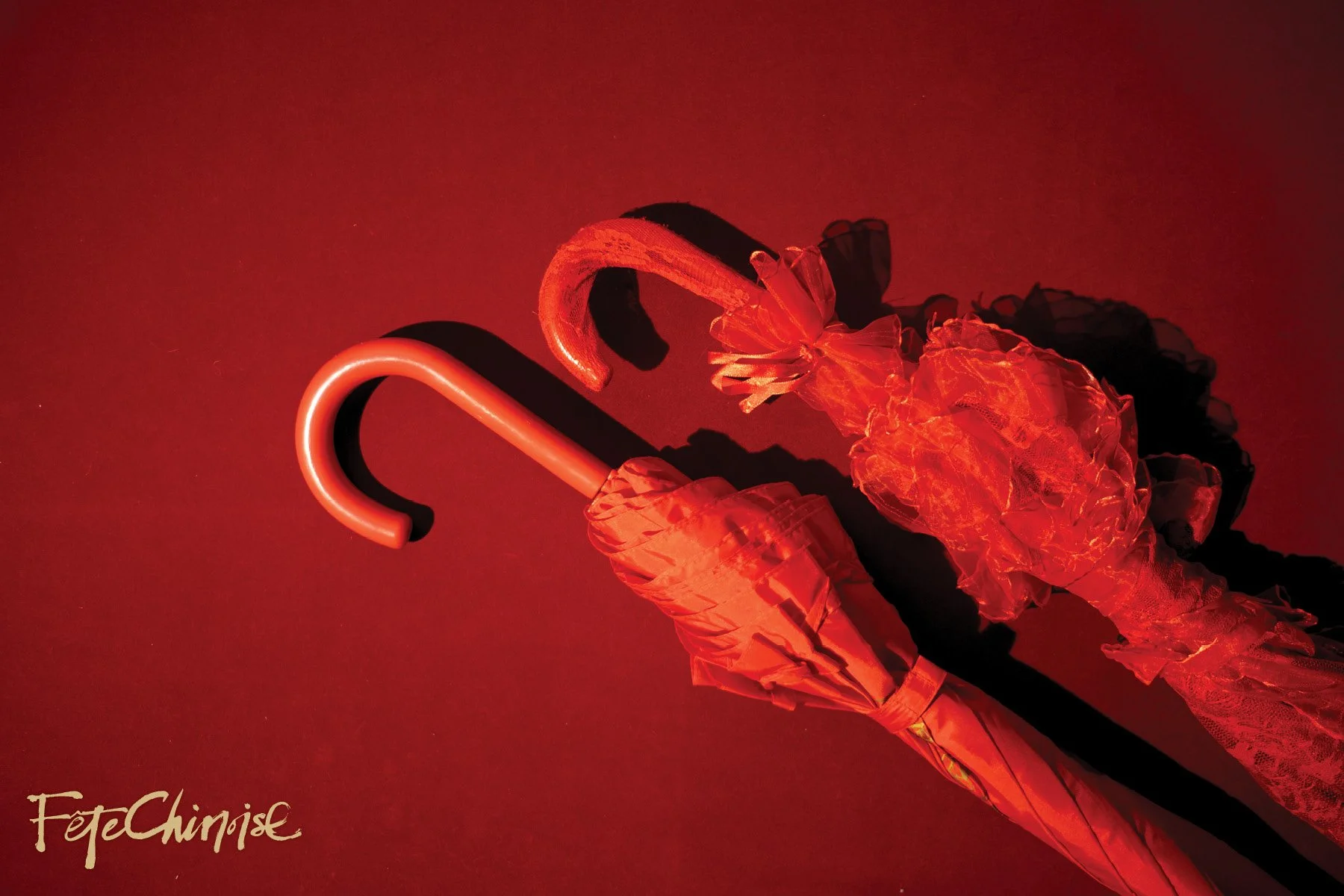
即現代所指的「接新娘」環節,新娘由大妗帶領出房門見父親,再由父親引路走到新郎面前行夫妻見面禮。出門時大妗會灑五色米,並撐起紅傘為新娘遮風擋煞。
Wedding Day: The Procession
Commonly known today as the "bride pick-up" ritual, the Dai Kam plays a key role in guiding the bride out of her room to meet her father, who leads her to the groom for the formal introduction. The Dai Kam holds a red umbrella over the bride as a symbol of protection, while scattering rice to ward off negativity.
敬茶
棗子茶:即敬禮用的茶,要放入紅棗和蓮子,寓意甜甜蜜蜜,年生貴子。此外,紅棗(需選用原粒有核的)和蓮子各兩粒,取其成雙成對之意。在同性婚禮上,棗子茶便會改稱為「感恩茶」。
Tea Serving Ceremony
Served during the tea ceremony, the tea includes red dates and lotus seeds symbolizing sweetness and fertility. Only whole, pitted red dates are used, and two of each item are included to represent a harmonious pair. In same-sex weddings, this is often renamed as “Gratitude Tea.”
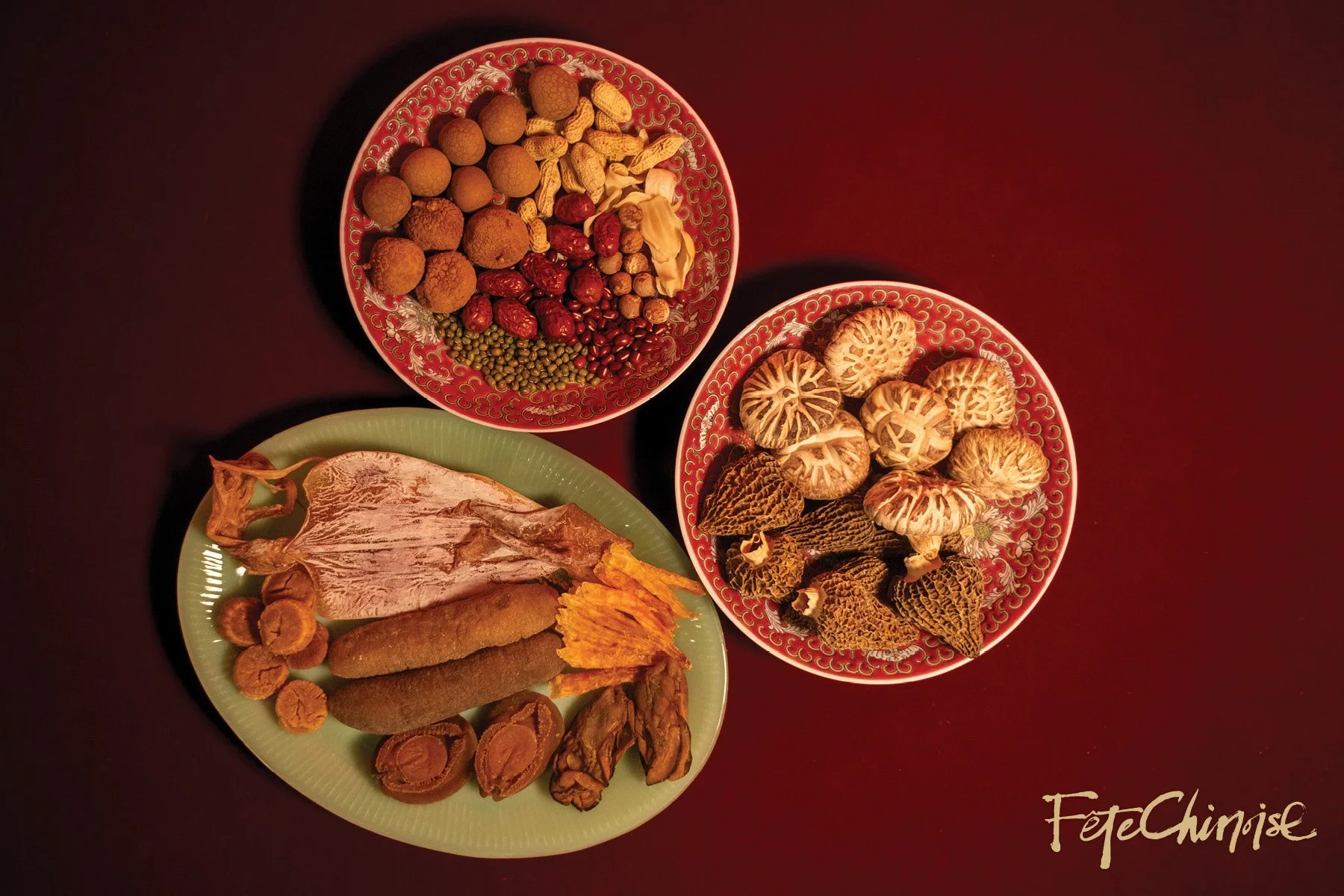
Courtesy of 源源海味參茸湯料國藥行 Eternal Trading Inc.
敬茶次序:
新人需按家中各人輩份和長幼逐一敬茶:先敬給最年長的至親及父母,新人要下跪行大禮,表示最深的敬意。向平輩敬茶時,無須行大禮,保持站立敬茶即可。不論長幼,新人敬茶時要以雙手端上茶杯,親友飲下新郎與新娘各一杯茶,寓意納福納喜。
中國人講求吉利,大日子少不了寓意吉祥的話語。大妗在新人敬茶時,為添氣氛,會說一些吉祥話,例如:「飲過新抱/女婿茶,富貴又榮華 / 靚過林青霞」、「茶到口,財到手;買車又買樓。」但在北美婚宴中,因為文化語言的差異,不可能逐句翻譯,否則便會太過冗長沉悶。於多元文化家庭中,通曉雙語甚至多國語言的大妗,於此時尤為重要,擔當溝通橋樑,靈活轉譯及解說,同時控制流程與節奏。
Order of Service
The couple serves tea in order of seniority—starting with the most senior relatives and parents. Kneeling during the ceremony is a gesture of deep respect, reserved only for parents and grandparents; it is not required when serving tea to relatives of the same generation, such as cousins or nieces. The couple must serve tea with both hands. In return, the family drinks both cups offered by the groom and bride, accepting their blessing.
Auspicious language plays an important role in Chinese culture, especially on joyous occasions like weddings. To create a lively and festive atmosphere during the tea ceremony, the Dai Kam traditionally recites a blessing each time she collects the teacup. However, at weddings in North America, due to linguistic differences, it is not practical to translate every phrase literally, as doing so would make the ceremony overly lengthy and tedious. In multicultural families, a bilingual — or even multilingual — Dai Kam becomes especially valuable, serving as a bridge between cultures. She skillfully adapts and explains the blessings, while also managing the ceremony’s flow and pacing with grace.
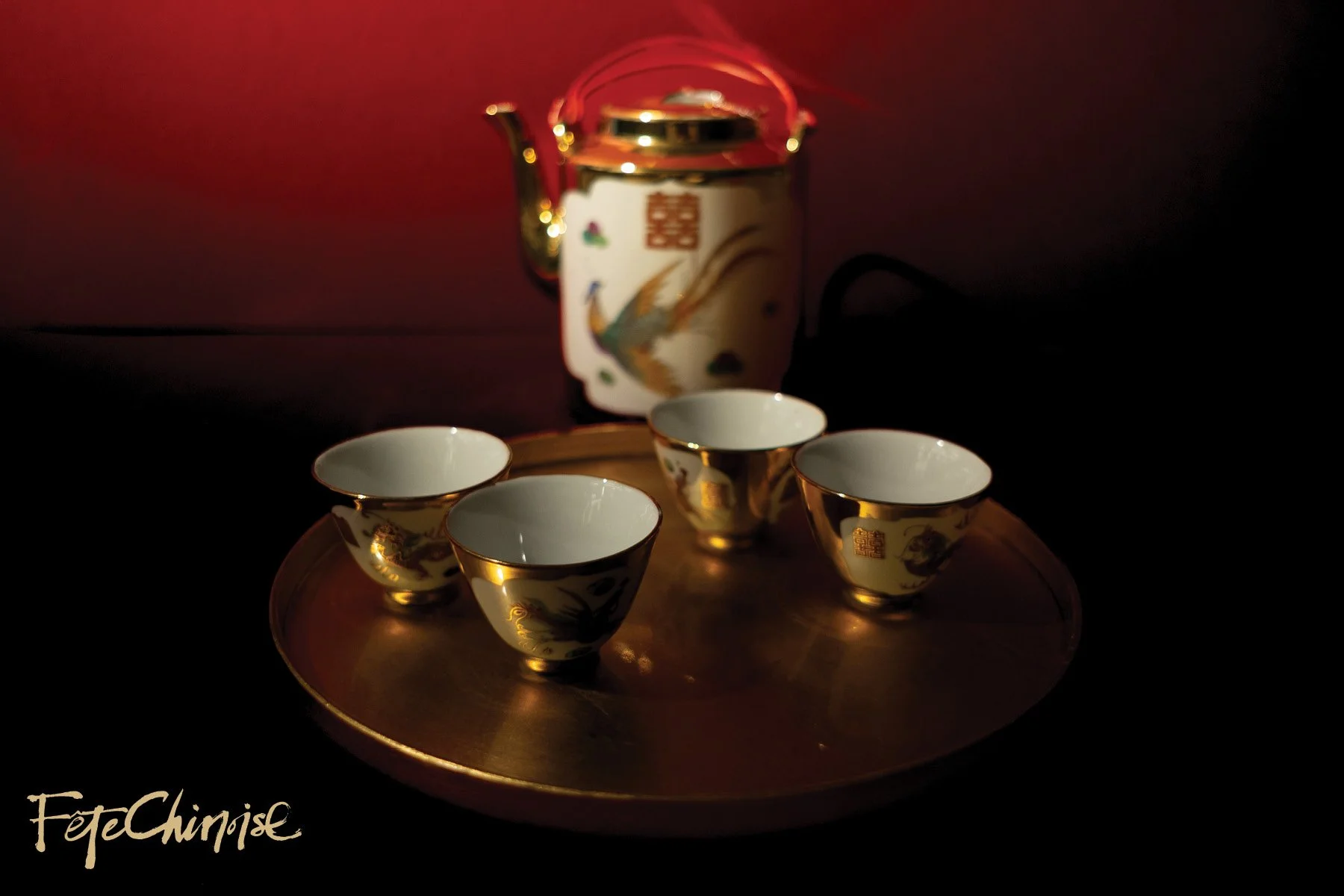
Traditional Tea Ceremony Set.
後記
隨著時代變遷及地域文化的發展,大妗的角色也變得更加多樣化,如今不再局限於由年長女士擔任。為了傳承大妗的傳統知識,Ginny 於 2025 年與多倫多大學利銘澤典宬合作,推出了「傳統中式婚禮文化證書課程」。有意聘請大妗的新人,除了可以通過親友介紹或網絡搜尋外,還可以根據專業證書的認證,挑選符合自己需求的專業大妗。
With the changing times and evolving geographical cultures, the role of the Dai Kam has become more diverse. It is no longer limited to older women. To pass on the traditional knowledge of the Dai Kam, Ginny collaborated with the University of Toronto - Richard Charles Lee Canada-Hong Kong Library in 2025 to offer the "Traditional Chinese Wedding Culture” Certificate Program. Couples looking to hire a Dai Kam can now not only rely on recommendations from friends and family or online searches, but also choose a certified professional Dai Kam based on the credentials provided by the program.
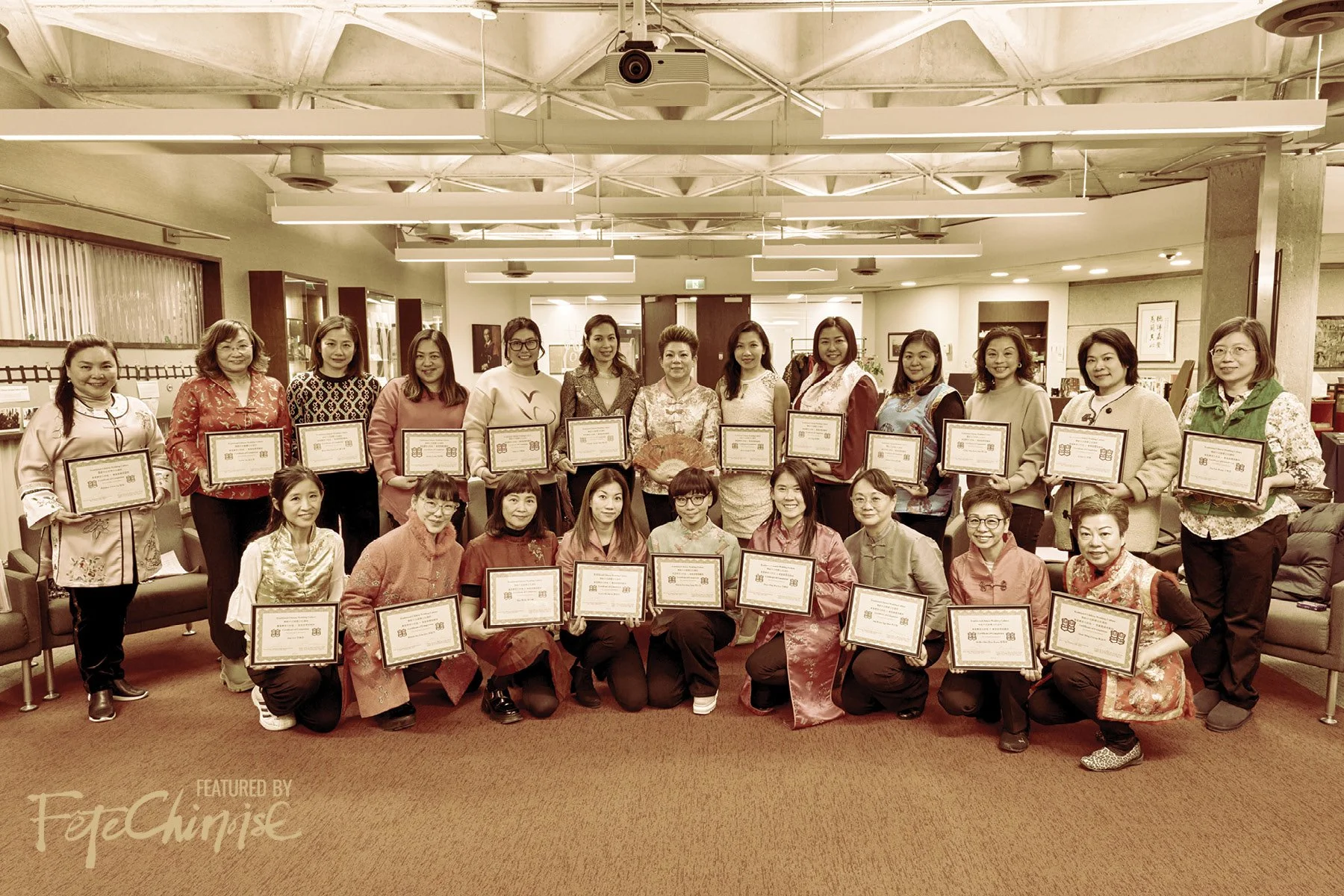
Image Courtesy of Ginny Chung.
Further Reading: Wedding Stories
Lotus & Navid: Love and Heritage: A Chinese-Persian Wedding at Hycroft Manor
愛情與傳承:中國與波斯的婚禮
As Featured in The Art of Celebration Annual Edition No.2
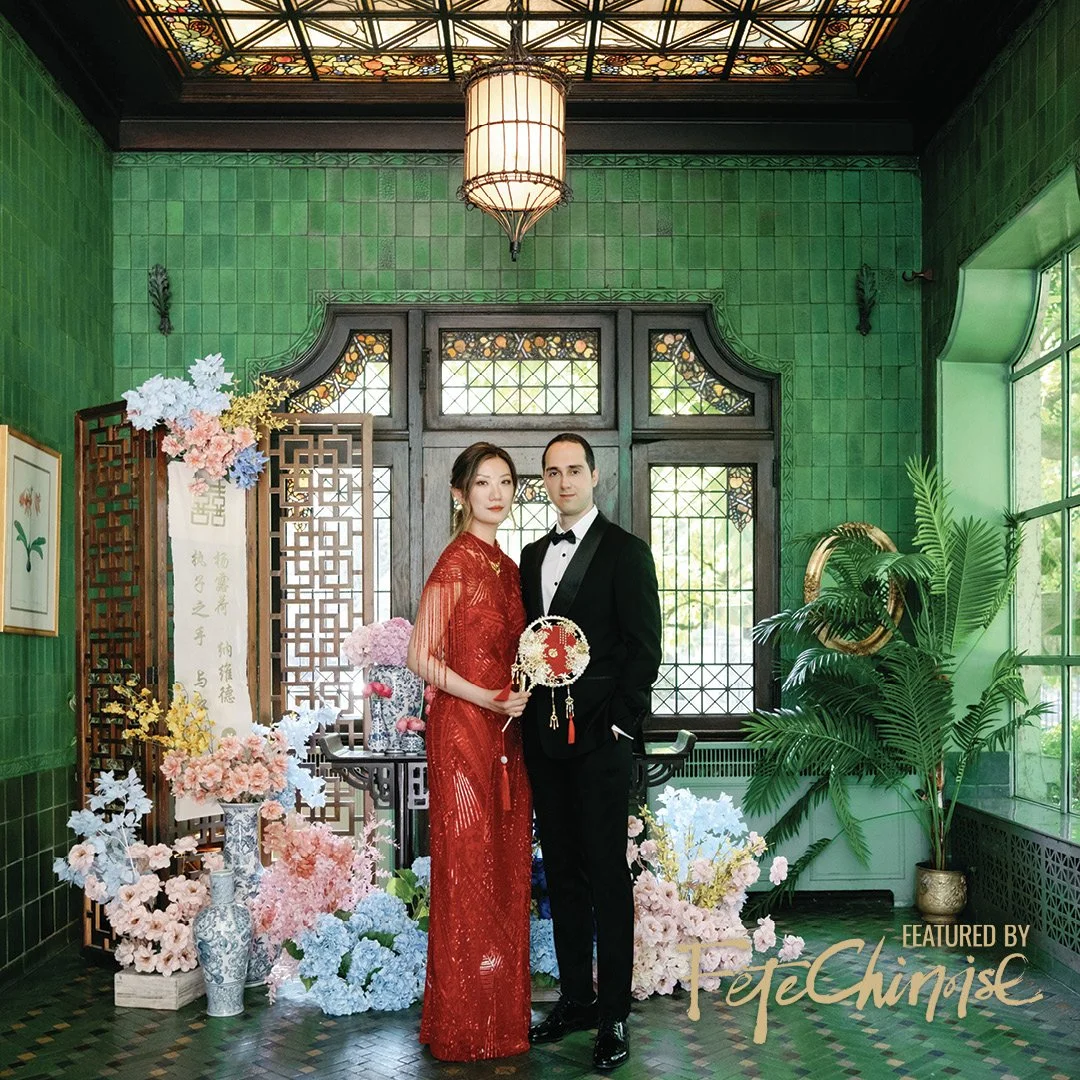
This extraordinary wedding between a Chinese bride and a Persian groom was more than just a beautiful event—it was a thoughtfully curated cultural story. Every detail was meticulously designed, not only to preserve the integrity of each tradition but also to create an immersive experience for every guest. From ceremonial arrangements and entertainment to personalized keepsakes, interactive games, and culinary selections, this wedding was a heartfelt tribute to the couple’s rich family heritage, ensuring it became a truly unforgettable memory.
Photography & Videography: Begie Weddings
Read more >>
Kelly & Kevin: A Fairytale Wedding at the Golf Country Club
如夢如幻的高爾夫鄉村俱樂部婚禮
As Featured in The Art of Celebration Annual Edition No.2
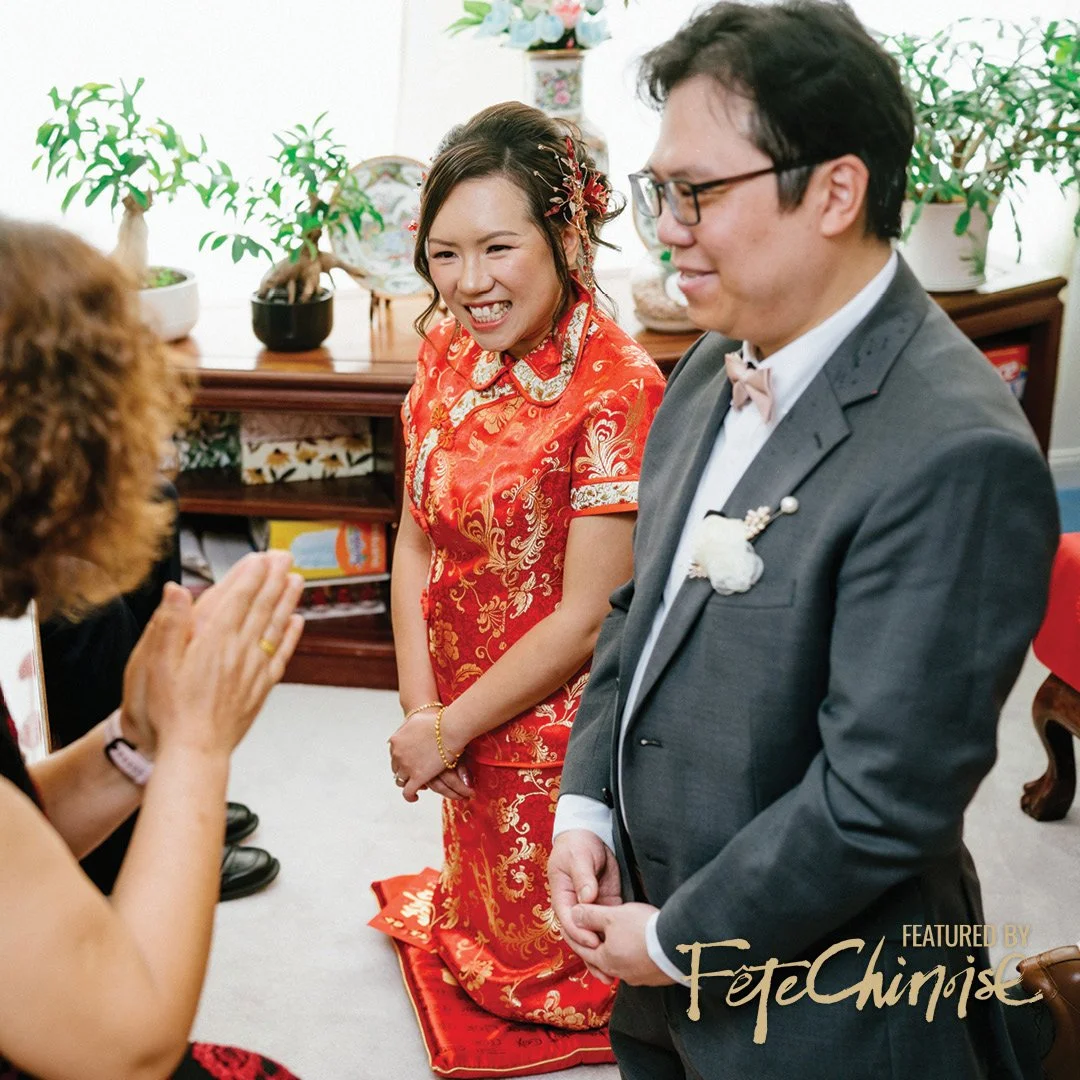
Popular traditions of a traditional Chinese wedding, such as the door games and tea ceremony, were events that Kelly and Kevin always knew that their wedding would incorporate. The door games were fun and amusing, while the tea ceremony was a tradition deeply rooted in respect and gratitude towards family elders.
Photography & Videography: Rosetta Li Weddings
Read more >>
More from Fête Chiniose
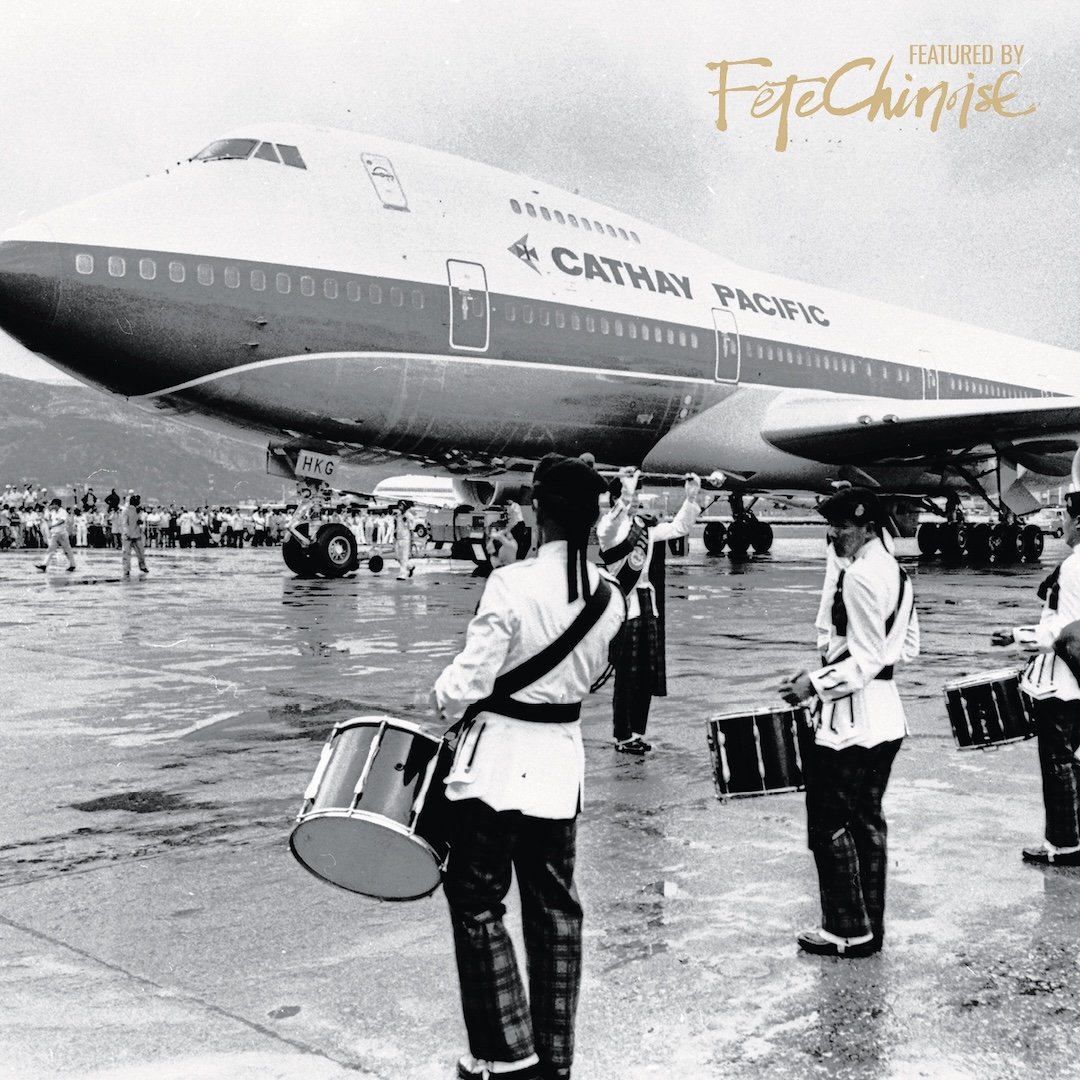
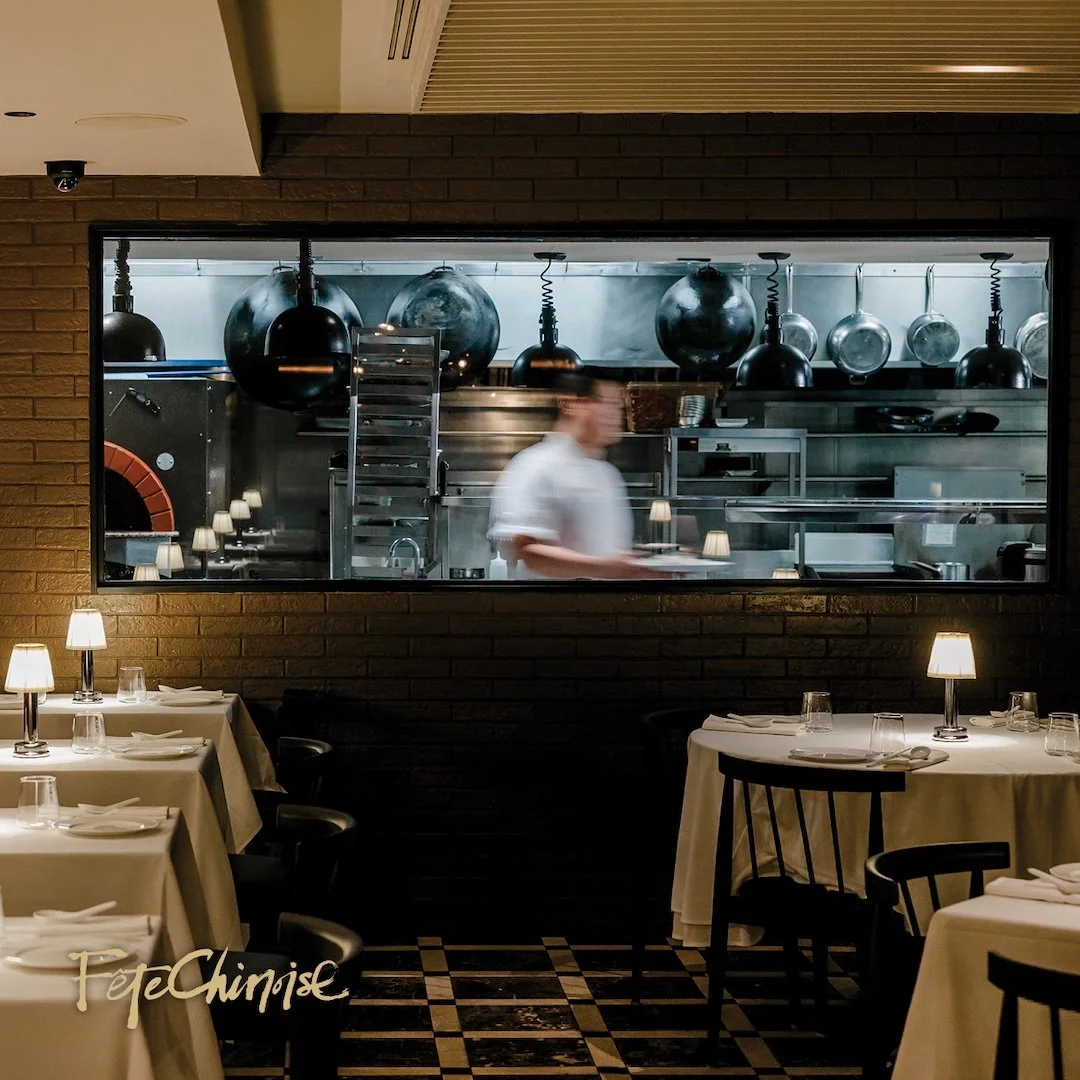




Wine, in many ways, is fascinating because it has the ability to preserve the taste of time. When Eastern flavours meet Western vintages, culture and sentiment naturally begin to intertwine at the table, creating a dialogue that adds depth to every shared occasion.
We are sincerely grateful to celebrity wine expert Bernice Liu for sharing her thoughtful perspective with Fête Chinoise on pairing Chinese cuisine with wine during festive occasions. Through her refined sensibility, she invites us to rediscover culture through the lens of each dish and its accompanying wine pairing.