
A Small Stamp, a Place in Our Collective Memory: Remembering Force 136
Written by Fête Chinoise Editorial Team
photography: Spill Studios (Richard Lam). Courtesy of Chinese Canadian Museum.

This Remembrance Day, Canada Post’s new Force 136 stamp honours Chinese Canadians who volunteered for secret Allied operations in Asia during the Second World War. Unveiled at Vancouver’s Chinese Canadian Museum on November 3, 2026, it recognises men who served Canada while facing discrimination and unequal rights at home.
Veterans’ families attended the unveiling, including Brent G. Hoy, whose father Charlie Hoy served with Force 136, and Rick Wong, whose father Hank Wong served with Australia’s Services Reconnaissance Department.
Their stories form part of the long struggle for Chinese Canadian equality, shaped by wartime service and years of community advocacy. As we approach Remembrance Day, the stamp offers an occasion to honour their contributions and reflect on the hard-fought changes that followed.
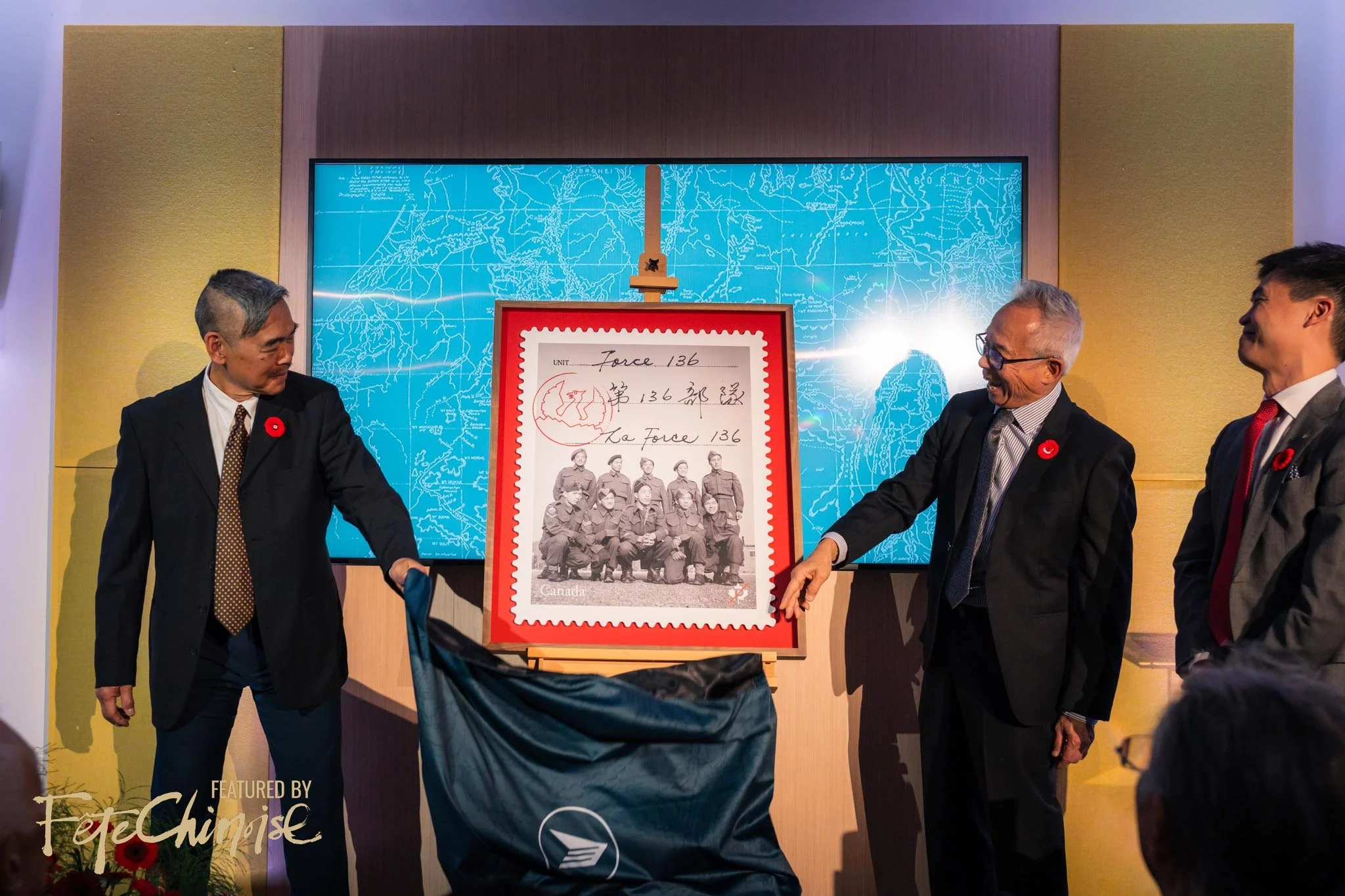
photography: Spill Studios (Richard Lam). Courtesy of Chinese Canadian Museum.
Serving a Country That Denied Them Equal Rights
During the war, Chinese Canadians faced restrictions on voting, employment and immigration. The Chinese Exclusion Act separated families and severely restricted immigration from China. Racial barriers also limited opportunities to enlist.
In 1944, Allied recruitment created a path into covert service. Approximately 150 Chinese Canadians were recruited to Force 136, part of Britain’s Special Operations Executive, or Australia’s Services Reconnaissance Department. Their training included wireless communications, espionage, parachuting and jungle survival.
Some deployed to Japanese-occupied territories, including Malaya and Borneo, to support resistance networks, gather intelligence and conduct sabotage. Others were still training when the war ended. Those sent behind enemy lines faced the dangers of capture alongside harsh conditions and disease.
By the end of the war, more than 600 Chinese Canadians had served across Canada’s armed services.
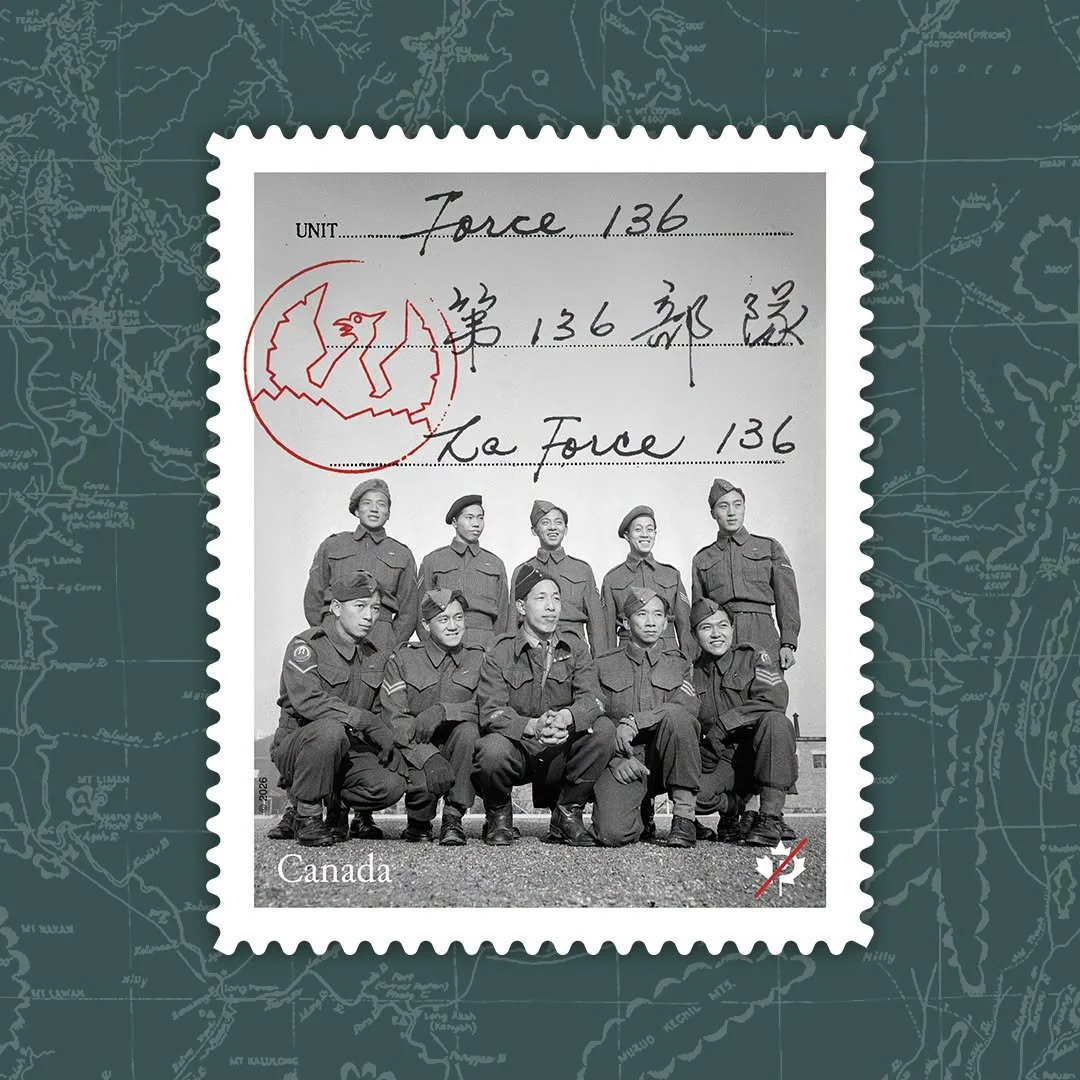
Reposted from Canada post Facebook
The Long Struggle for Equality
For many volunteers, military service carried hopes for change at home. They undertook demanding and dangerous work while their families continued to live under discriminatory laws.
Their service strengthened the case for equal treatment, adding to the sustained efforts of Chinese Canadian advocates and community organisations. In 1947, the Chinese Exclusion Act was repealed and Chinese Canadians gained the federal vote.
These were significant changes, though they did not bring discrimination to an end. Restrictions and barriers persisted, and the work of securing equal opportunities continued. Remembering the veterans’ contributions means recognising both what they helped change and the conditions they had been required to endure.
Commemorating Their Service
Designed by Toronto-based Clear Space, the stamp features a black-and-white photograph of Chinese Canadian soldiers awaiting repatriation in 1945. The red phoenix insignia of Force 136 overlays the image, with the unit’s name appearing in English, French and traditional Chinese.
The issue gives public recognition to a chapter of Canadian military history that deserves to be more widely known. It also acknowledges the people behind that history: volunteers whose service overseas became part of a community’s long fight for equality at home.
The stamp is available through Canada Post and the Chinese Canadian Museum’s retail store, 1889 Trading Co.
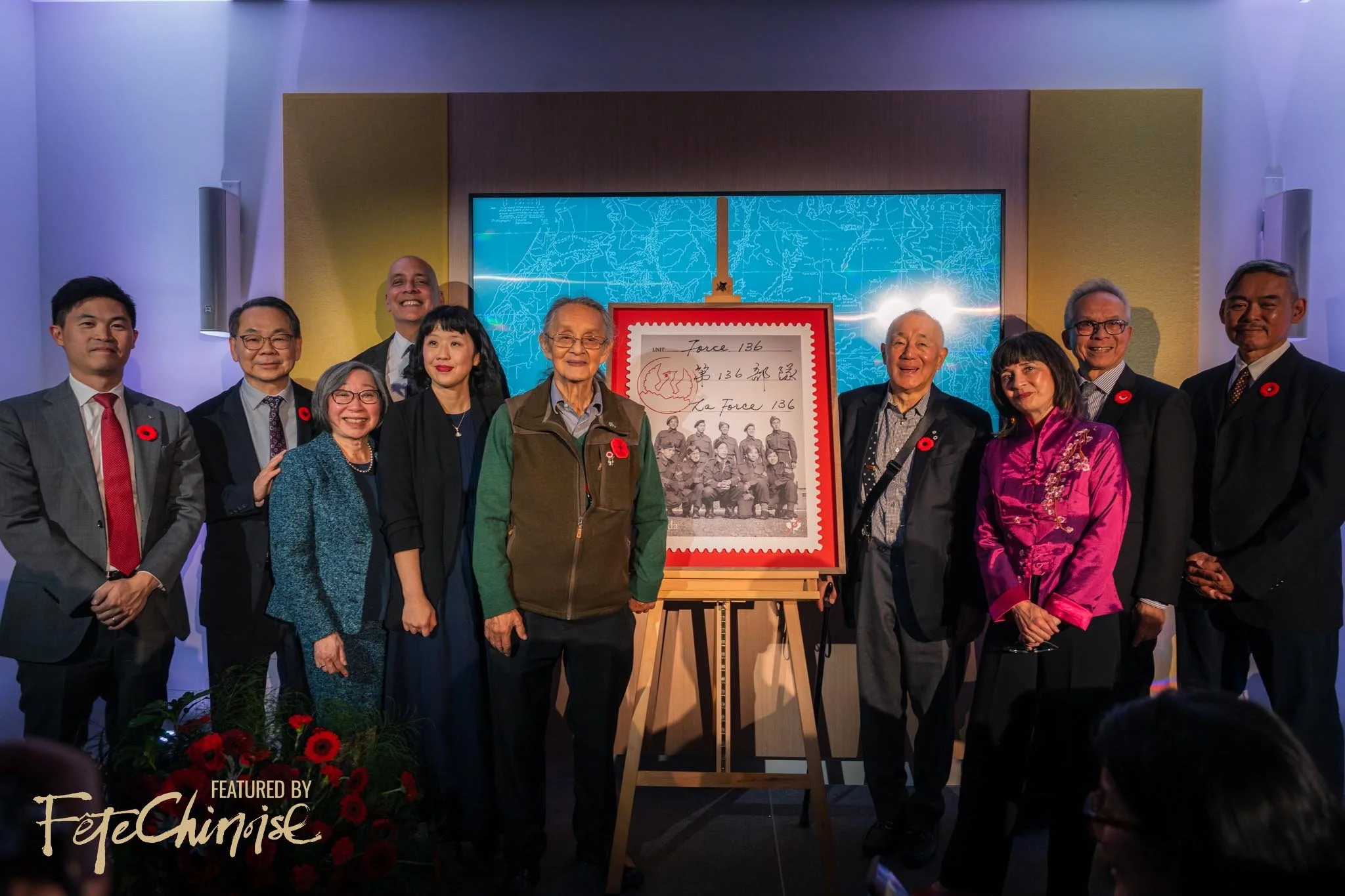
photography: Spill Studios (Richard Lam). Courtesy of Chinese Canadian Museum.
More from Fête Chiniose
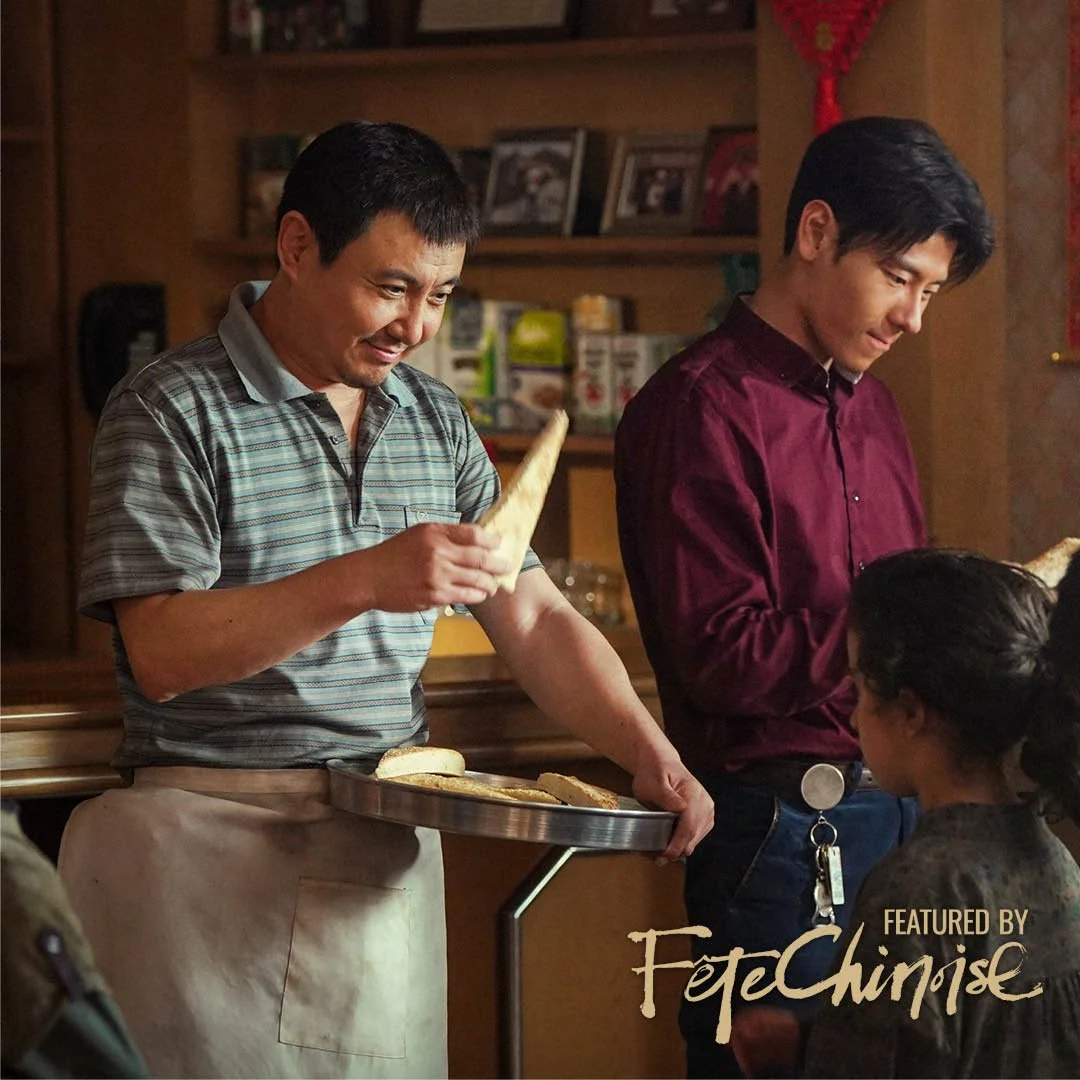






The Mulan International Film Festival returns to Toronto from November 21 to December 3, 2026. Explore this year’s pan-Chinese cinema lineup, from Mother Bhumi starring Fan Bingbing to stories of migration, intimate documentaries and a Qiu Jiongjiong retrospective.