Francesco Lietti: Painting Cities, Layer by Layer 彩色旅圖
English 英: Fête Chinoise Editorial Team with interview notes from Francesco Lietti
Chinese 中:Translated by Maggie Ho
Photography: Francesco Lietti, Thien-Ty LY
As Featured in 2026 Fête Chinoise Design Annual

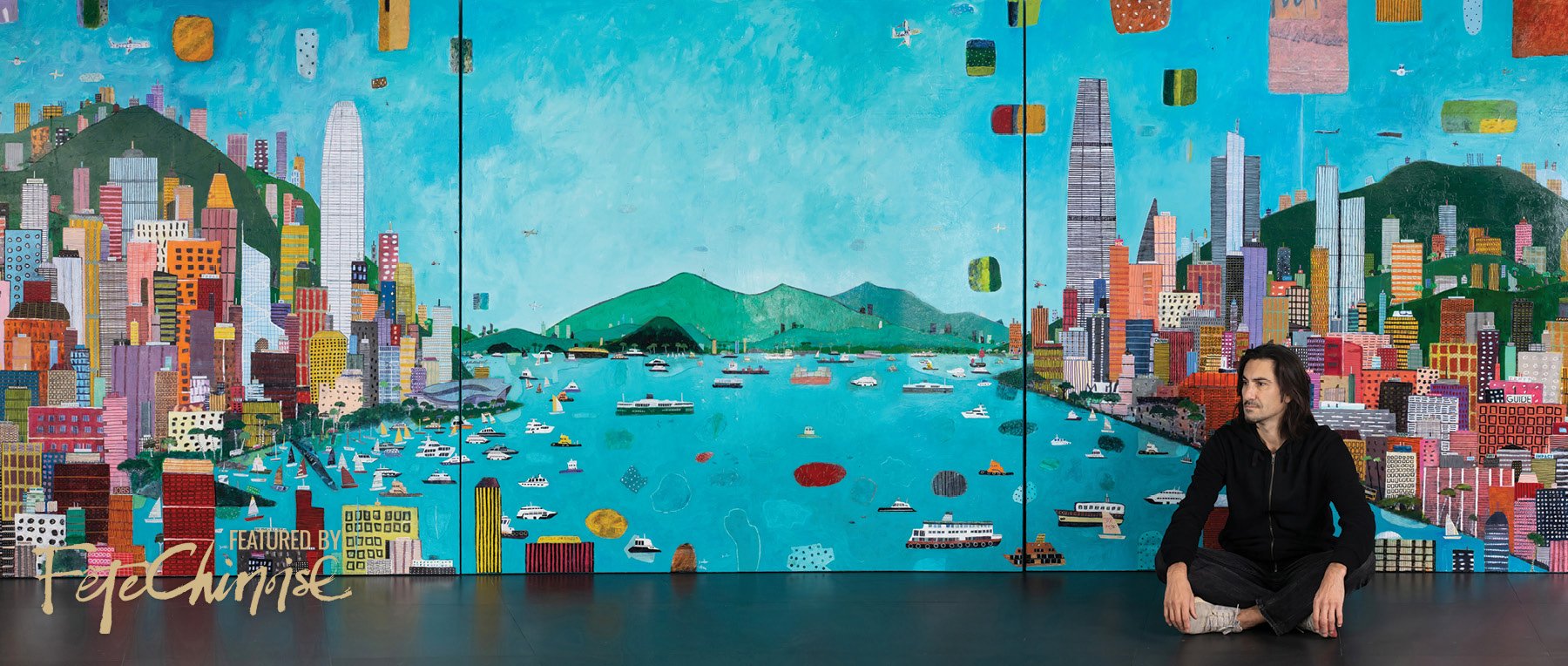
Something for Everyone
200 x 600 cm mixed media on canvas, 2021
Photography: Thien-Ty Ly
Francesco Lietti did not come to painting through art school. He started in the corners of a shared house in south London, working on whatever surfaces were at hand. As a child he had always drawn and painted, but without formal lessons. What he did have, he says, was imagination. For years he painted in bursts, then stopped for months at a time. In 2001, he began taking apart old furniture, painting the boards and hanging them on the walls. That small, practical decision gave him both material and space and turned painting from an occasional diversion into a habit.
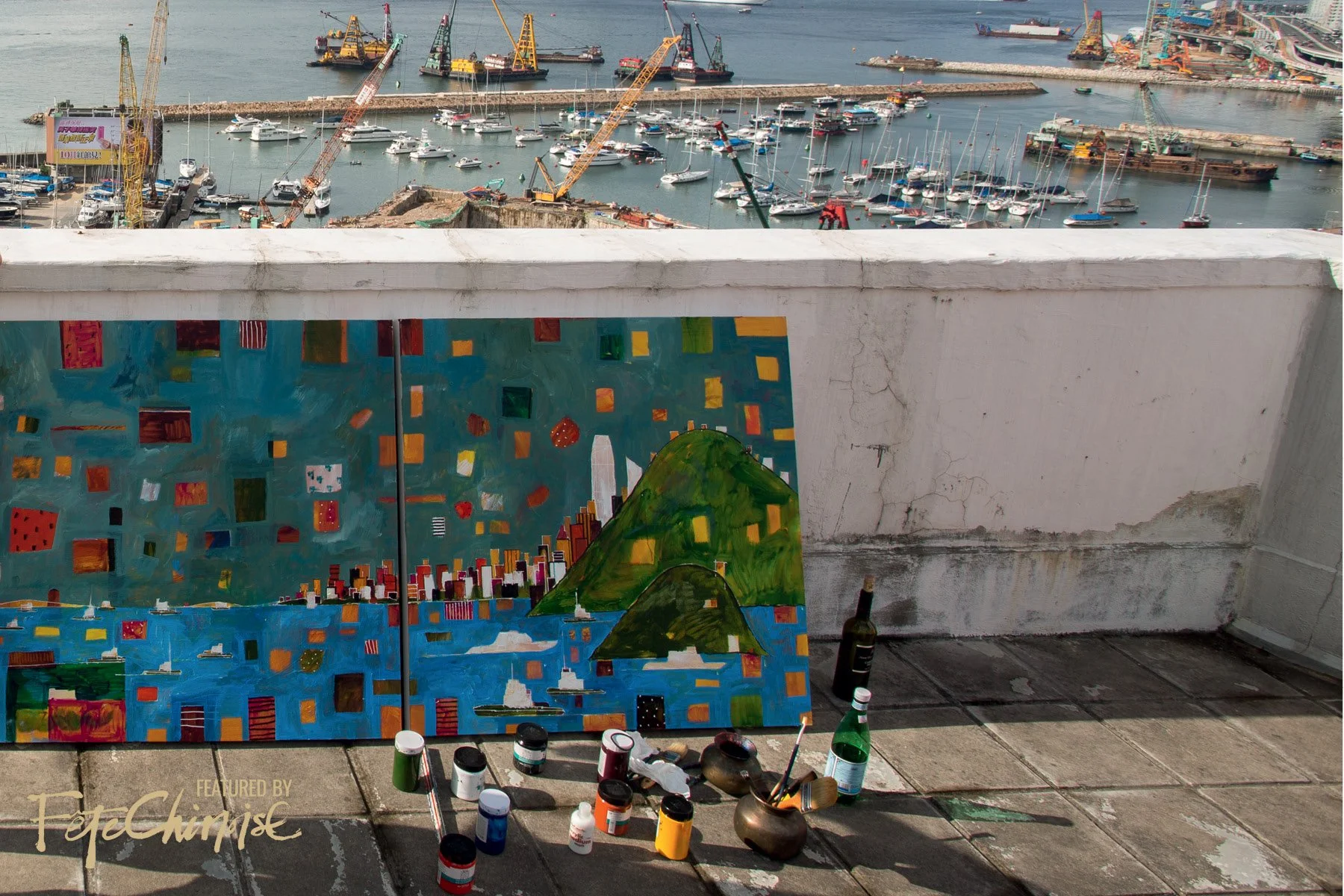
Working on the rooftop. Photography: Francesco Lietti.
Born 1971 in Lecco, on the southern shore of Lake Como in northern Italy. Lietti received formal training in architecture, first at the Politecnico di Milano, then at the École des Beaux‑Arts, La Seine, in Paris, and later in a postgraduate town‑planning program at South Bank University in London. That background shapes how he thinks as an artist on canvas. “When I paint, I often think in architectural terms,” he says. He pays attention to how structures sit together, how scale shifts, how different materials change the feel of a surface. His paintings often read like plans or elevations turned inside out, with solid and empty space working against each other. In that sense, city is both subject and material.
Lietti works in mixed media: acrylic paint, paper, wood and collage. He treats them less as special effects than as building blocks. For him, collage echoes the way cities grow: piece by piece, over time, through addition and adjustment. In recent years he has tried metal, stone and concrete, pushing his studio practice closer to the physical fabric of the streets he paints.
意大利藝術家 Francesco Lietti,以異鄉人的距離感與建築師的視角,將亞洲旅程凝煉於畫布之中。畫作上的城市輪廓線條俐落,色彩奔放,在結構與即興、現實與想像之間,層層交織。
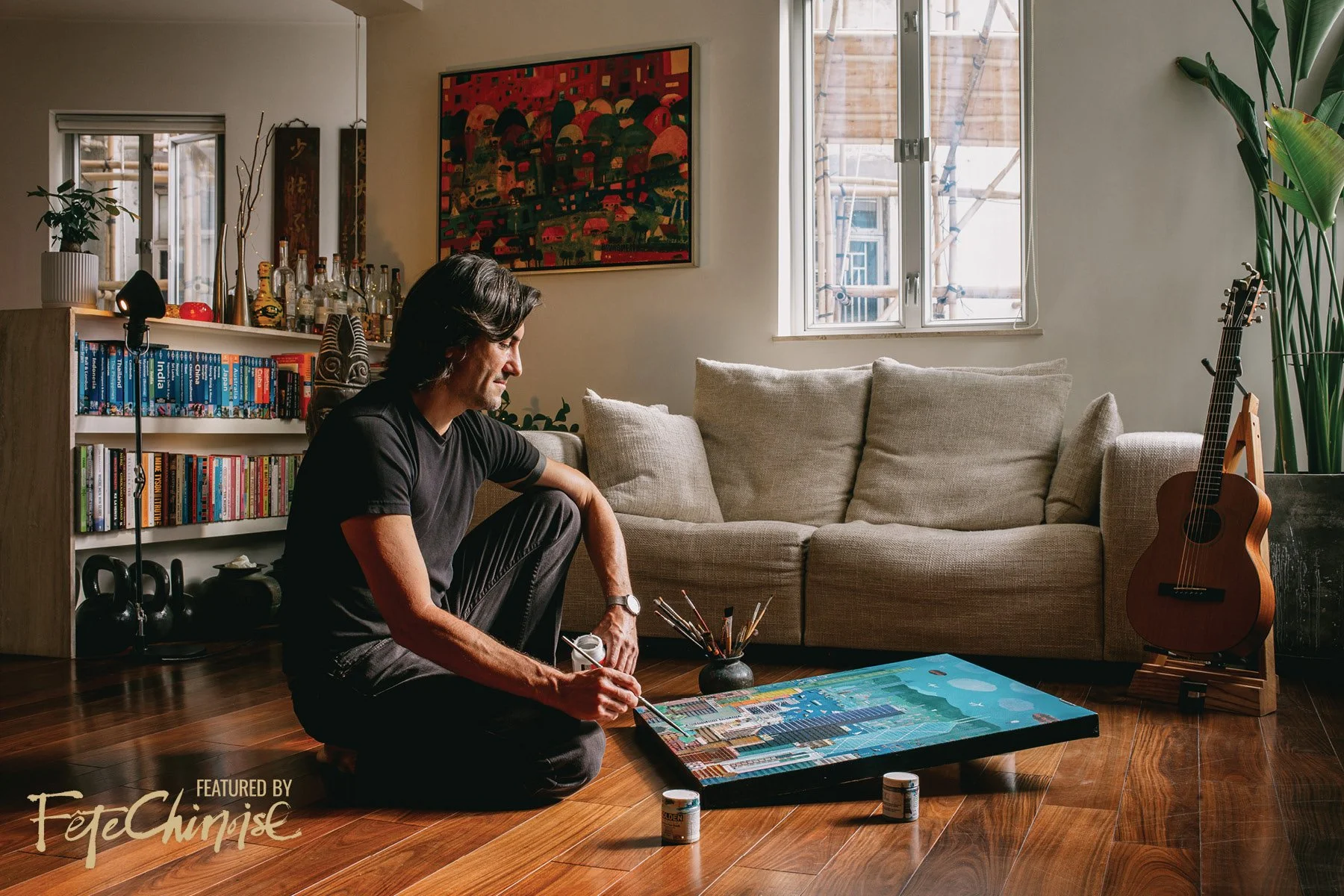
Francesco painting in his studio. Photography: Thien-Ty Ly
意大利、倫敦與香港
出生於意大利湖邊小鎮 Lecco, Francesco 自幼便熱愛畫畫,而且充滿想像力。長大後他於米蘭理工大學修讀建築,曾赴巴黎塞納河畔的 École des Beaux-Arts 深造,並於倫敦進修。2001 年,其時他住在倫敦南部一間分租公寓,室內堆滿陳舊傢具,令他忽發其想。「有一晚,我突然想到把這些傢具重用,於是把它們逐一拆掉,在拆下來的木板上作畫,並將完成品掛在牆上。」他回憶道:「房東 Mr. Raul 從未察覺其中的變化,更會讚嘆居室的佈置。」擁有相應的創作物料與空間,令他開始有規律地作畫,推動他從閒餘興趣邁向認真創作的第一步。
2005年,一趟由倫敦出發、橫跨歐亞的漫長鐵路旅程,讓他途經香港,從此愛上這個充滿活力的繁華都市。Francesco 落腳的地方是尖沙咀一間小型賓館,帶著好奇的心,他沿街漫步至海旁,夕陽下的維多利亞港映入眼簾,瞬間便令他深深著迷。「那是大自然與人工最完美的結合。那一瞬間,我便愛上了這個地方,無法自拔,只想將眼前一切牢牢捕捉。」
Hong Kong entered his life in 2006. He arrived at a small guest house in Tsim Sha Tsui, walked down to the harbour at sunset and felt, at once, that he wanted to stay. The meeting of water, hills and towers, and the density of the streets cut through with patches of green, made a deep impression. “It was as if natural perfection had met the perfect human touch,” he says. The city soon became his home and one of his steady subjects.
Much of his work begins with walking. Lietti rides buses to the end of the line, gets off and wanders. He looks for overlooked corners: a flyover cutting through housing blocks, a sudden view over a bay, a cul‑de‑sac where trees press up against concrete. Those trips feed his sense of Hong Kong as a stacked city, where streets, bridges, towers and hills sit almost on top of one another. On canvas, that density shows up as tight grids and layered planes, with colour doing the work of air.
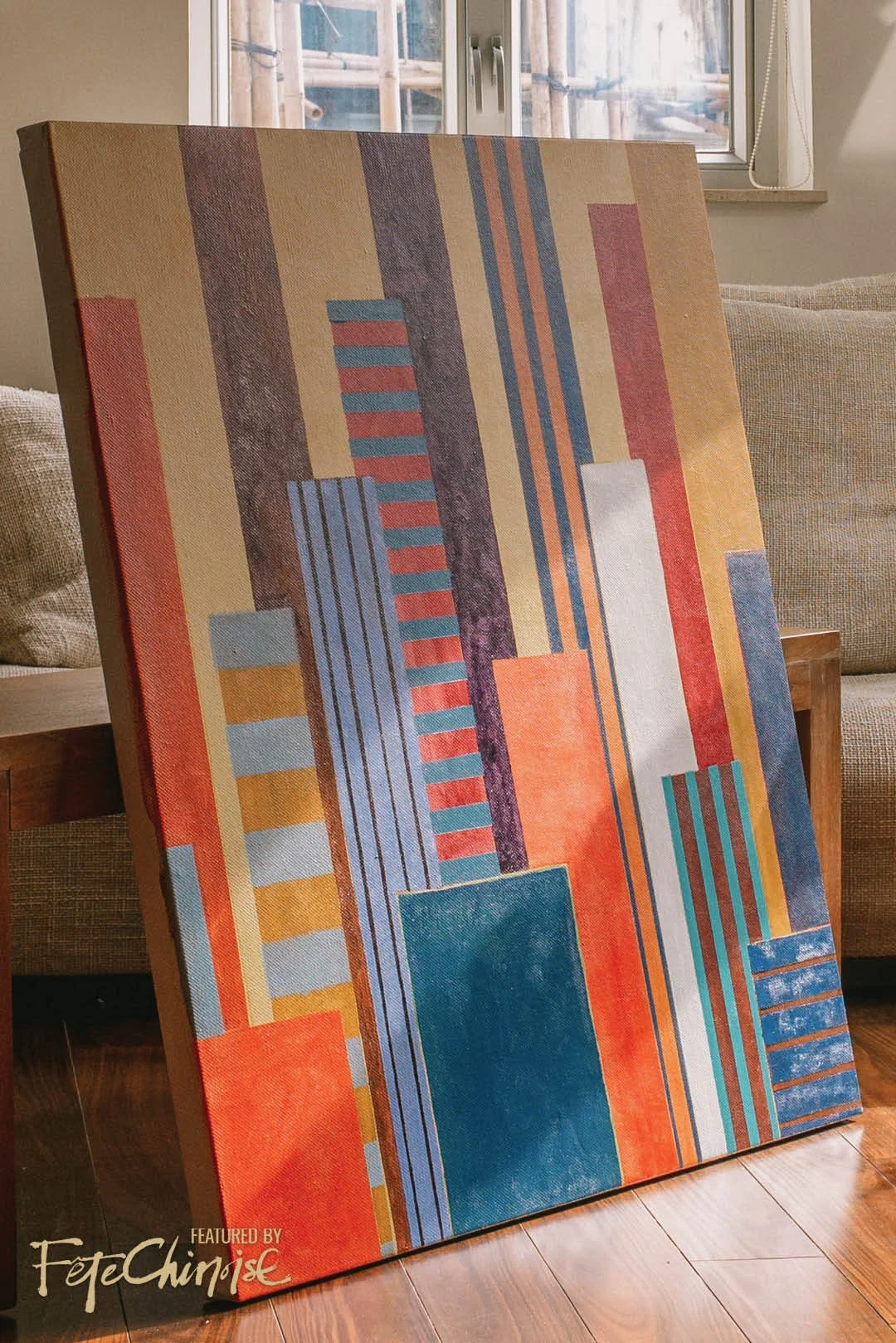
In The Studio, In Progress. PHOTOGRAPHY: Thien-Ty LY
Lietti grew up near Lake Como, where mountains drop into water. Later he lived in Milan, Paris and London. That mix of dramatic landscape and close urban fabric runs through his work. He is drawn to places where strong natural forms and heavy building sit side by side. In Hong Kong he found a city where those two instincts met. His background in architecture shapes how he reads the way people adapt to tight spaces and how they change the cities they live in.
Francesco 自此定居香港,並視之為第二個家。香港的地利位置,亦方便他遊歷其他不同亞洲地區。與此同時,他逐漸從建築師轉型為藝術家,並開始探索不同材料, 近年嘗試運用金屬、石材與混凝土,呼應城市的物質記憶。2018年,Francesco 出版畫冊《Colours of Asia》,記錄其筆下的亞洲各地城市景觀。現實中由石屎與玻璃建構的高樓大廈,配以絢麗多彩的色調,變得活潑俏皮起來。
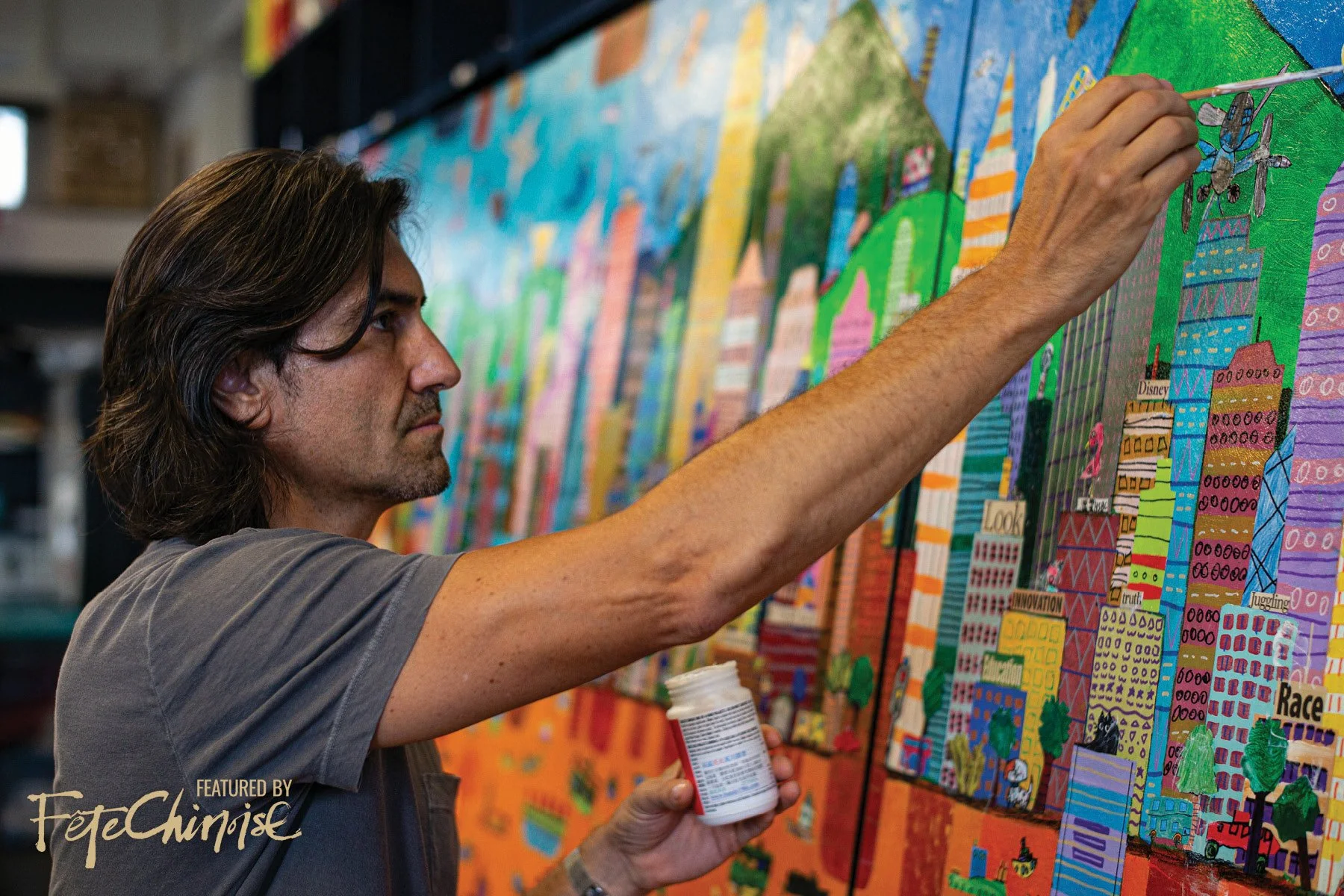
Francesco Lietti painting Under the Lion's Gaze. Photography: Thien-Ty Ly.
取之城市、用之城市
拼貼是 Francesco 作品的主要手法。他一直嘗試以壓克力作畫,並結合紙張與木板進行拼貼創作,特別欣賞這些材料本身的紋理與觸感,並將材料視為空間語言的一部分,而不只是技術選擇。這種層層堆疊的方式,呼應城市自身的生成邏輯——在時間中累積、適應與重構。
多年的建築訓練與工作,塑造了他獨特的視覺與創作語言。「建築與城市是我鍾愛的。它們複雜且充滿節奏,在實體與空間交錯之間,構成不同的紋理與秩序。作畫時,我常以建築的視角來思考:不同結構、大小、材質與美學的建築,彼此對話,共同塑造出一種質感、視覺節奏與圖案之美。過往的訓練讓我不只著眼於城市的功能,更重視當中層層堆疊的構成。如今,我將這種理解轉化為畫布上的色彩、形態與流動。」
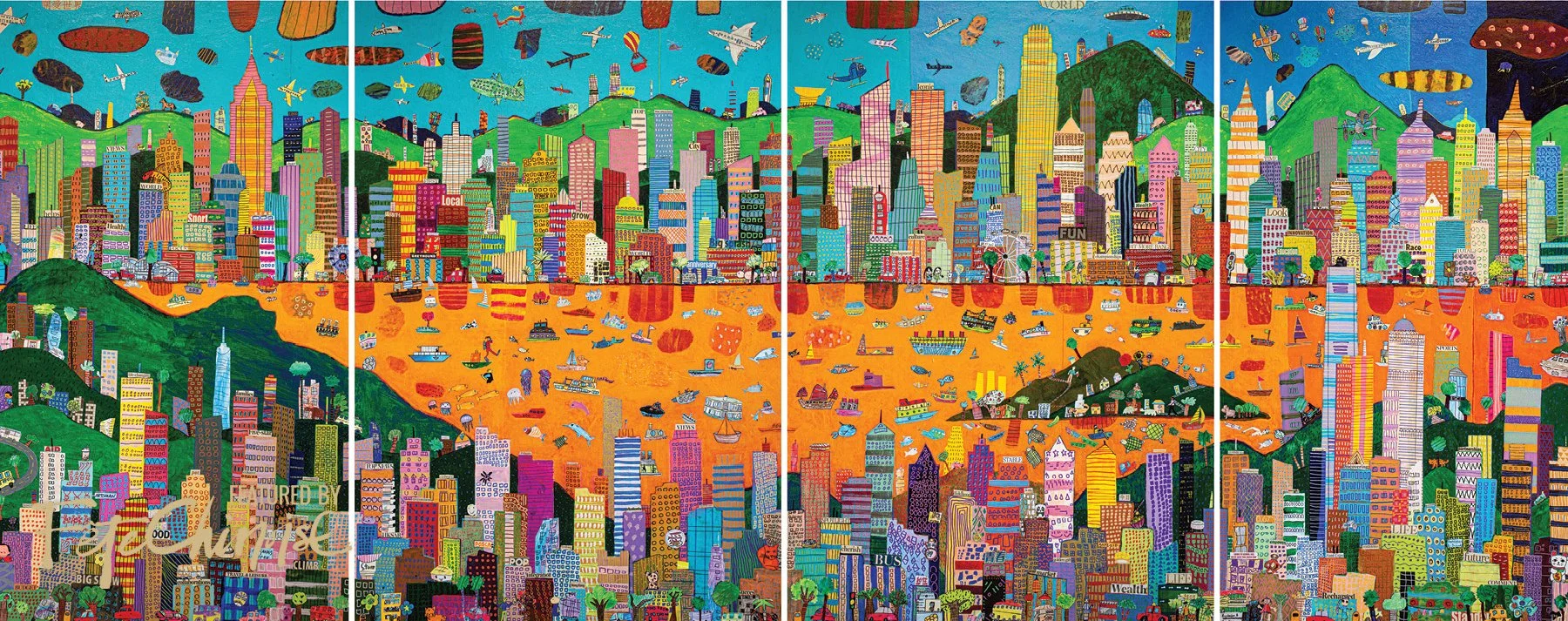
Under the Lion's Gaze
175 x 480 cm mixed media on canvas, 2025
Collaborative painting at AIS
PHOTOGRAPHY: Francesco Lietti
Collaboration has become an important part of his practice. He has worked with schoolchildren on murals and community projects, as well as on large-scale public pieces, including a mural at King Mongkut’s Institute of Technology Ladkrabang in Thailand and a painted façade at the Hong Kong Museum of History and Science. Over the years, beyond Hong Kong and Thailand, he has collaborated with schools in Italy, Malta, South Korea, and the United States. These experiences, he says, remind him that painting can be a shared act, not just a private one in the studio. Watching children work is also a reminder that complex compositions can grow out of simple marks if you give them time and attention.
Working in Hong Kong’s commercial art world as an expatriate, Lietti tries to keep his own line while speaking to the city around him. Collectors who follow his work often respond to the way he shows cities as places of movement and mixture, where people from different backgrounds have to learn to live together at close range. He sees urban life as a way to think about contemporary experience more broadly: crowded, fast‑changing and layered.
Questions of scale and pressure enter the work as well. In recent years he has become more interested in how painting can hold ideas about urban growth, density, climate and cultural change. Some of his canvases are filled almost to the edges, mirroring the way buildings, roads and people press into limited land. He uses that saturation to think about how human activity builds up and then has to shift or be rearranged when space runs out.
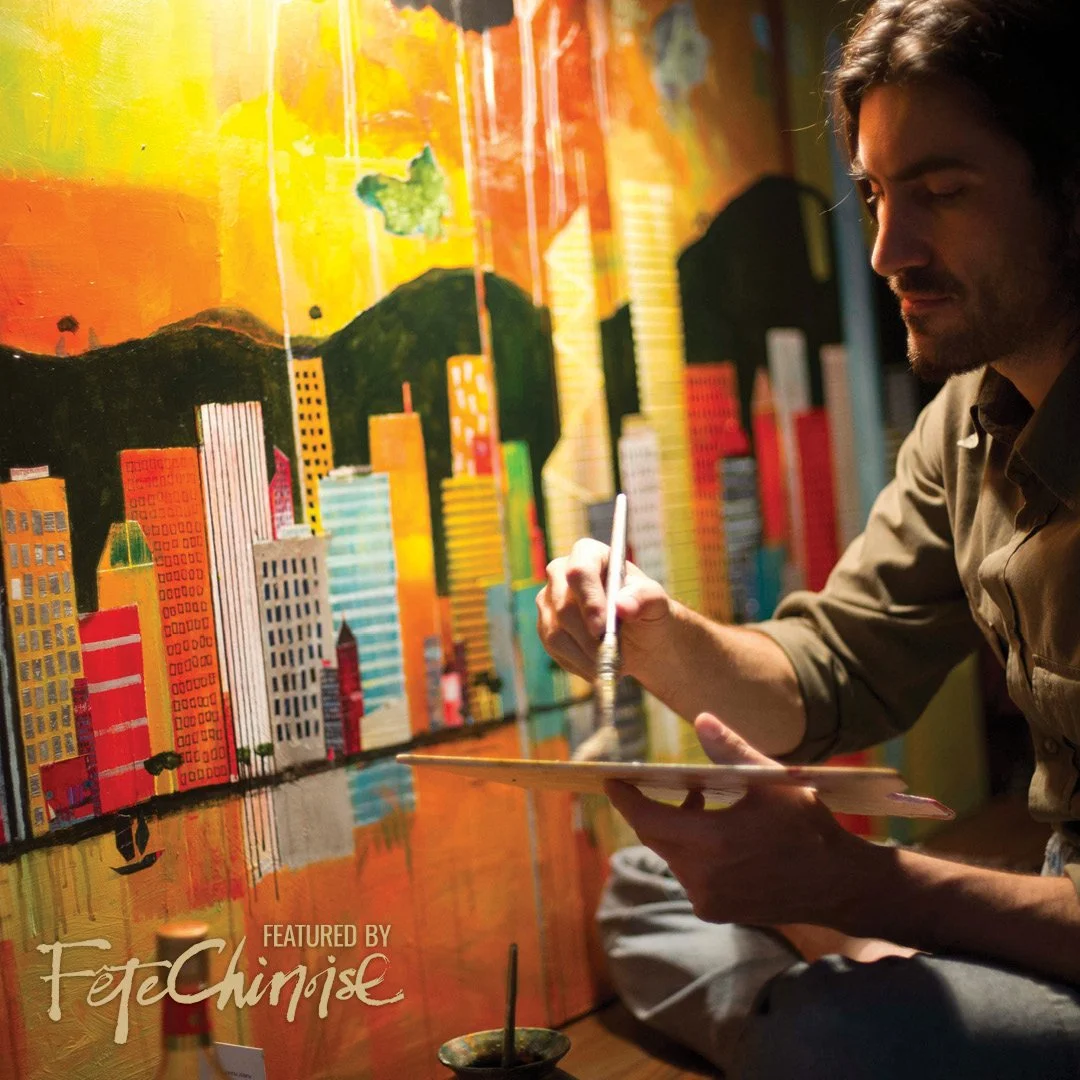
In The Studio, PHOTOGRAPHY: Francesco Lietti
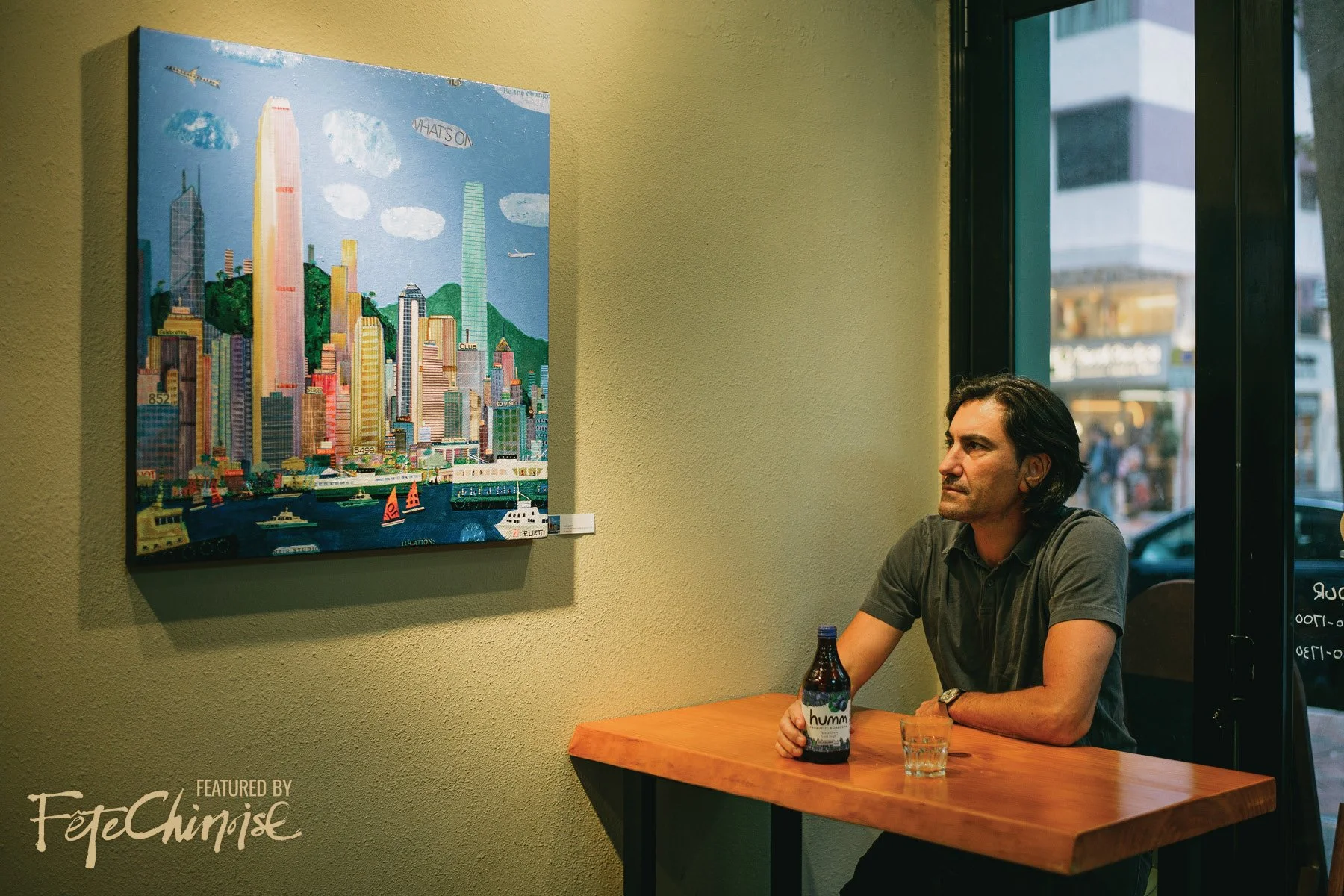
PHOTOGRAPHY: Thien-Ty LY
人文連結與參與
平日, Francesco 喜歡徒步或乘搭各式交通工具, 穿梭香港的不同角落。「我喜歡在城市或山徑中走走逛逛,每次都令我發現有趣的新景點。有時我會即興跳上巴士,由它帶領我到訪陌生的地方,下車後自己尋路回家,常以渡輪回到港島的家作結。」
狹窄街道、密集樓群與曲折小巷,都是他觀察與描繪的對象。自然與城市密度之間的對話,為他提供源源不絕的靈感。作為一個生活在亞洲的外國人,他總以帶點距離的視角觀察城市,加上建築訓練,使他更敏銳地捕捉人在有限空間中的生活方式。
「城市是一個多重身份共存之地,當中孕育出許多意想不到的互動。」Francesco 認為藝術不只是個人表達,更是一種連結與共享創造。 因此除了繪畫,他也積極參與各類公共藝術創作,包括與學生及社群合作的壁畫與大型公共項目。他曾於泰國 King Mongkut’s Institute of Technology Ladkrabang 創作壁畫,也參與了香港尖沙咀歷史博物館及科學館的藝術外牆項目。「對我而言,最有意義的創作,都是通過群策群力創造出來的。」這些經驗讓他相信,繪畫可以是一種共享的創作行為,而不只是個人在工作室中的實踐。
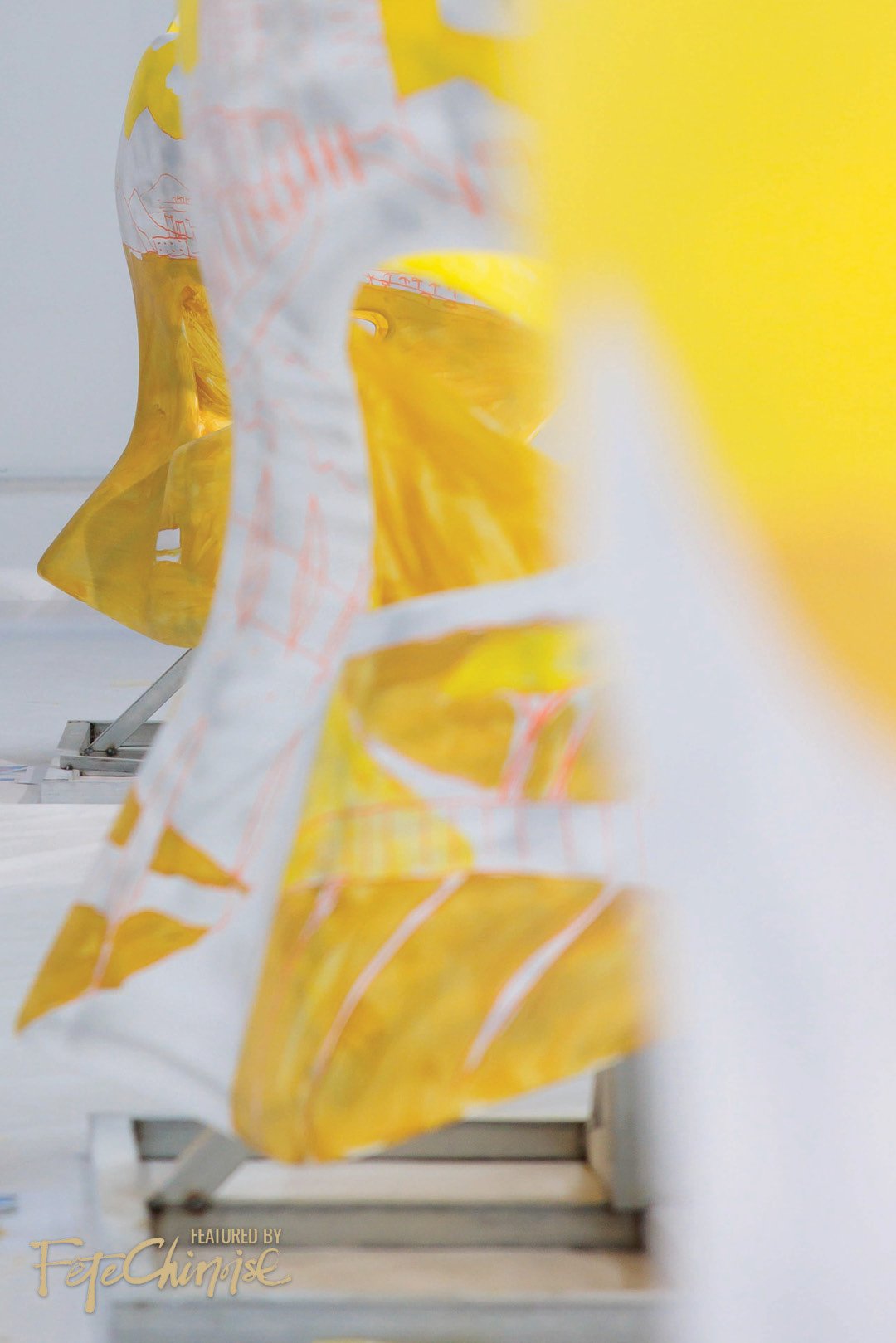
Discovery Bay’s Masks in progress. Photography: Thien-Ty Ly.
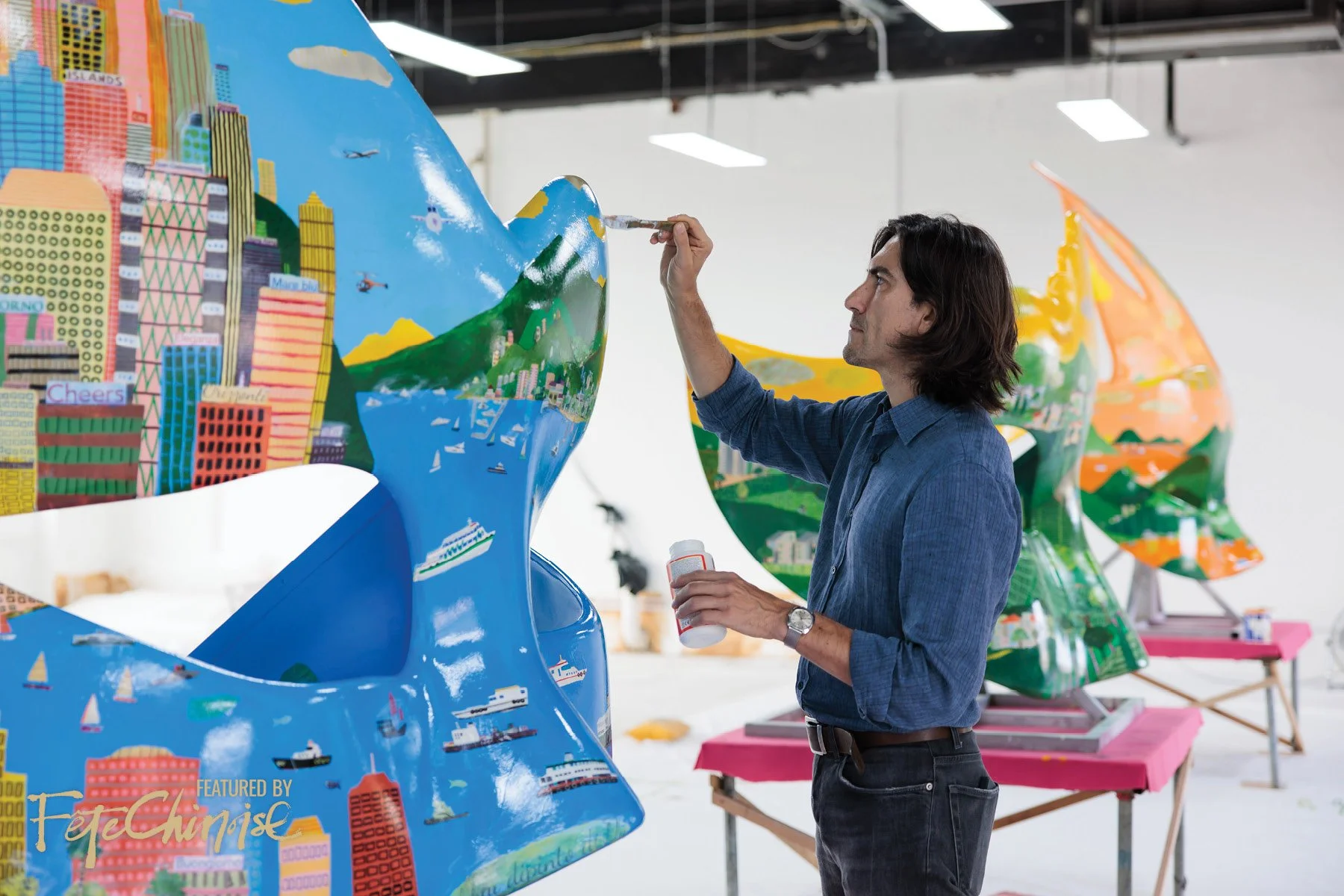
Discovery Bay’s Mask 1. Photography: Thien-Ty Ly.
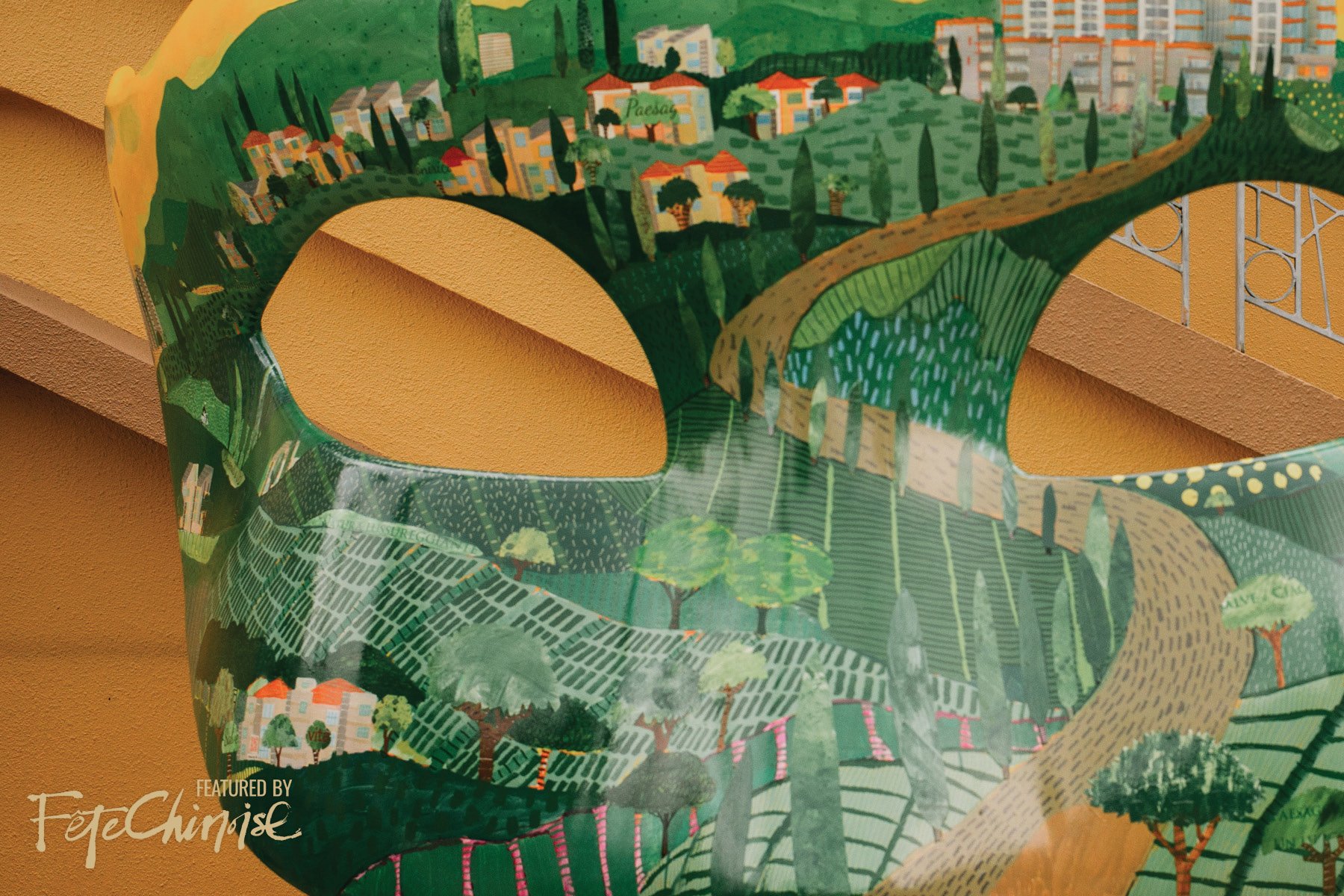
Discovery Bay’s Mask 2. Photography: Thien-Ty Ly.
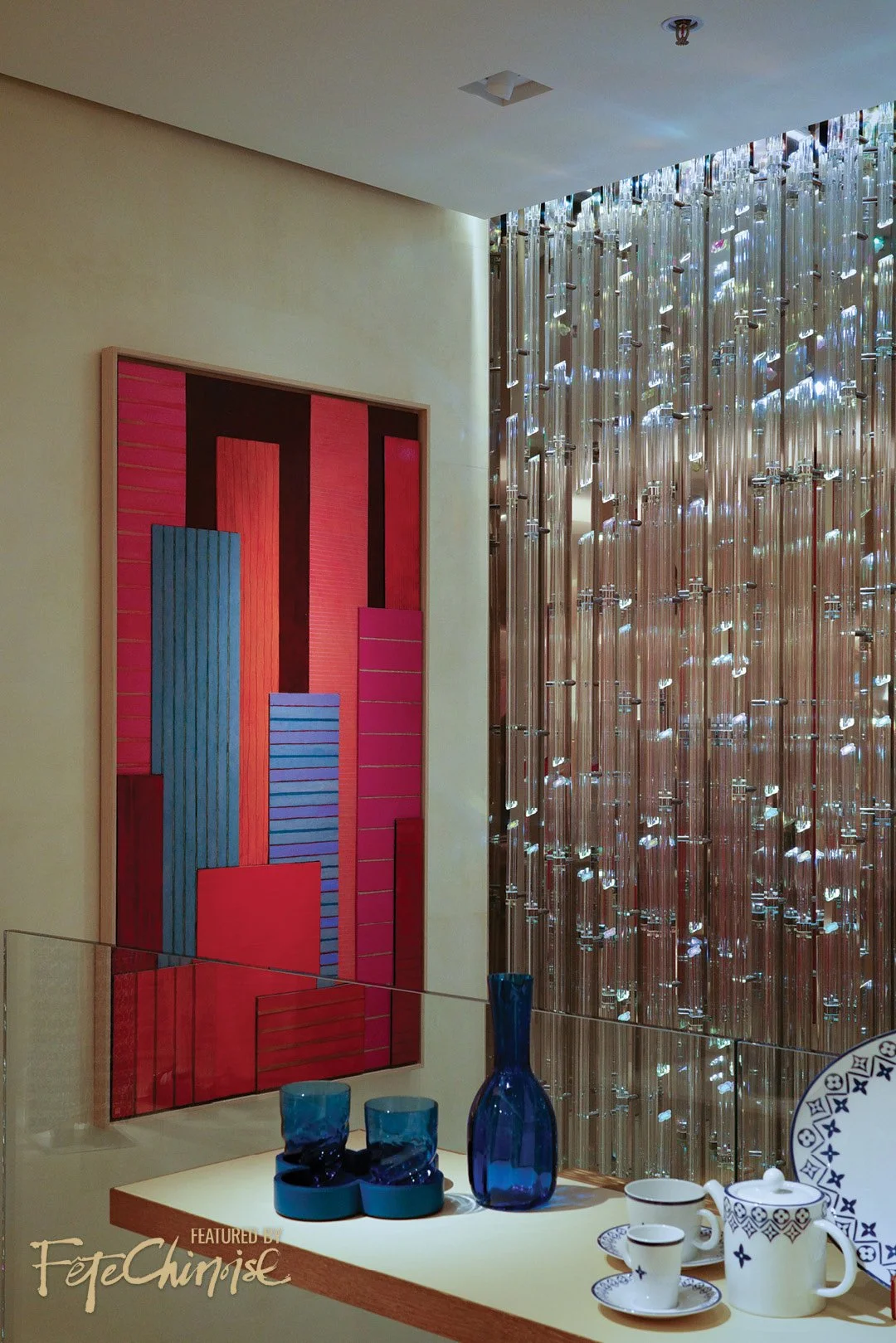
Legno 07
90 x 160 cm mixed media on wood, 2024
PHOTOGRAPHY: Francesco Lietti
His paintings now generally sell in the range of HK$20,000 to HK$80,000. For newer collectors he produces hand‑pulled screen prints in small editions of 10, usually around HK$5,000 framed. The prints let people enter the work at a smaller scale while still holding its layered city structures.
Lietti continues to move between painting, architecture and spatial design. In the studio he is testing new materials and sketching sequences of buildings and streets in flux. He has taken part in residencies with young artists in schools in Hong Kong, Singapore and the United States. Watching children work, he says, is a reminder that complex compositions can grow out of simple marks if you give them time and attention. Following his collaborations with Louis Vuitton and Cushman & Wakefield, he also continues to engage in dialogue with design studios and architectural contexts in which art can interact with space in new ways. He also collaborates with design studios and architects, placing works in spaces where their urban themes echo the buildings around them.
He has not yet been to Canada, but hopes to show his work there and see how his paintings speak to the balance between dense cities and wide landscapes. Until then, his paintings keep circling the same question: how to show the life of a city without pinning it down. His canvases build and rebuild streets, towers and skylines, layer by layer, until what is left looks and feels like a living city.
Francesco Lietti’s art, like the cities that inspire it, is alive, layered, and in constant motion—an ongoing conversation between structure and spontaneity, heritage and modernity, place and imagination.
孩子是未來
近年來,Francesco 對城市化、密度、氣候與文化變遷等議題愈加關注,畫面亦變得更加飽滿與密集,呈現都市生活的節奏與韌性,同時反映人類如何在有限空間中累積與重組。展望未來,Francesco 將繼續探索繪畫、建築與空間構造之間的邊界,嘗試新的材料與創作方式,同時積極與香港及美國等地的年輕藝術家進行更多駐地合作。
「孩子們總是以直覺進行創作,不過分追求成果。在某種程度上,這樣的創作過程正如城市本身的演變:在持續的適應、即興與集體參與中慢慢形成。」他說。「無論是城市還是藝術,要改變複雜的系統,都是由簡單的動作開始。」
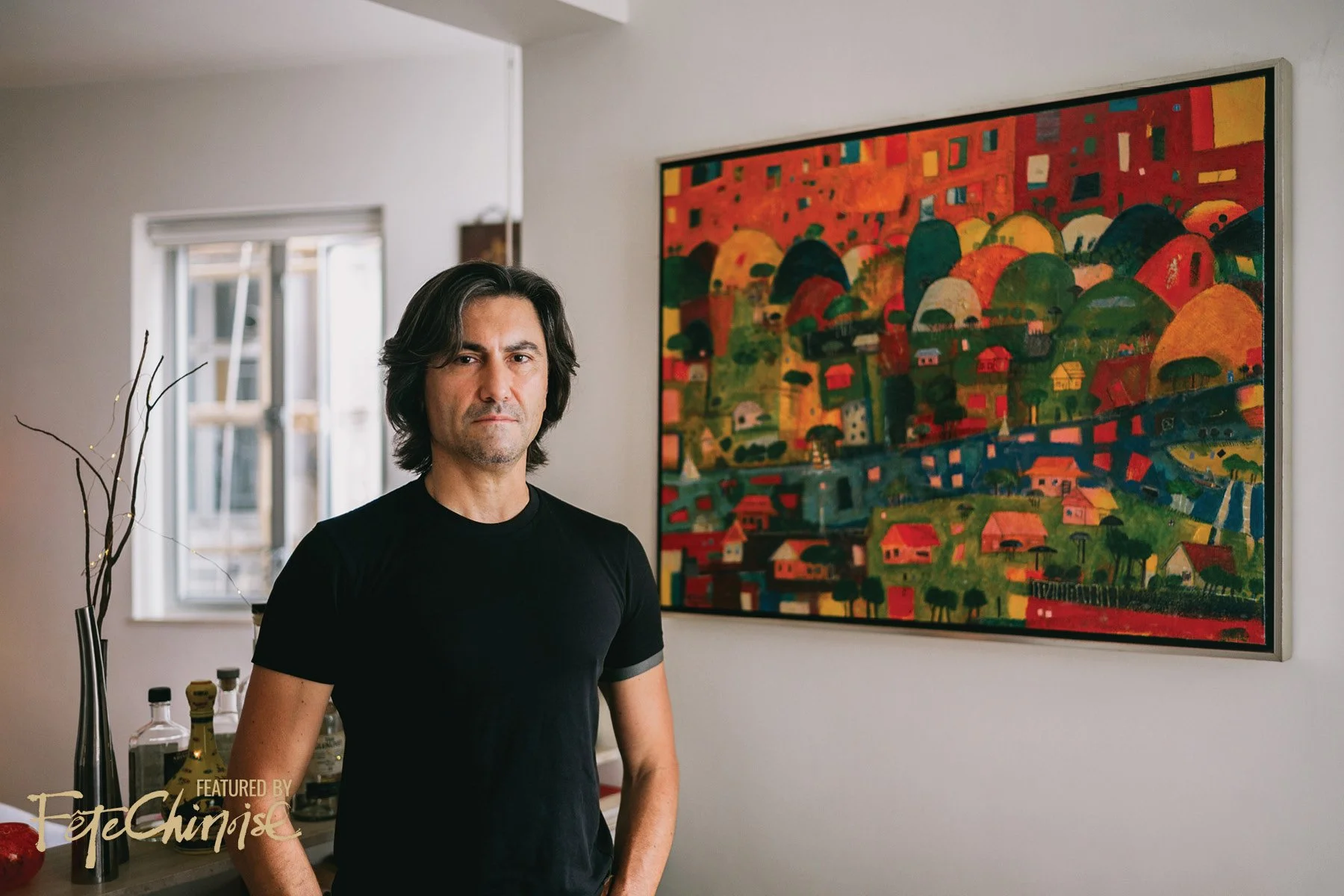
Photography: Thien-Ty Ly
More from Fête Chiniose
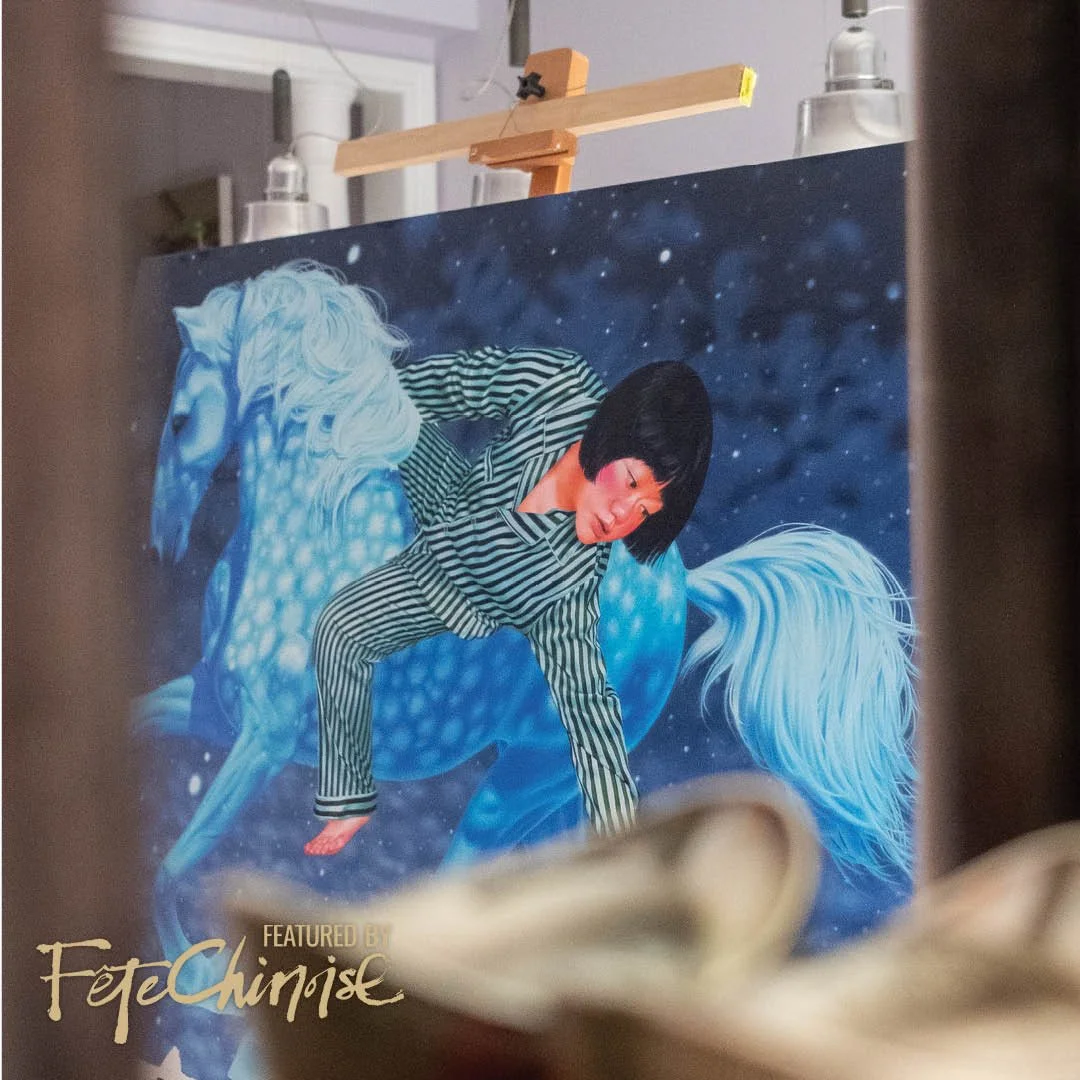
Lin describes her work as a meeting of memory, the present moment and imagination. Rooted in Chinese artistic traditions and rigorous technique, her practice has also been shaped by years abroad, carrying her beyond inherited forms into a language of her own. “Memory belongs to a fixed past, while the contemporary is constantly changing. And I like change,” she says.