Slow Bloom: Kejie Lin’s Gongbi Gardens 精耕細美
English: 英 & Chinese 中:Maggie Ho
Photography: Calvin Lee, Kejie Lin · Art Direction: Deborah Lau-Yu
Venue: Varley Art Gallery of Markham
As Featured in 2026 Fête Chinoise Design Annual

Outside the Varley Art Gallery in Unionville, Ontario, a snowstorm has turned the streets still and white. Inside, flowers and birds emerge in fine ink lines, each petal painted with the slow, precise touch of Kejie Lin’s gongbi brush. A landscape garden anchors the room, its measured calm echoing the patience that runs through her work and life.
Lin describes her work as a meeting of memory, the present moment and imagination. Rooted in Chinese artistic traditions and rigorous technique, her practice has also been shaped by years abroad, carrying her beyond inherited forms into a language of her own. “Memory belongs to a fixed past, while the contemporary is constantly changing. And I like change,” she says.
加拿大安大略省的一月,飛雪連天,上天下地都是白茫茫一片;萬錦市瓦利藝術館內正展出《林可婕:造園記》個人展覽。工筆畫家林可婕(Kejie Lin)的一系列畫作上,花鳥蟲魚栩栩如生;置於展場中央的園林景觀裝置,春意盎然,令觀眾驟然忘卻窗外的寒冬,細意感受箇中的閒情逸趣。
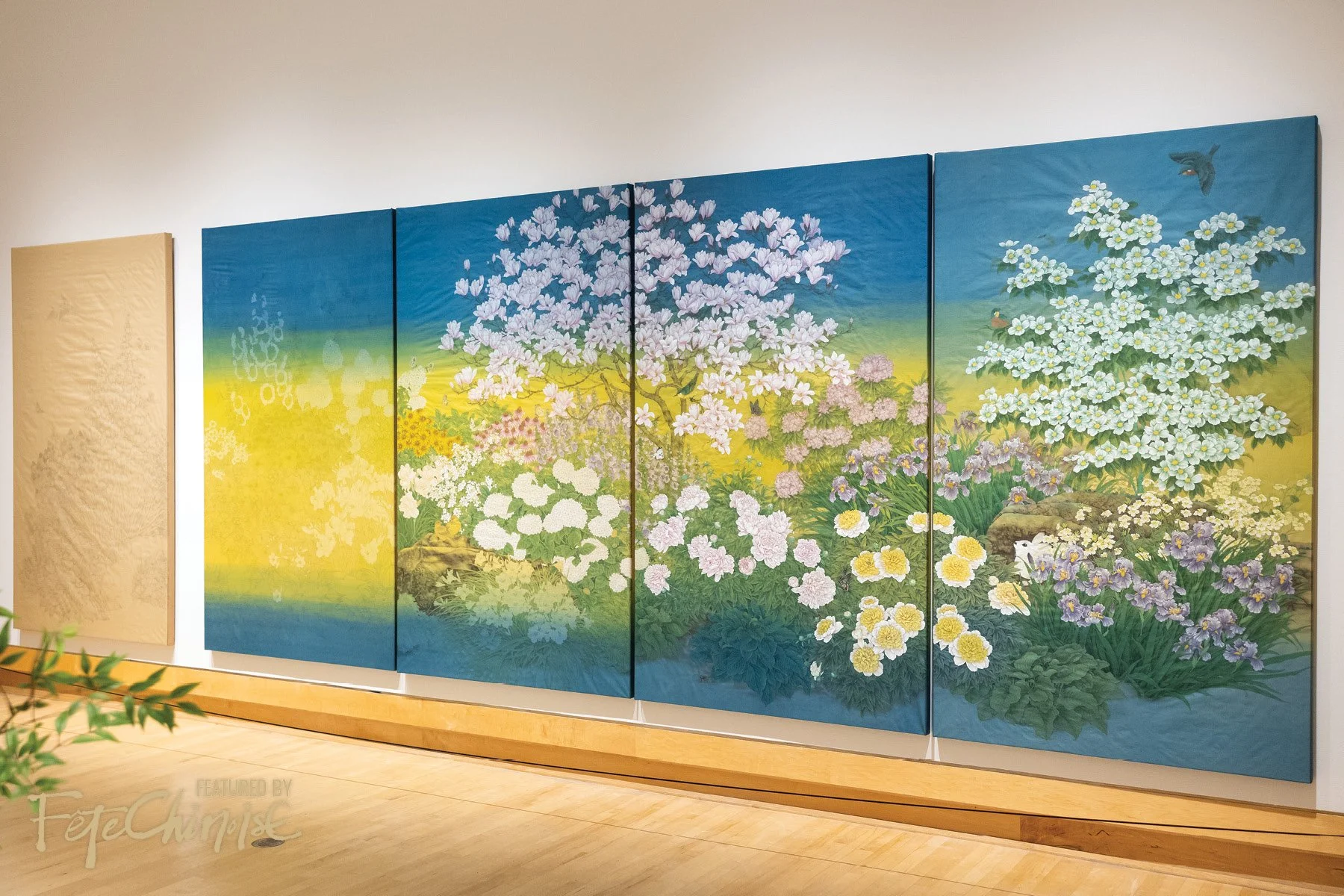
A Garden of My Own (2023). Collection of the artist Kejin Lin. PHOTOGRAPHY: Calvin Lee.
迥轉藝術路途
Kejie 出生於中國重慶,自小受父親的文化薰陶,小時候在家中書房內閱覽離騷、唐詩、宋詞等古籍文學,筆墨丹青不離手。父親一早發現她的美術天份,特意找來美術系的同僚為女兒教畫,先從寫意花鳥畫入門,十歲起接受西方素描與色彩基礎訓練,其後於師範大學美術系專修工筆技法。
Born in Chongqing, China, Lin grew up surrounded by books and art. Her father, a professor of classical Chinese literature, kept a study lined with novels, essays and brush paintings. Recognizing her talent early, he backed her practice even when money was tight, buying rice‑paper copybooks so she could draw and later introducing her to a colleague who taught Chinese painting. That encounter marked the start of her formal training.
Lin’s early exercises were free‑brush studies of flowers and fruit. At ten, she began learning Western sketching and colour techniques. At university, she studied fine art with a specialization in gongbi, the meticulous style of Chinese ink painting that would become central to her work. After graduation, she chose a more practical path. “I always wanted to be a pure art practitioner,” she says. “But in the early 1990s, that was not a sustainable way to make a living.”
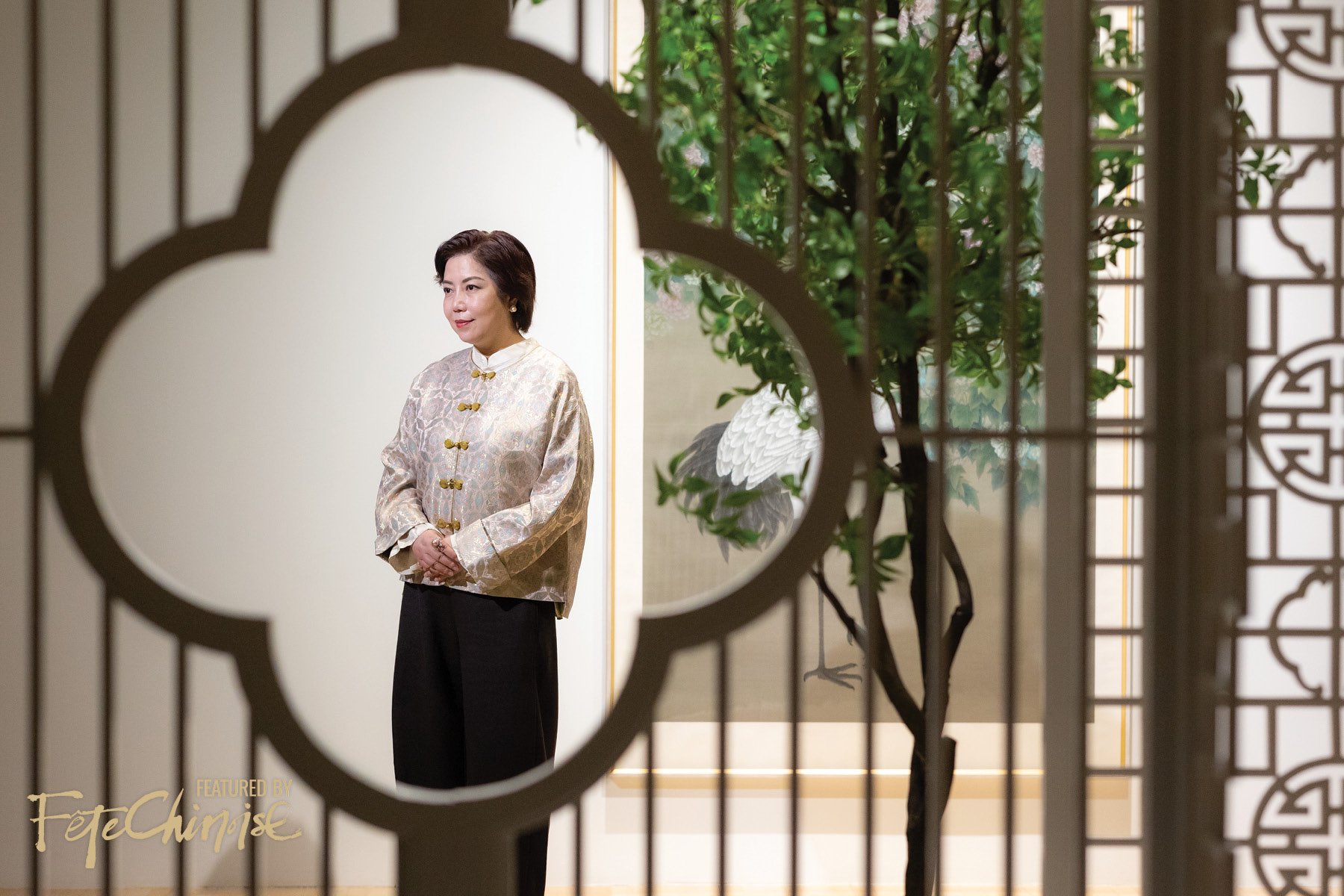
PHOTOGRAPHY: Calvin Lee.
然而,九十年代初的中國社會,現實容不下純粹追求藝術理想。畢業後 Kejie 為了生計,不得不放下對藝術的熱愛。她先從事室內設計,進而修讀建築設計,及後以景觀規劃設計為專業,並加入廣州、香港的建築景觀設計公司,參與過多個大型城市公共空間改造規劃、市政景觀工程、城市公園和各類住宅社區景觀項目的設計與建設。事業發展順利,可是頻繁出差與大型工程的高壓節奏,讓她逐漸遠離創作。「很多時候,我其實已經不在做專業,而是在處理專案、管理與各種關係。那種風風火火的生活,我並不感到很享受。」
She went into interior design, then continued into architectural design and finally into landscape architecture, working for firms in Guangdong and Hong Kong. The projects were demanding and the hours long, and over time art was pushed to the margins. Years of deadlines, travel and pressure left little space for her own work. “Those days were always hurried and hectic,” she says. “I wanted my life to slow down, to enjoy and create things that weren’t part of fast consumption.” She had carried a private promise for years: once she was financially stable, she would return to art without compromise.
Immigrating to Canada in 2017 changed the rhythm of her life and work. It gave her the chance to step back from client projects and think seriously about that promise. When the time came, Lin wound down her business and set out to rebuild her foundation. She travelled to Nanjing to retrain in gongbi, first attending a workshop at the Academy of Arts and Design at Tsinghua University, then studying with contemporary gongbi painter Yu Hui (喻慧). From 2015 to 2017, she immersed herself in both technical refinement and critical discussion.
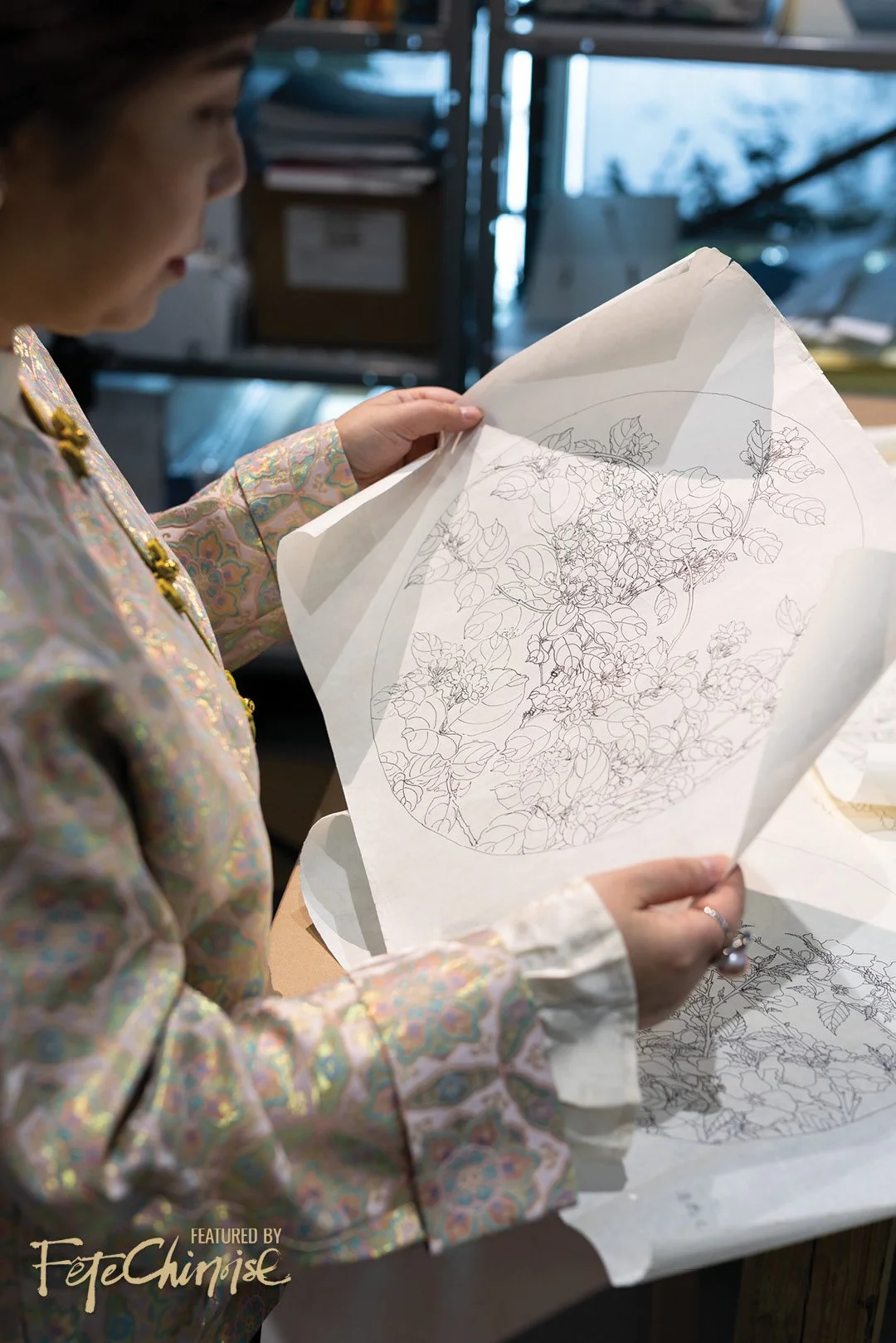
PHOTOGRAPHY: Calvin Lee.
PHOTOGRAPHY: Calvin Lee.
2015年她的加拿大移民申請獲批後,令她不得不重新思考人生。新的地方意味著新的開始,她亦寄望藉此有所改變,重新調整生活。「我想讓自己慢下來,去做一些不是快銷的東西。」她解釋說:「我一直有一個初心,等自己有了足夠經濟能力之後,我會選擇回來專職做藝術創作。」
就這樣,Kejie 一邊逐步結束自己在中國的景觀設計事業,一邊為重拾畫筆、回爐再造作準備。「當時我有想過用什麼方式、媒介來表現我想表達的東西,後來我發現我還是喜歡工筆畫。它的技法要求作者在繪製過程中,長時間保持沉靜的心態,並需極富耐心。其實畫什麼東西都需要細心與耐心,工筆畫的創作過程尤其漫長,特别是畫一個大型作品的時候,你可能一年兩年都看不到成果,那中間的過程是非常痛苦的。」她坦言年輕時未能真正理解「慢」的價值,當經歷過多年遠離藝術、為現實奔波疲憊的生活後,才明白能夠心無旁騖的專注創作、把時間用來仔細思考和琢磨,是多麼難得。
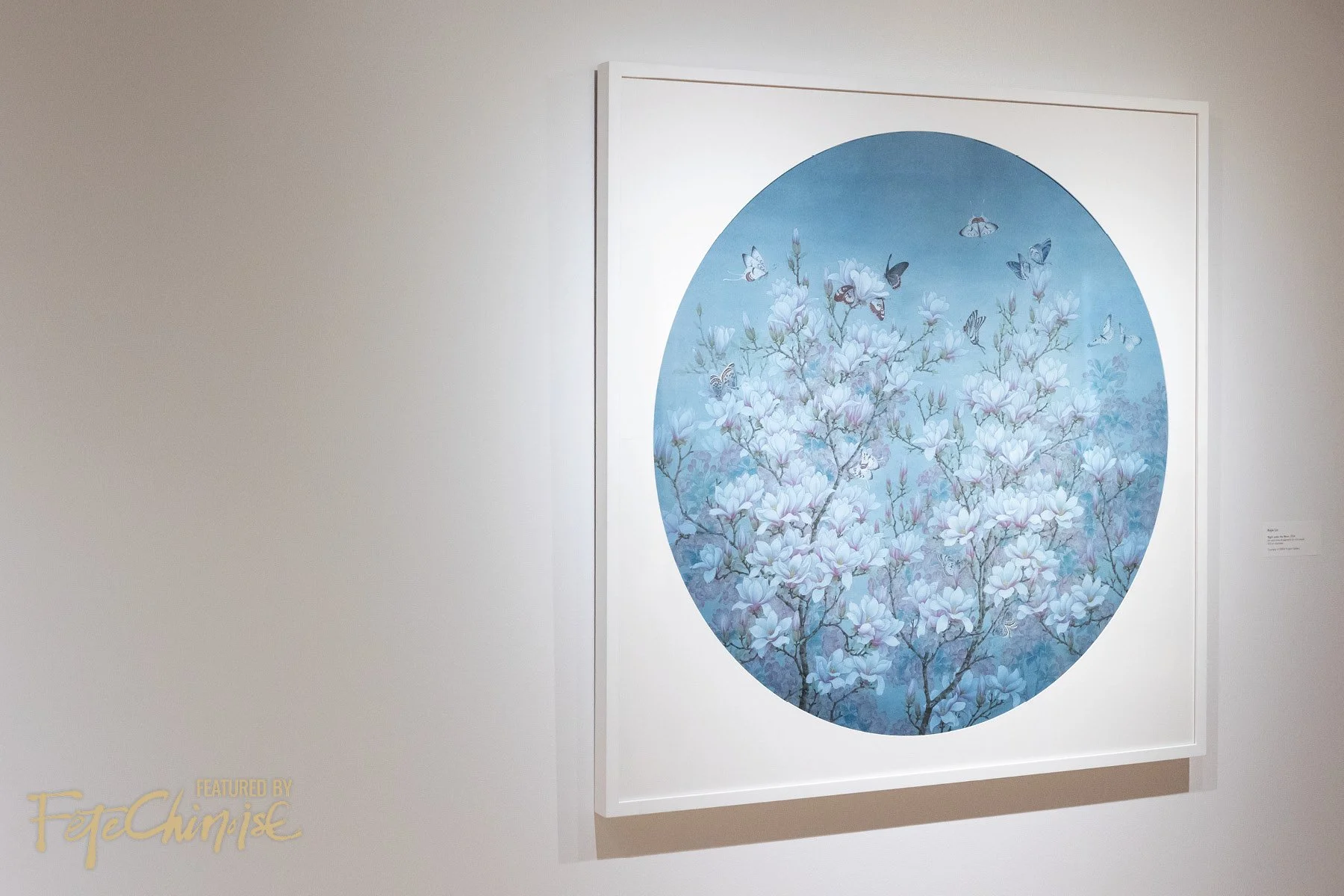
Night under the Moon (2022). Courtesy of SSEW Project Gallery. Photography: Calvin Lee.
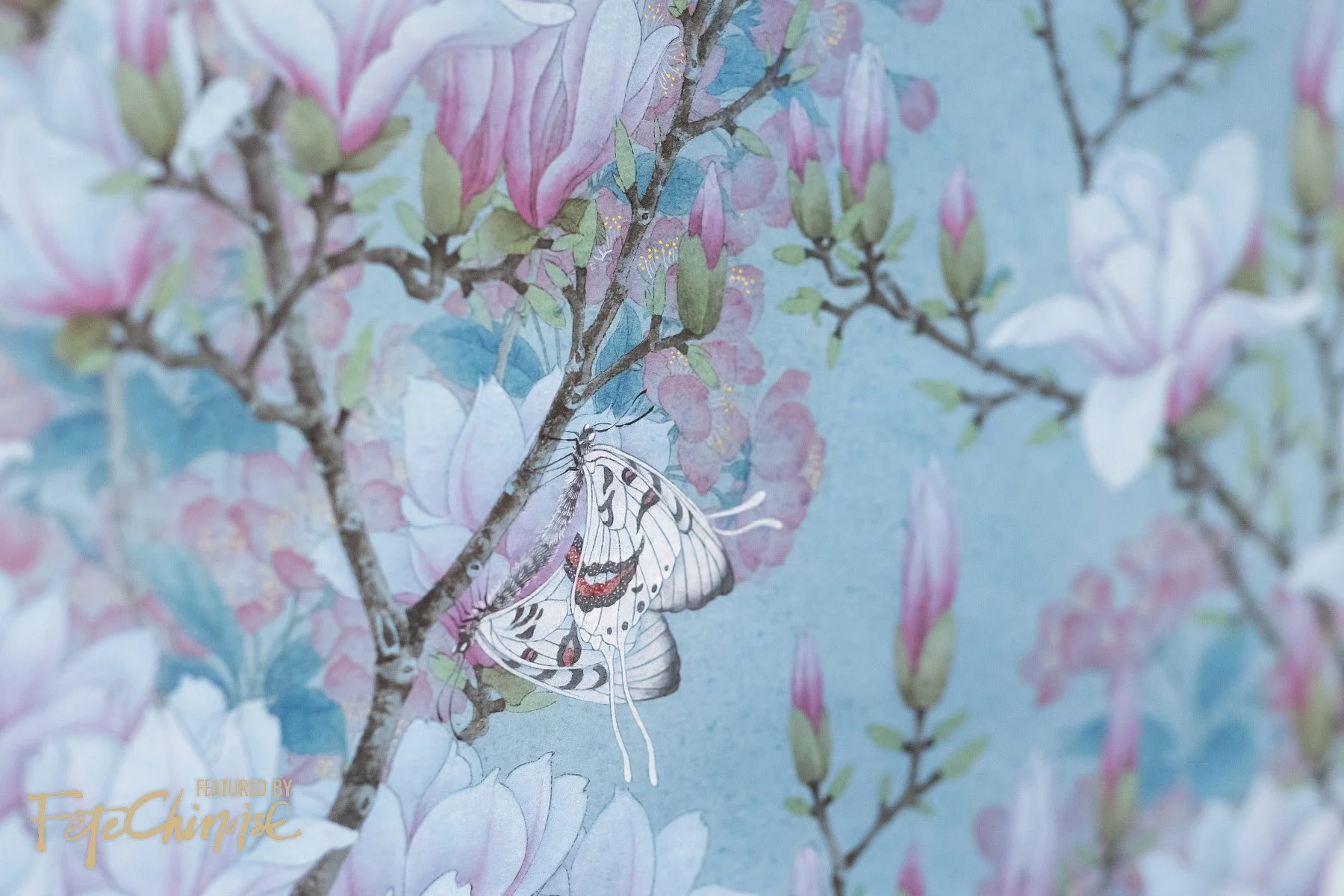
Close-up view of Night under the Moon (2022). Courtesy of SSEW Project Gallery. Photography: Calvin Lee.
“Creation comes from accumulation. Knowledge, aesthetic sensibility, life experience. When that accumulation reaches a certain point, technique becomes a way to support what you want to express.”
“Creation comes from accumulation,” she says. “Knowledge, aesthetic sensibility, life experience. When that accumulation reaches a certain point, technique becomes a way to support what you want to express.”
In 2017, Lin completed Tropical Garden I – Rainforest Dawn, which received the Newcomer Prize, the top award at the Jiangsu Provincial Fine Art Exhibition. The following year, Blooming Blaze won the top prize at the National Gongbi Painting Biennial in Xiamen. In 2023, she held her first solo exhibition, The Mind’s Garden, at Newcastle Contemporary Art in the U.K. In 2024, Tropical Garden II – Daybreak received first prize at the 16th Adachi Contemporary Ukiyo‑e Exhibition in Japan. In 2025, her solo exhibition A Garden of My Own opened at the Varley Art Gallery, and Tropical Garden III – Midnight was acquired by the Royal Ontario Museum.
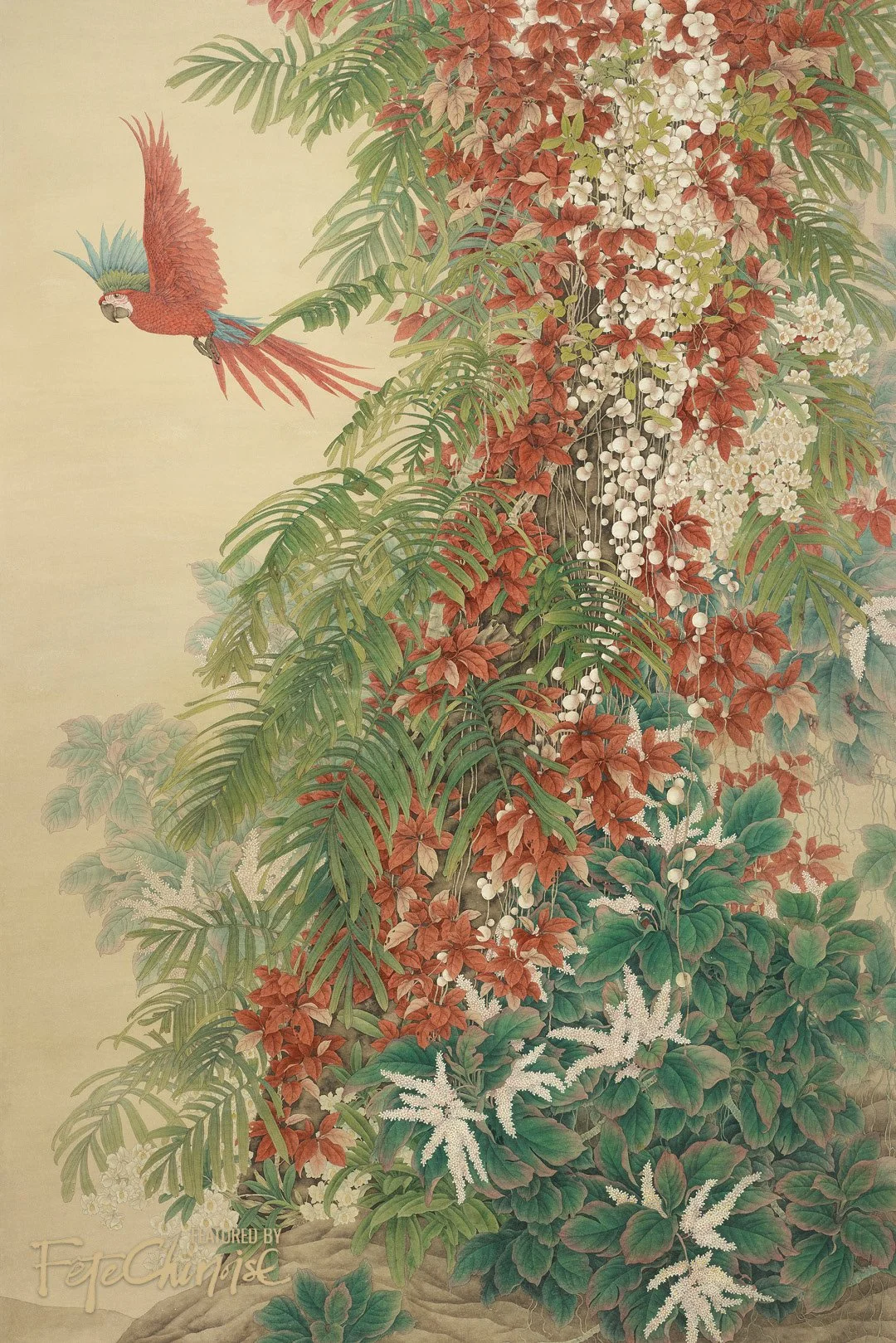
Tropical Garden 2 (2021). Collection of the artist Kejin Lin. PHOTOGRAPHY: Kejie Lin.
決定回歸藝術創作之後,Kejie 先於清華大學美術學院參加李大成工筆畫高級研修班,後再到南京,師從當代著名工筆畫家喻慧至今。相較於年青時的學院訓練,這次「回爐再造」不僅是學習新技法和熟悉新材料,而是更深入探究怎樣以「工筆畫」融入當代美術語境,尋找創作方向,並確立個人藝術風格。
2017 年,Kejie 完成首個正式作品《熱帶花園I-雨林晨光》,甫一亮相即獲江蘇省美術作品展最高獎(新人獎);翌年,作品《繁花盛焰》在廈門全國工筆畫雙年展中獲得最高獎;2023年,於英國 Newcastle Contemporary Art 藝術中心舉辦首次個人展覽《The Mind’s Garden》;2024年作品《熱帶花園II-晨曦》獲得日本第十六屆足立當代浮世繪大展一等大獎 ; 2025年,在萬錦市瓦利美術館舉辦個展《造園記 A Garden of My Own》;同時期,作品《熱帶花園III-子夜》被安省皇家博物館收藏。成功看似來得迅速,實則奠基於長年的觀察與紀律。多年園境設計工作,使她對植物形態與自然結構格外敏銳;長年的攝影習慣,則鍛鍊了她對光影與構圖的觸覺。如今她每日在工作室至少投入八小時專注創作。「我早已習慣長時間工作,」她說,「不同的是,現在所有的精力,都用在我真正熱愛的事情上。」
The apparent speed of that rise rests on years of observation and discipline. Landscape work sharpened her eye for plant forms and structure, while years of photography shaped her sense of light, shadow and composition. Today, she spends at least eight hours a day at the studio. “Long hours are familiar to me,” she says. “The difference now is that all my energy goes into what I truly love.”
Her practice moves constantly between technique and idea. “On one hand, it’s about learning skills and methods,” she says. “On the other, it’s about asking how traditional gongbi can speak to the present. If a work only repeats historical subjects, it risks losing relevance.”
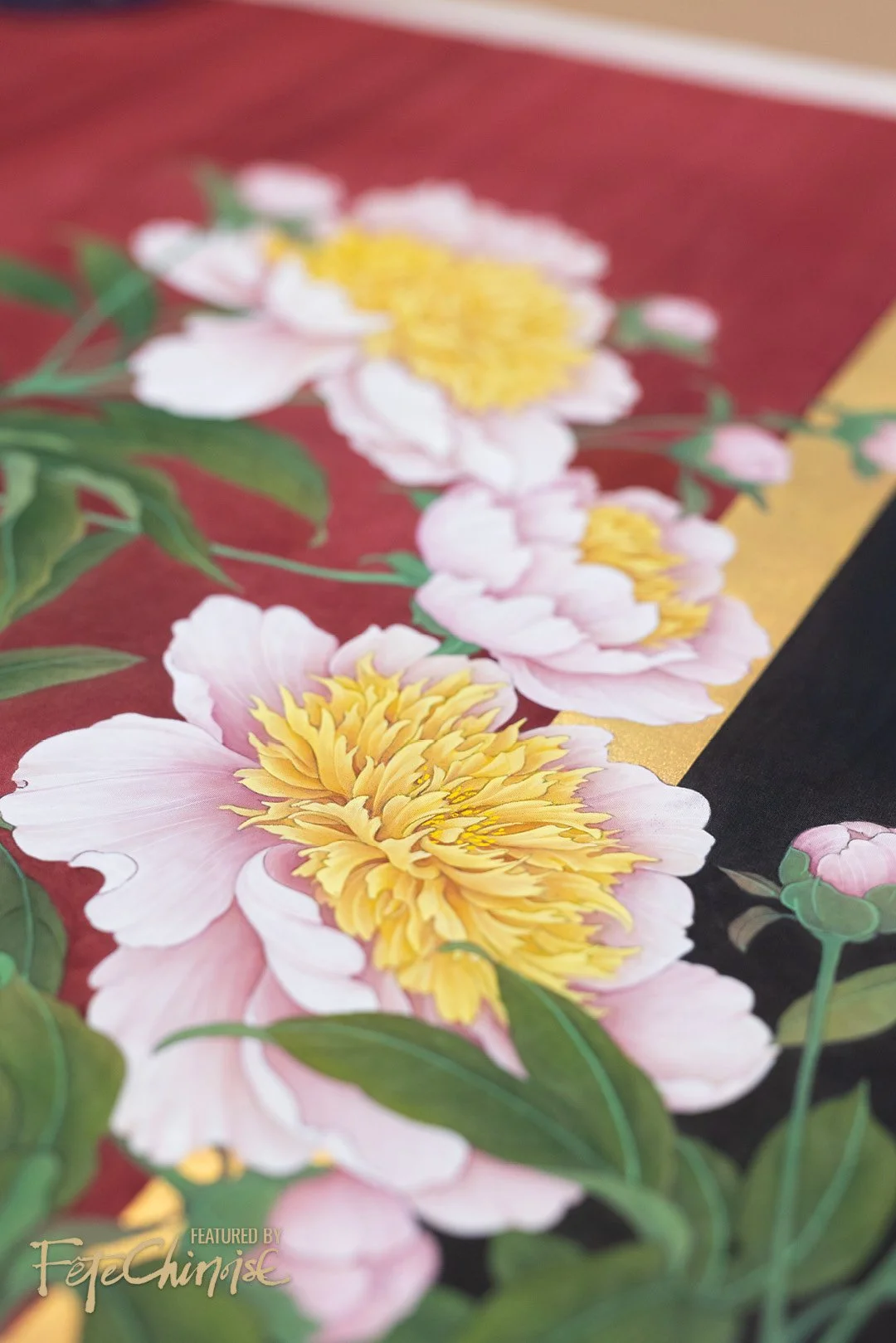
Colour is one of the ways she advances that line of questioning. In works such as Red Mandragora (2022) and Blue Hydrangea (2022), she sets her subjects against fields of solid black, an uncommon choice in traditional Chinese painting. She treats plants almost as figures, placing them at the centre of the frame. The black ground drops away, so the reds, greens and blues hit the eye with more force.
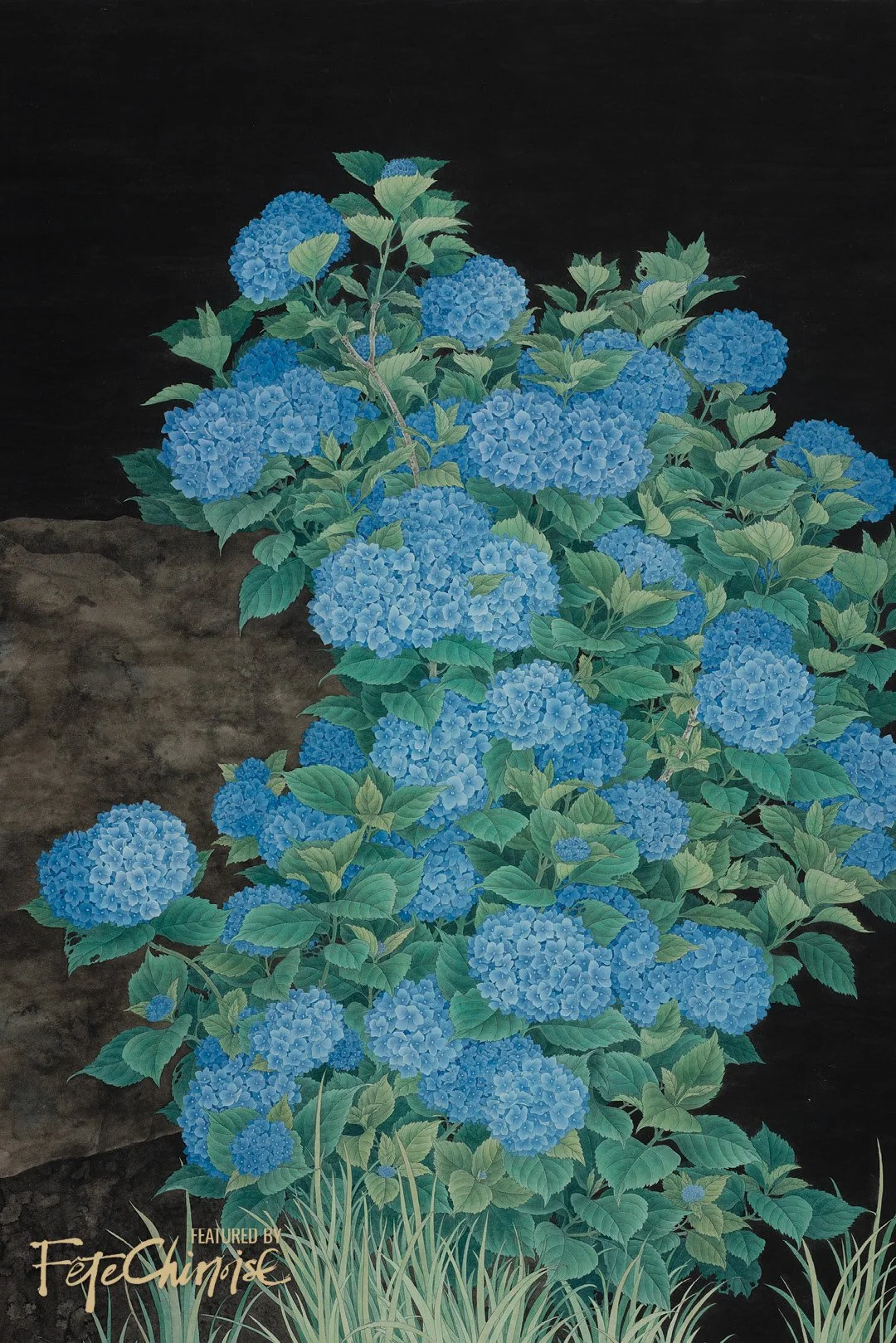
Blue Hydrangea (2022). Courtesy of SSEW Project Gallery. PHOTOGRAPHY: Kejie Lin.
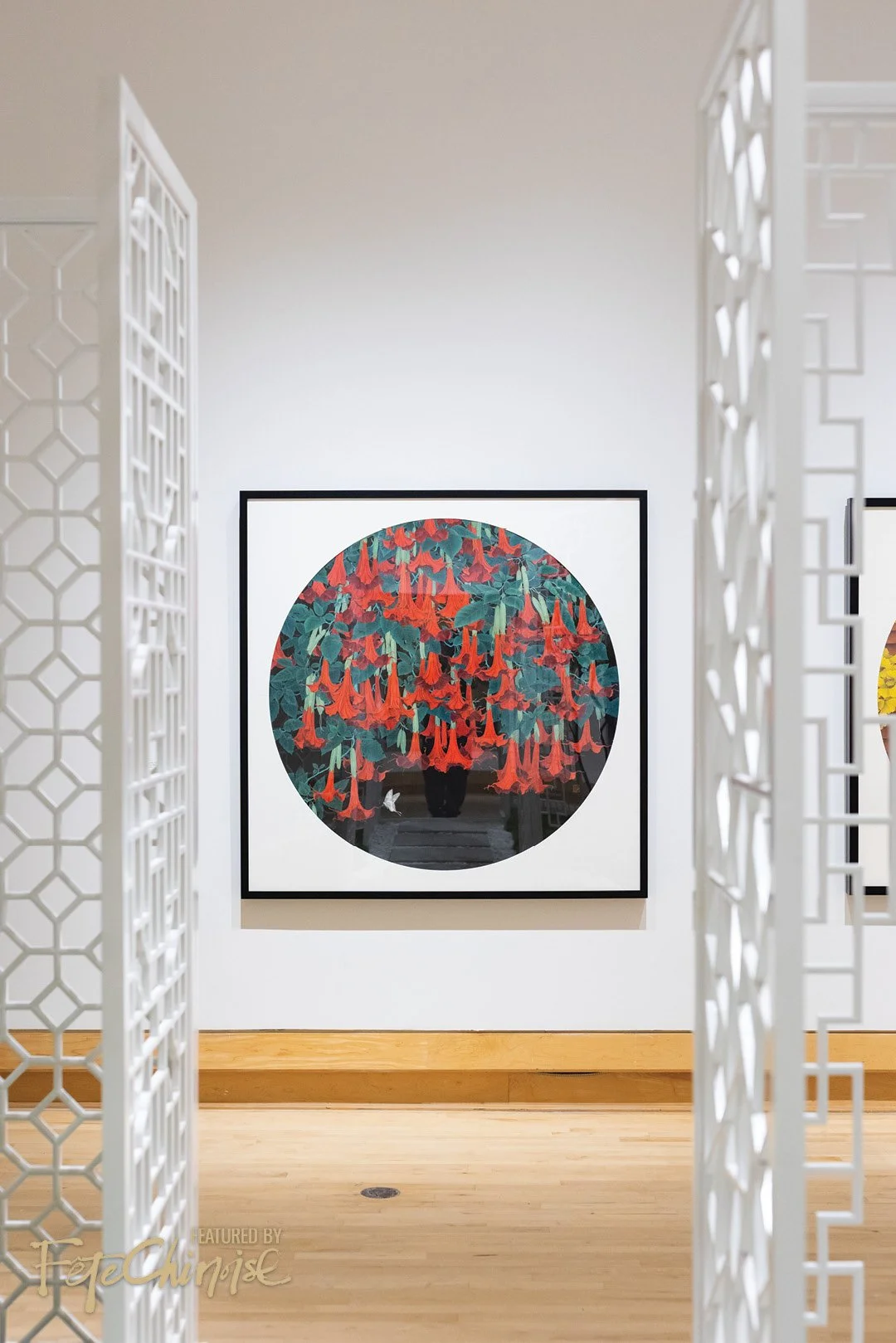
Red Mandragora on view at A Garden of My Own. Photography: Calvin Lee.
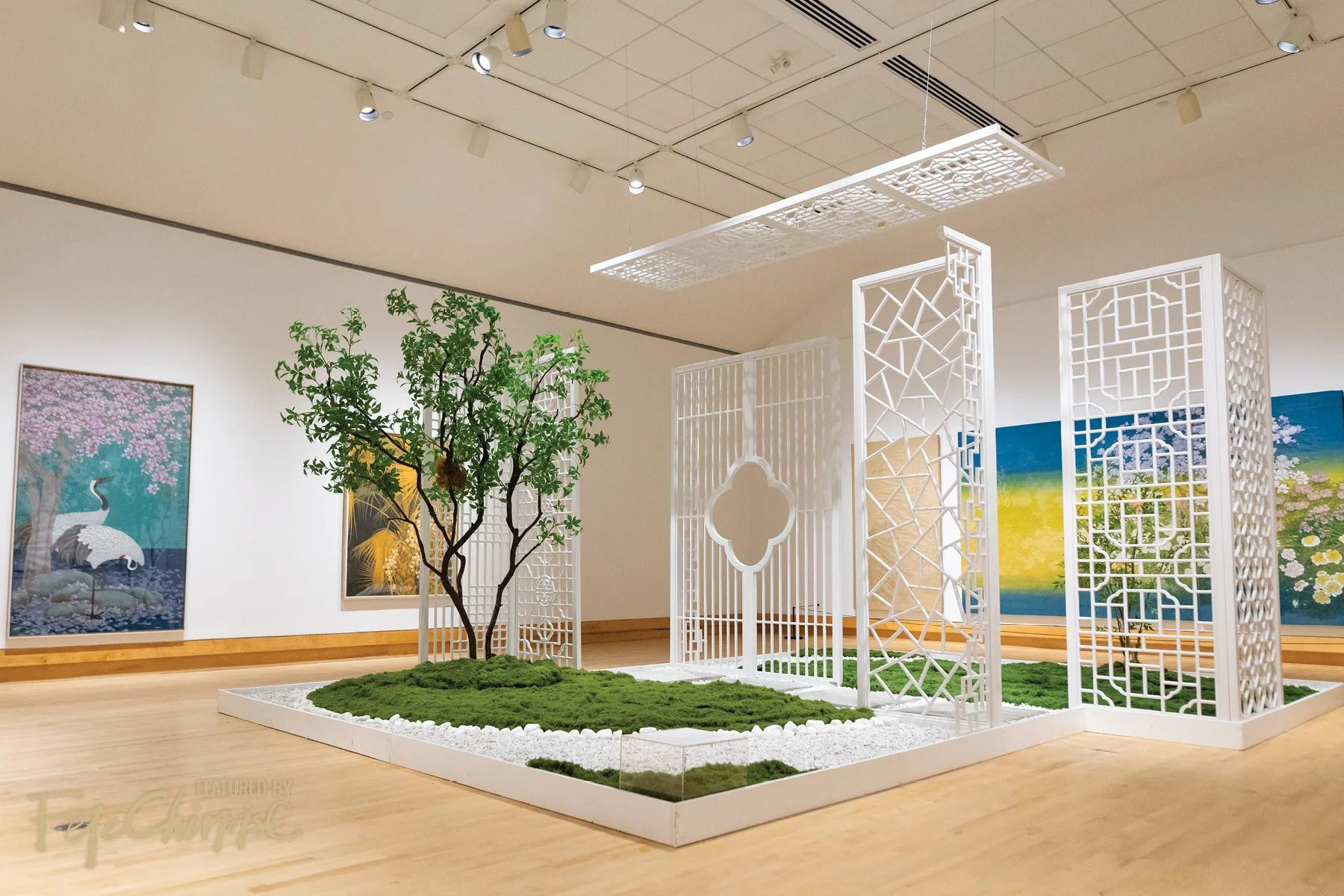
Installation view of A Garden of My Own. Photography: Calvin Lee.
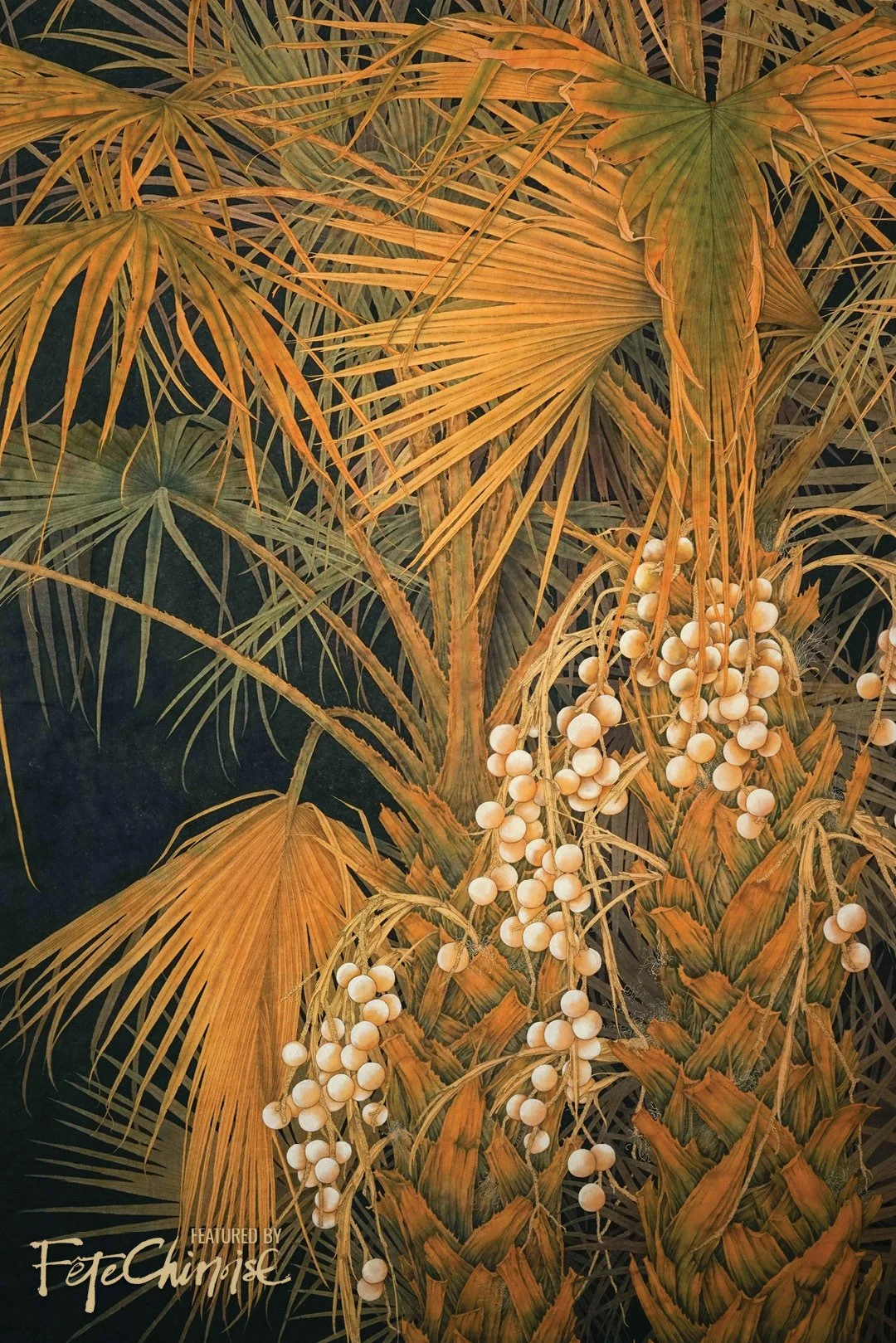
The Light of Setting Sun (2019). Courtesy of SSEW Project Gallery. PHOTOGRAPHY: Kejie Lin.
傳承與創新
Kejie 的作品除了表現出傳統工筆技法的精湛,更講究創新,與時並進。「我覺得作品應該具備一定的時代性,不然我一味畫那些延習傳統的東西,並沒有什麼意義。不管是表現形式還是創作主題思想,我覺得應該與時代相結合,展現我們當下的生活或思想。」
她在用色與構圖上的表現尤為鮮明而突出。《鶴庭 · 春》(2024)一作中,黑白對比鮮明的丹頂鶴靜立於粉紅盛放的玉蘭樹下,造型借鑑自清代古畫,玉蘭樹則取自 Kejie 家門前的實景。石綠與孔雀藍交織成背景,整體配色清雋、生氣活現。而在《紅色曼陀羅》(2022)與《藍色繡球》(2022)兩幅作品中,植物昂然佇立於全黑背景之前。她解釋道:「黑色是一種很厚重的顏色。西方的古典油畫,尤其是那種宗教題材或文藝復興時期的古典油畫,背景都是深色的,用以突出莊嚴與恒久的氛圍。黑色也是最複雜的顏色,每個人都可以透過黑色想像更豐富、無法言說的東西。我眼中的花和植物,時常帶有某種神聖氣質,置於全黑背景之中,於複雜中突顯純粹,是我最喜歡的表達方式。」
“Black is a very heavy colour,” she says. “A dark background pulls your attention straight to whatever sits in front of it.”
In Red Mandragora, she pushes that contrast further by changing the flower’s colour itself. “Mandragora is a very beautiful plant,” Lin says. “Its flowers bloom like trumpets, but in reality they are not red.”
She painted the work over the Christmas season, drawing on festive reds and greens. The flower appears dressed in a deep, velvety red, lush and formal.
Beneath that surface is a meditation on perception. Mandragora is poisonous. Lin invokes a Buddhist teaching that all forms are illusory. “You cannot deny its existence just because it is poisonous, or deny the good and beautiful side of it,” she says.
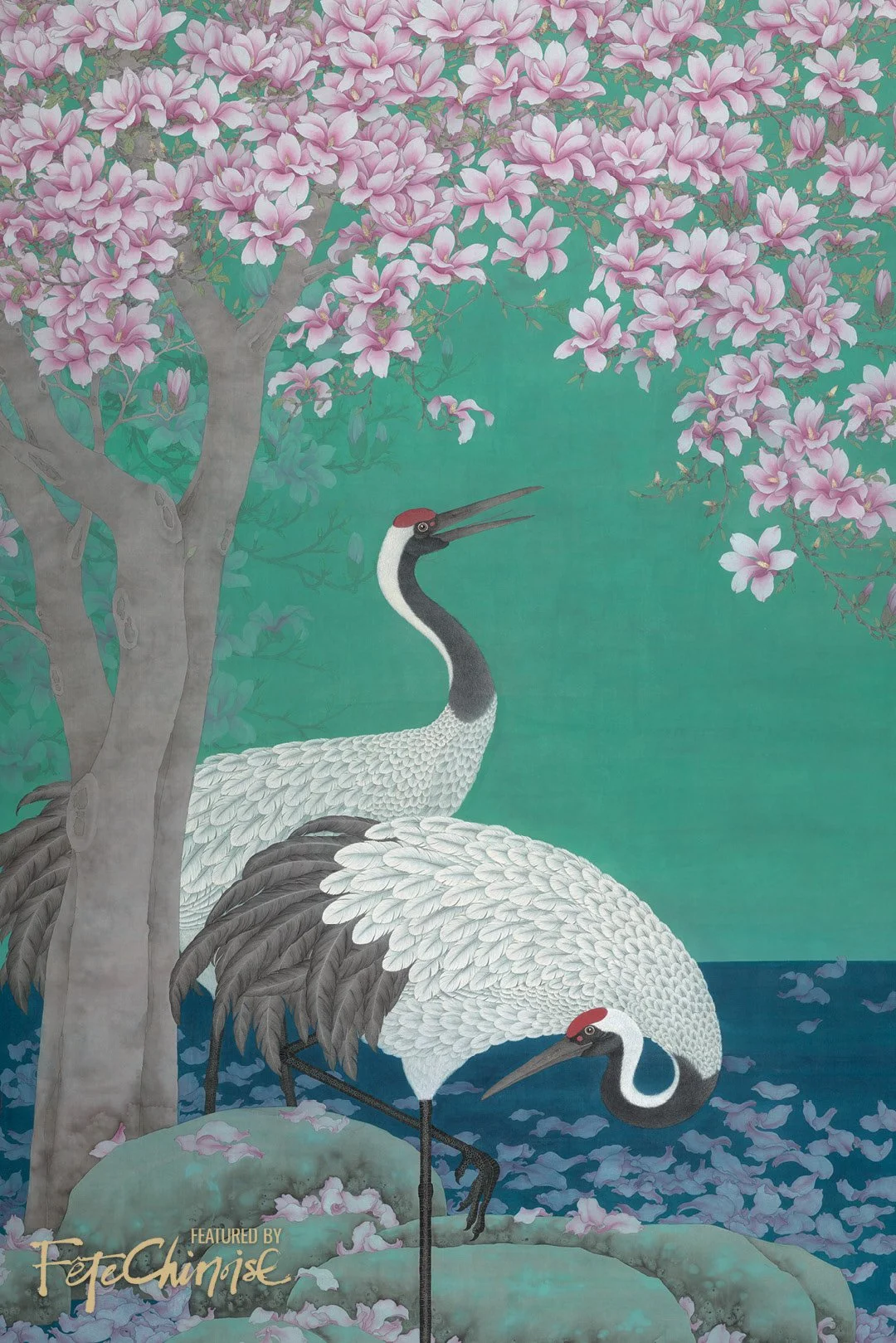
Crane Courtyard · Spring (2024). Collection of the artist Kejin Lin. PHOTOGRAPHY: Kejie Lin.
《紅色曼陀羅》同時是一件關於想像與隱喻的作品。曼陀羅花原本沒有鮮紅的品種,作品中那抹近乎天鵝絨質感的紅,來自她在作畫時正值聖誕佳節的情感聯想。然而,華美之下暗藏警醒:曼陀羅是有毒的。她借用佛教「凡所有相,皆是虛妄」的觀念,提醒觀者,美與惡並非對立,要時刻保持清醒的頭腦,對待生活。
記憶與當下
Kejie 的創作深植於中國文化的根源,同時映照她作為加籍華人的雙重身份。這種跨越地域與文化的視角,使她以一種既親近又疏離的方式重新審視自然世界。於她而言,筆下花鳥剪影不只是風景,它們是記憶經過轉譯後的故土,也是移植而來的身份得以安放、生長之所。
《熱帶花園》系列源自她長年於中國南方生活與工作的經驗。街道旁隨處可見的龜背芋、蘭花、黃花夾竹桃,這些生長於亞熱帶地區的植物,早已深藏於她的感官記憶之中,成為畫面裡反覆浮現的形象。
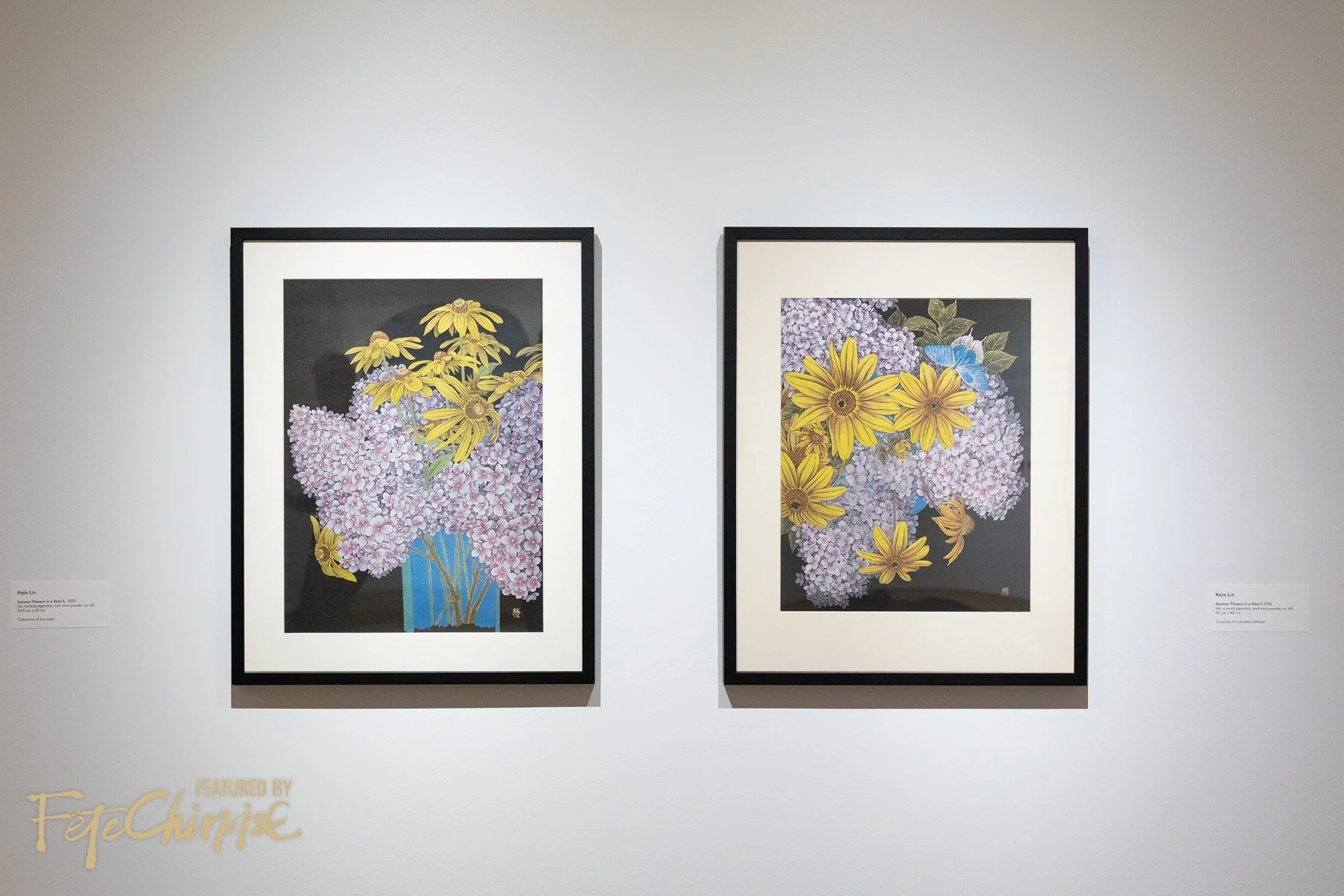
Left: Summer Flowers in a Vase II (2025) Collection of the artist Kejie Lin Right: Summer Flowers in a Vase I (2024) Courtesy of a private collector, PHOTOGRAPHY: Calvin Lee
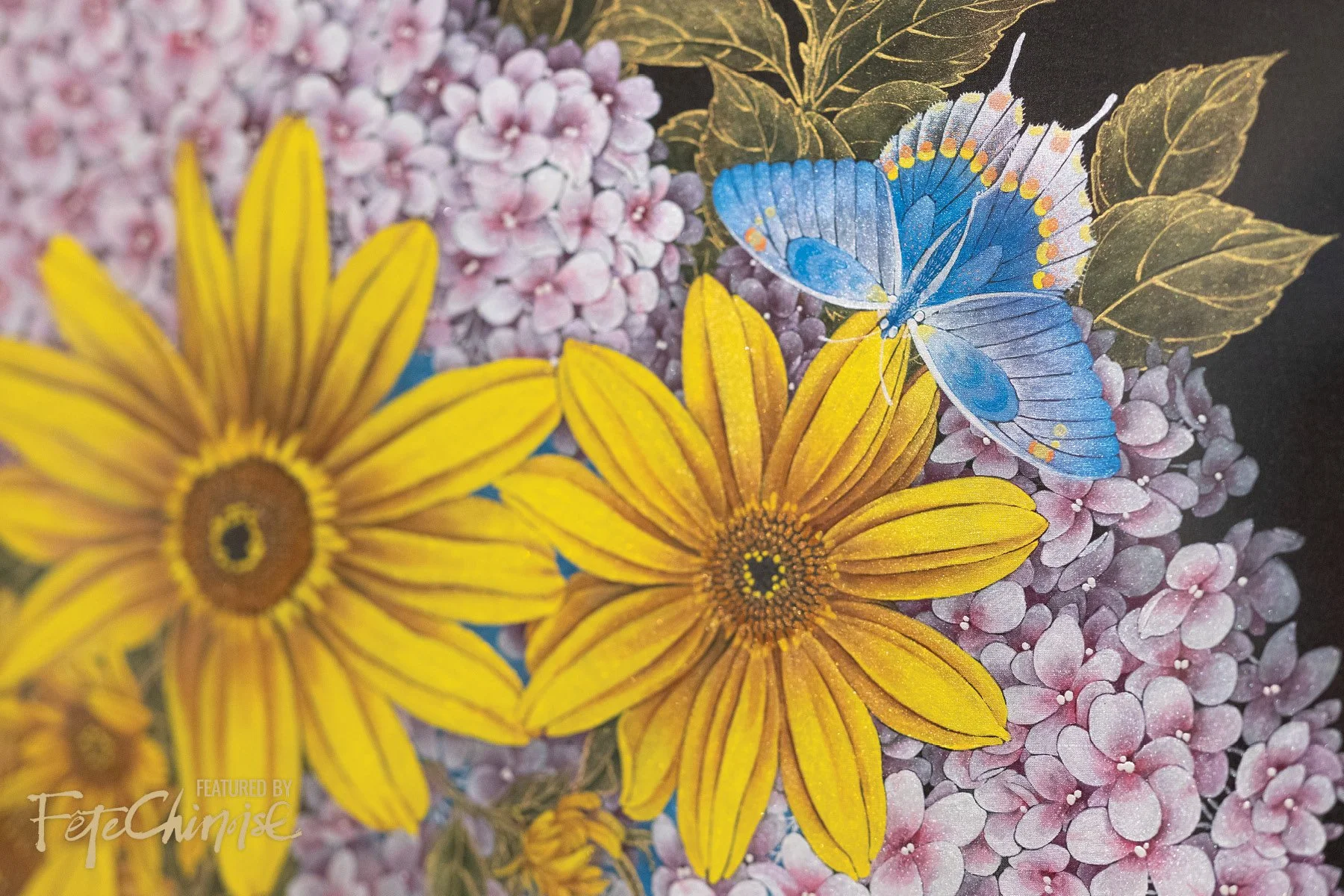
Close-up view of Summer Flowers in a Vase I (2024) Courtesy of a private collector, PHOTOGRAPHY: Calvin Lee
Chinese painting has long relied on metaphor; Lin adopts some of those conventions and develops her own. The mix reflects both her cultural roots and her personal history, but also the cities and climates she has lived in. In the Tropical Garden series, she draws on memories of living in southern China, especially Xiamen, where flame trees line streets in dense red canopies each summer. Monstera, orchids and yellow oleander were everyday plants there, lining roads and courtyards, even though oleander is highly poisonous. After so many years, those images sit deep in her mind.
“One of the paintings I am working on now depicts a street in Xiamen called Hubin North Road,” she says. “Along the entire street are flame trees with large clusters of bright red flowers. When summer comes and they bloom, the treetops become a sea of red – dense, vibrant, intense. That has become one of my strongest impressions of the city.” The painting shows a full flame tree seen from an overpass, with high‑rise buildings rising behind it. “It is my memory of my home in the past.”
而另一件她正埋首創作的作品,描繪的是廈門的湖濱北路。盛夏時節,道路兩旁的火焰木盛放,整片樹冠化作濃烈而奔放的紅色。畫面中,火焰木自天橋視角展開,背後則是高樓林立的城市輪廓。那是她多年生活與工作的城市,也是她對「家」的深層記憶。
「記憶是固定的,當下則有很多變數;我個人是喜歡多變的。」
這樣的創作取向,與《造園記》(2023-2026)形成微妙對照。作品取材自她現今在加拿大列治文山的後院花圃。繁茂的草叢之間,一隻目光如炬的兔子隱藏其中,皮毛細緻得近乎可觸;鳶尾花層層疊疊,豐滿而張揚,與中國傳統審美中所強調的飄逸修長截然不同,卻正是水土轉換之後,自然展現的另一種豐饒狀態。五聯畫的組合方式,涵蓋了加拿大五至九月植物的生長週期,從發芽到枯萎,完整展現季節循環。她不僅僅是在畫一個花園的場景,更在畫流動的時間。
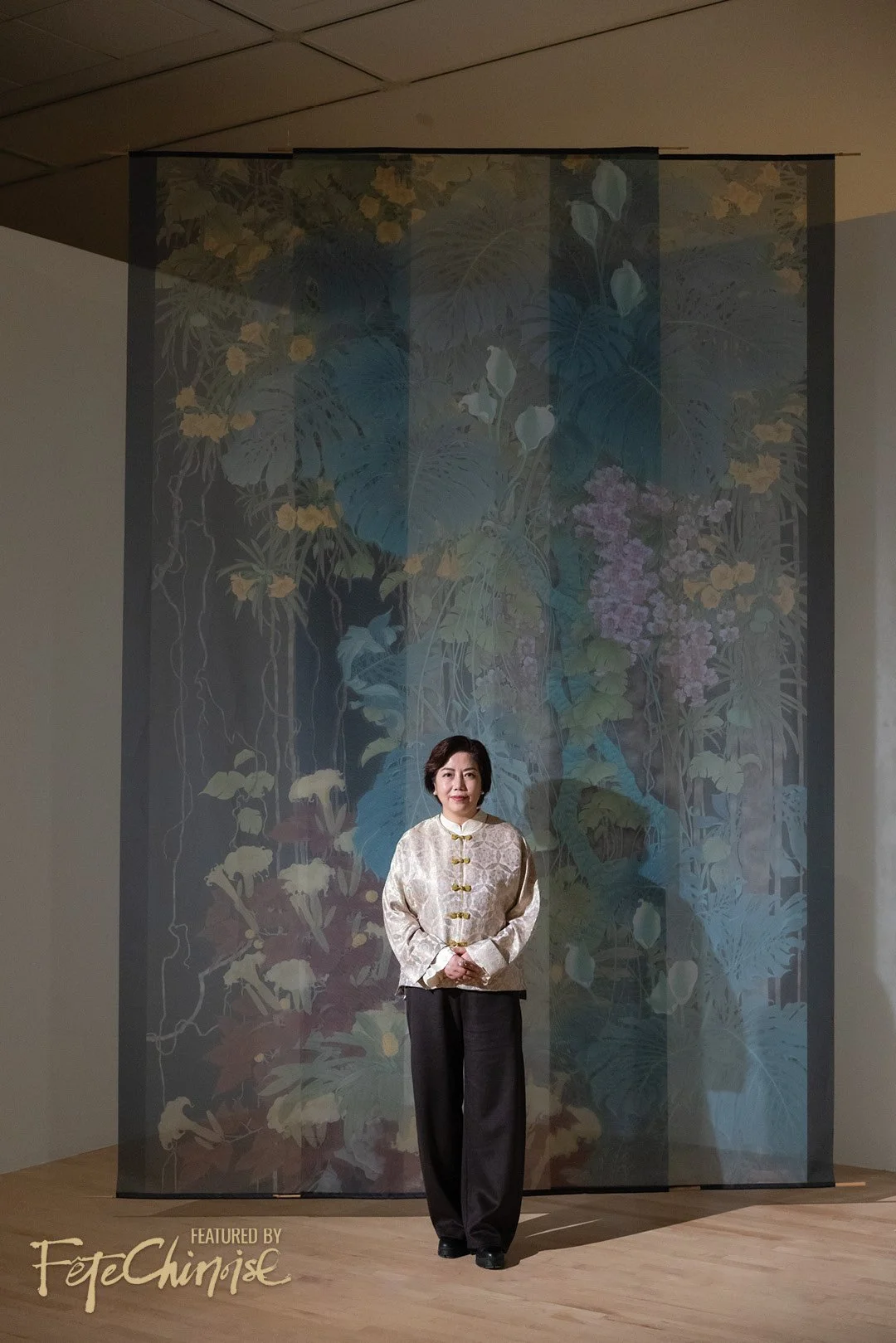
Tropical Garden 3 - Midnight (2023). Collection of the artist Kejin Lin. Acquired by the Royal Ontario Museum. PHOTOGRAPHY: Calvin Lee.
That sensibility finds a quieter counterpoint in A Garden of My Own (2026), inspired by her backyard in Richmond Hill, Ont. Dense grass fills the frame. A rabbit appears almost by chance, alert, its fur rendered with near‑tactile care. Irises bloom in unison, full and unapologetic.
“My teacher often asks why the things I paint are so big, even clumsy,” Lin says. “I tell her, that’s simply how they grow.”
Where traditional Chinese aesthetics often favour slender restraint, she lets plants take up space. What some might call excess, she sees as dignity.
“People say they look chubby,” she says. “I don’t. I see them as graceful, lavish. That’s also beauty.”
Kejie 的老師曾半開玩笑地問,為何她筆下的事物總顯得又大又「笨拙」。她的回答簡單而直接:「它們就是這樣生長,我喜歡它們原本的樣子。」
沒有固定的美
對 Kejie 而言,美從來不是固定的形式,她拒絕將事物強行納入既有的審美框架,尊重萬物自然不修飾的生長姿態。透過不同物料、形式與展示方式,她不斷實驗並延伸繪畫與空間、觀眾之間的關係。繪畫不再只是停留於紙與絹之上,而是成為與當下世界對話的方式。
她的作品中始終流動著一種冷靜而溫和的情感。那是一種對世界的清醒觀看:沒有純然的善與惡,也沒有單一的美。「藝術本身就是無國界,只要東西能夠真誠地打動人,能夠讓人覺得共情,就是好作品。」
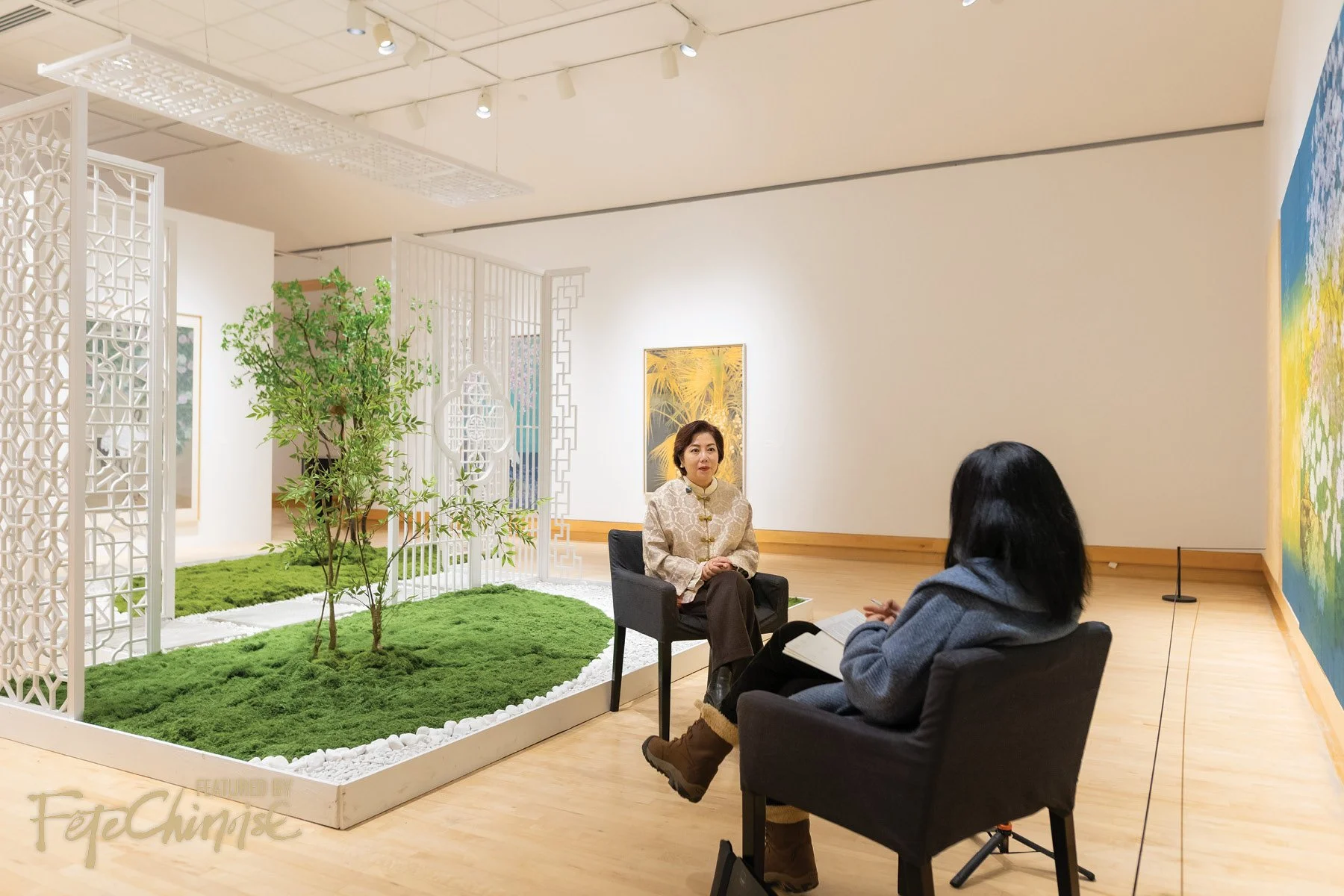
PHOTOGRAPHY: Calvin Lee.
More from Fête Chiniose
Lin describes her work as a meeting of memory, the present moment and imagination. Rooted in Chinese artistic traditions and rigorous technique, her practice has also been shaped by years abroad, carrying her beyond inherited forms into a language of her own. “Memory belongs to a fixed past, while the contemporary is constantly changing. And I like change,” she says.