The Forest That Built Hong Kong: On Bamboo and the City It Raised 鉅細竹藝在民間
English 英: Genuine Lam with edits from Deborah Lau-Yu · Chinese 中:Ophelie C
Photography: Inkgo Lam, The University Museum and Art Gallery, The University of Hong Kong,
Dixon Kwan, Kathy Yu, Kit Chan, Romain Jacquet-Lagrèze, William Shum
As Featured in 2026 Fête Chinoise Design Annual

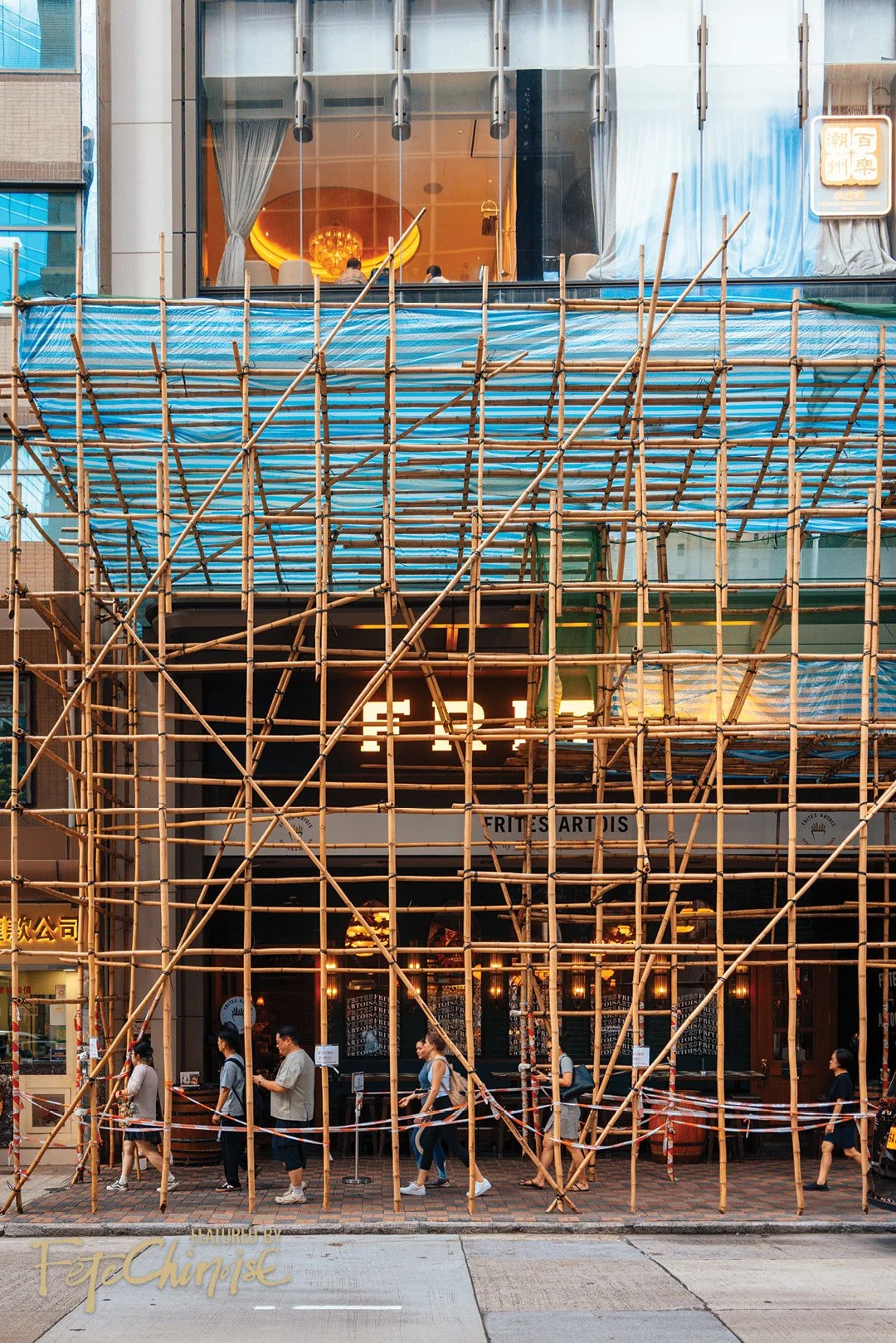
Photo Credits: Dixon Kwan
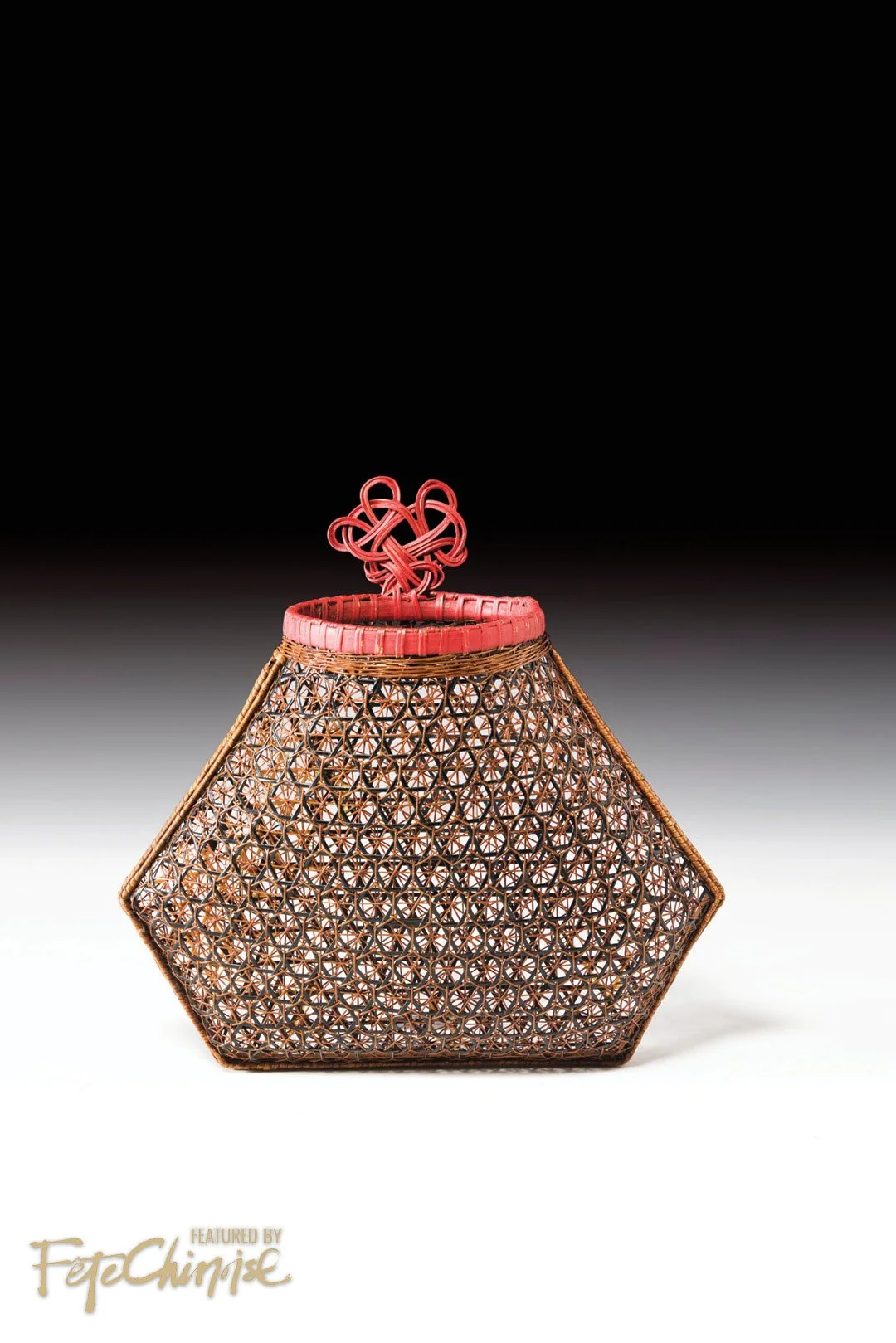
Hexagonal Bamboo Basket with Chrysanthemum Plaiting. Qing Dynasty (1644–1912), China. Muwen Tang Collection. COurtesy of the University Museum and Art Gallery, the University of Hong Kong.
Since 2022, the Fête Chinoise team has been planning an article to celebrate the phenomenon of bamboo in construction in Hong Kong and as a beautiful material in design. This idea was sparked by an associate editor for the magazine at that time, Melissa Haggerty, who spent a good number of years in the vibrant city in her earlier career. At the end of 2024, discussions began for me to pen the piece based on my own love for bamboo scaffolding and bamboo’s cultural symbolism. Then in late 2025, a fire tore through a residential building in Tai Po. Thousands of residents’ lives were altered in a night. As media began to pick up the story, the bamboo scaffolding still clinging to the building’s facade became the subject of sudden, fierce scrutiny. A material that had blended into the visual texture of Hong Kong life, as unremarkable as the sound of a tram bell at dusk, was suddenly pushed into public view globally.
Suddenly, everyone had an opinion about bamboo.
For those of us who grew up in Hong Kong – who learned to read the city by the rhythm of scaffolding going up and coming down – seeing bamboo innocently turned into a symbol of blame felt like watching an old friend stand accused. Scaffolding made of bamboo is in itself a phenomenon, and equally remarkable is what it represents: a craft, a culture, a living inheritance that has survived centuries of glass towers and globalization.
A line by Su Shi 蘇軾, the great Song Dynasty poet is profound – 無竹令人俗. “Without bamboo, a man becomes vulgar.” Su Shi wrote it as a scholar’s half-serious jest, arguing that bamboo was as necessary to a refined life as meat was to a full stomach. He meant it as aesthetic philosophy. Perhaps it could be understood from an additional perspective: what makes a man vulgar is not the absence of bamboo as ornament; it is the loss of the knowledge, the patience, the particular quality of attention that bamboo demands of those who work with it. Lose the bamboo and something in us coarsens, especially as a Hong Konger.
「無竹令人俗」,自古以來竹子中空有節的形態清雅淡泊,廣為古代文人墨客讚頌,經常以竹比喻君子堅忍、剛直、虛心等品德。竹林廣佈於中國、日本、印尼、印度、泰國等東亞地區,竹的根、莖、筍、籜、稈、枝、葉均有用處:竹枝可做成竹掃帚與筷子;竹葉可包粽子……從日常生活到藝術創作,甚至建築棚架,竹子因其靈活、堅韌而隨處可見,與東方生活文化密不可分。
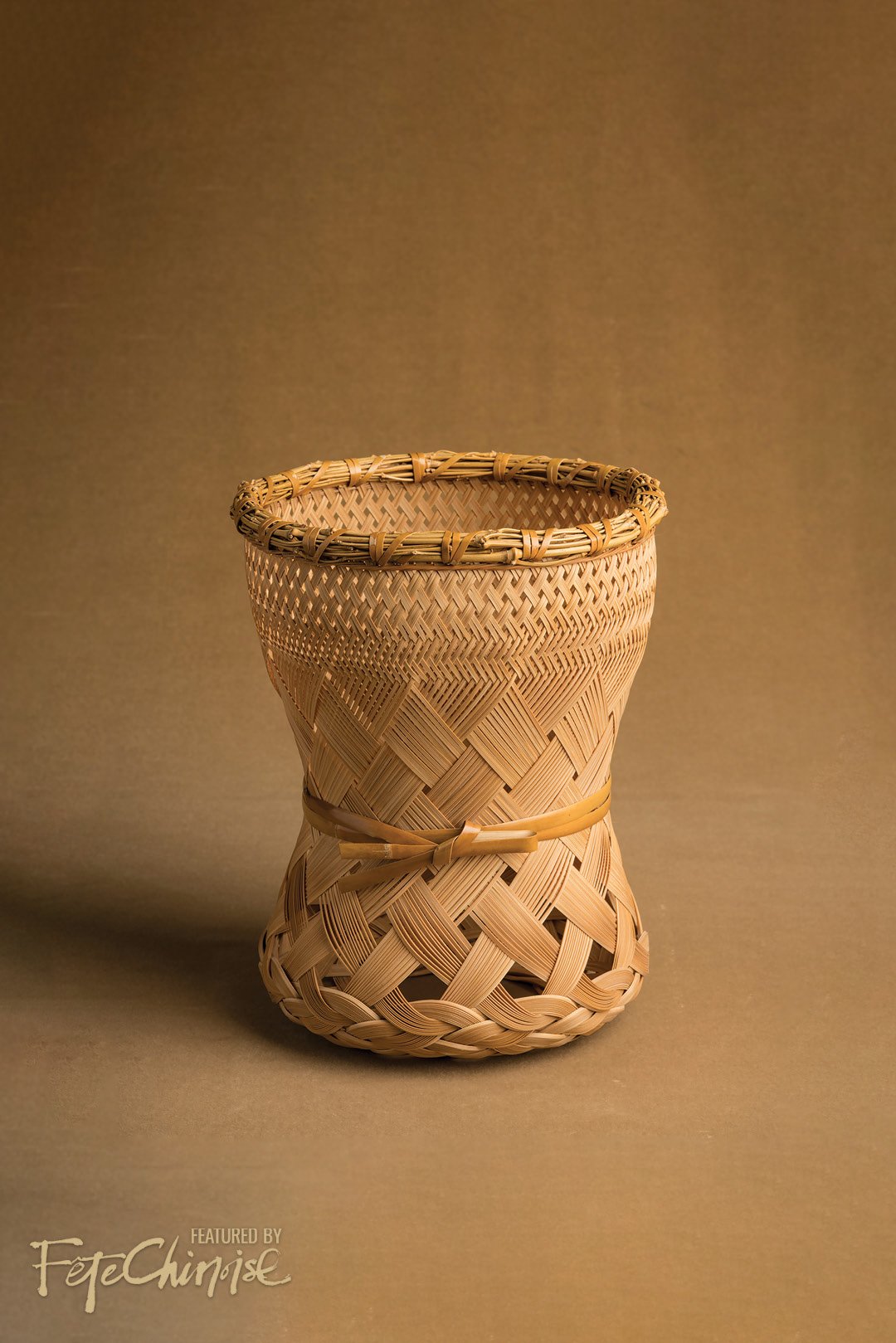
Basket for Flowers, 'Longevity'. Iizuka Rōkansai (1890–1958), Japan. ca. 1940.Naej Collection. COurtesy of the University Museum and Art Gallery, the University of Hong Kong.
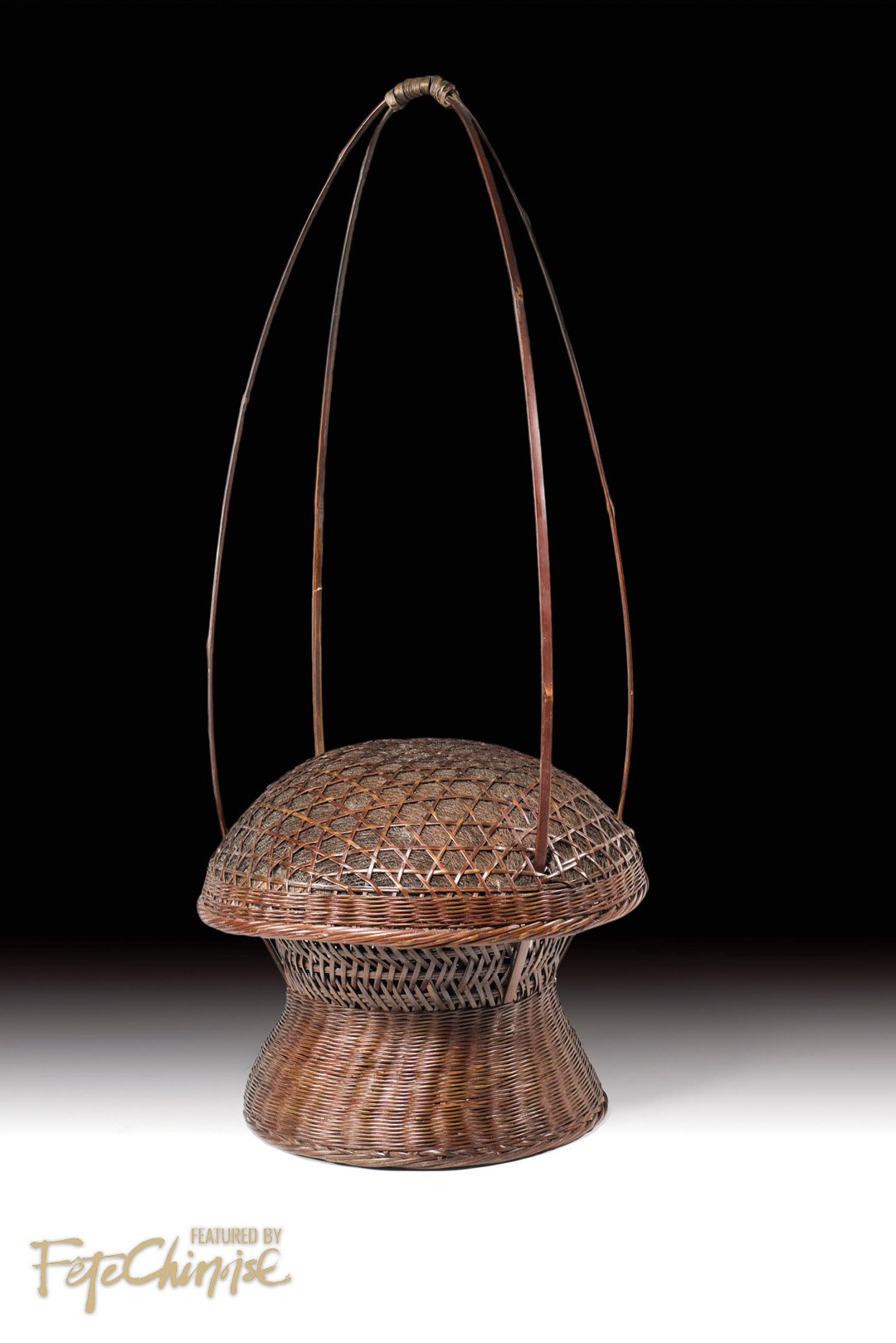
Handled Bamboo Basket. Qing Dynasty (1644–1912), China. Muwen Tang Collection. COurtesy of the University Museum and Art Gallery, the University of Hong Kong.
From 25 June – 26 October 2025, the University Museum and Art Gallery, The University of Hong Kong, presented Bamboo Baskets: Chinese Origins, Japanese Innovations, a large exhibition offering an overview of the finest achievements of bamboo art in East Asia. This project benefits from the support of two visionary collectors and it displays a juxtapositioning of Chinese and Japanese baskets in Hong Kong for the first time. The expansive yet carefully selected objects prompt a reconsideration of the central role played by continental prototypes or Karamono (唐物, literally ‘Tang things’ or ‘Chinese things’) in the prodigious development of Japanese basketry over the past 150 years.
The display of bamboo baskets encompassed more than 200 objects illustrating different weaving techniques and tracing the history of early Ming and Qing dynasty vessels to their influence over Edo era artefacts and the innovative further development into contemporary kogei. Focused on the transfer of knowledge and the continuation of many long-practiced bamboo weaving techniques, the exhibition also included the context of the traditional tea ceremony and the related art of ikebana flower arrangements. Together, the exhibition documents the making by hand of some of the finest decorative arts and celebrates an important intangible cultural heritage still perfected by often generation old family workshops.
This exhibition relied on the exemplary loans from both the Naej Collection in Germany and the Muwen Tang Collection in Hong Kong, and it is supported by Japanese Consulate of Hong Kong and Macau and the HKU Museum Society.
Florian Knothe – Director of the University Museum and Art Gallery, the University of Hong Kong
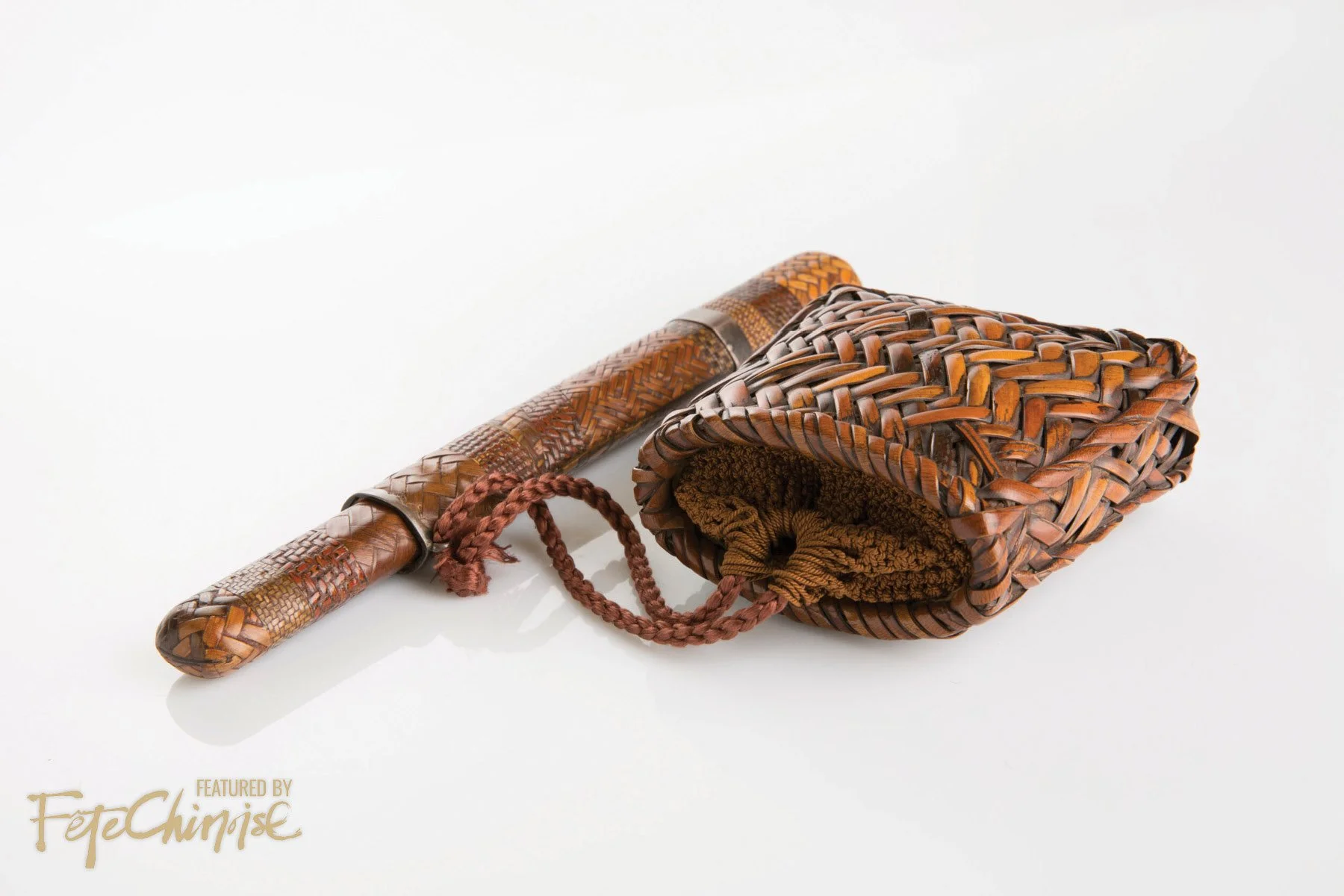
Pipe Case and Tobacco Container. Hayakawa Shōkosai III (1864–1922, Japan.ca. 1897–1905. Naej Collection. COurtesy of the University Museum and Art Gallery, the University of Hong Kong.
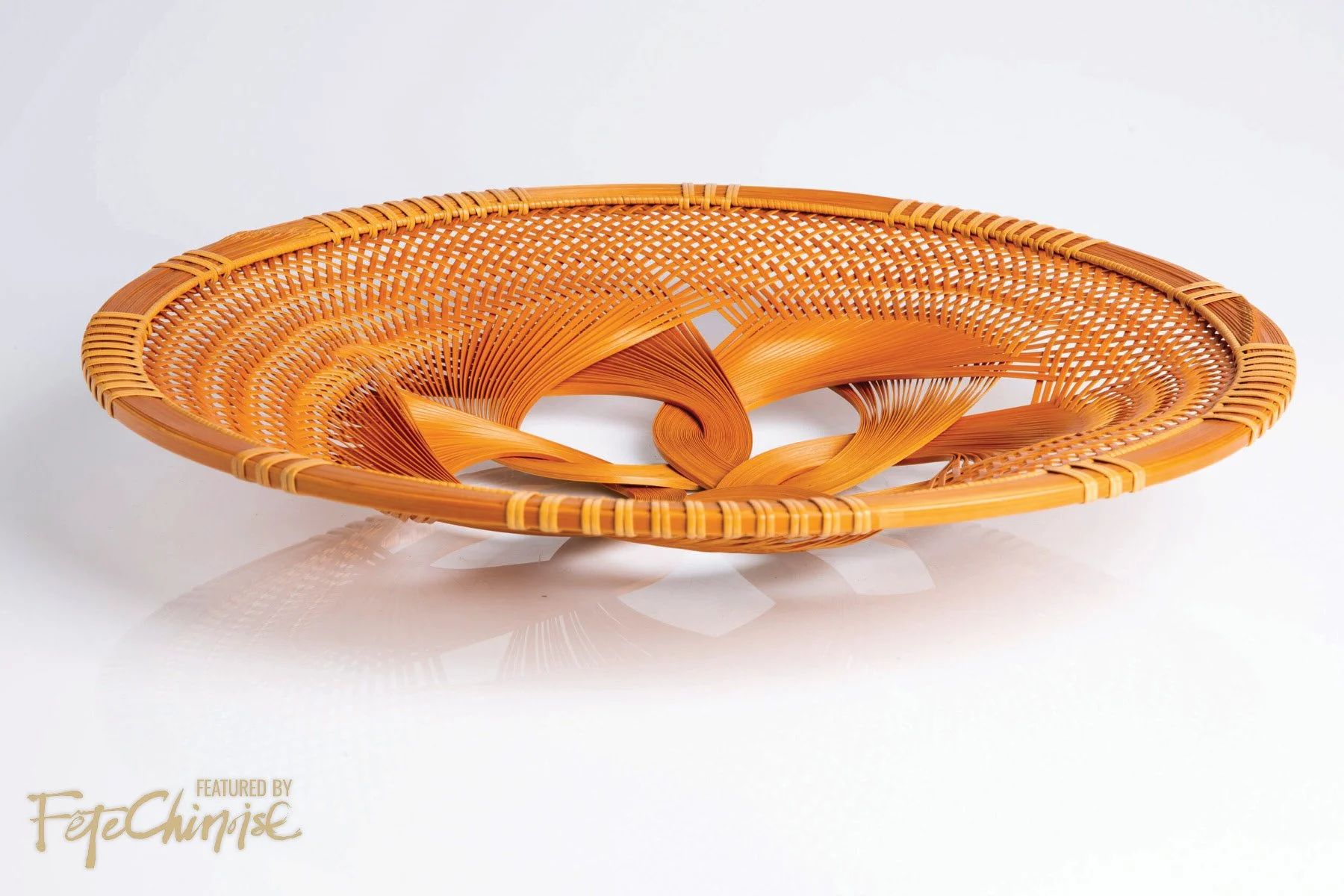
Basket for Fruit. Shōno Shōunsai (1904–1974), Japan.ca. 1958. Naej collection. COurtesy of the University Museum and Art Gallery, the University of Hong Kong.
A Forest Within a Forest
Hong Kong is well known as a concrete jungle of magnificent towers. But long before the concrete arrived, there was another kind of jungle—the bamboo groves that have for millennia colonized the hillsides of southern China, their hollow stems rustling in the wind like a thousand quiet conversations, captured in Ang Lee’s film Crouching Tiger, Hidden Dragon. It is one of the most beautiful ironies in the built history of our city: that the jungle of steel and glass rising from Victoria Harbour was erected, storey by storey, decade by decade, by a forest of bamboo.
This is not a metaphor. This is literal. The scaffolding that allowed Hong Kong to build itself – upward, always upward as though reaching for something just beyond grasp – was bamboo. The skyline that would become one of the most photographed in the world was first held together not by steel frames or aluminum systems imported from the West but by poles harvested from Chinese hillsides, lashed together with nylon strips by men who worked 30, 40 or 50 storeys above the street without a second thought. The world would later turn Alex Honnold’s rope‑less climb of Taipei 101 into a live Netflix event, billed as one of the most dangerous feats a person could attempt – the hardest section being the middle floors, the so-called bamboo boxes, eight segments of overhanging concrete designed to evoke a bamboo stalk growing skyward. These men did something comparable every morning in rubber flip-flops, ate lunch up there and took the minibus home. There was no documentary. No live stream. No 10-second delay for the faint of heart. The sky was not their achievement. The sky was their office. The clouds were not a destination, they were simply where the work was. When the work was done, they came back down and nobody applauded, and then they went back up again the next morning, because that is what it means to make the extraordinary into 家常便飯 – the plainest meal of the day.
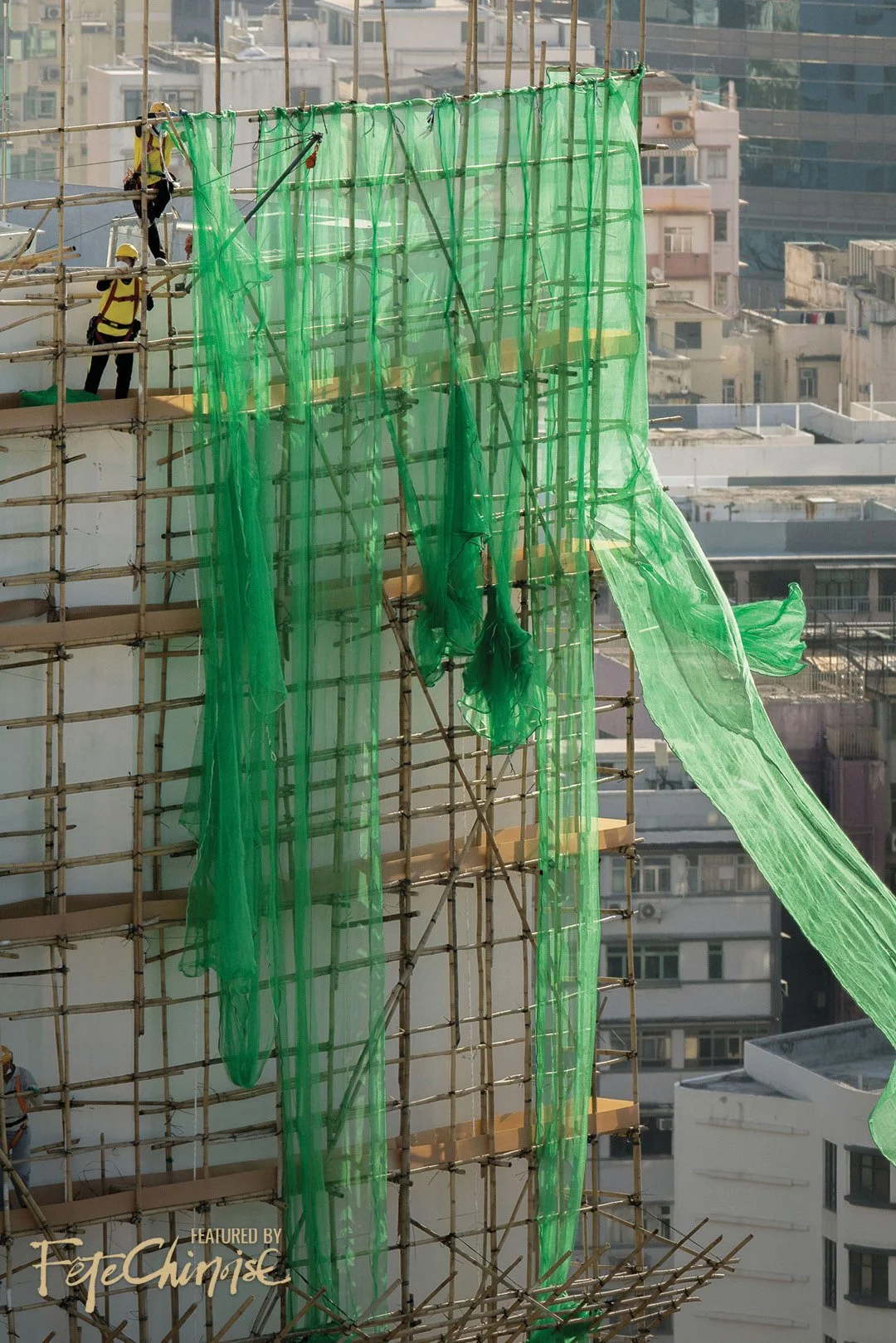
Bamboo Weaver #8, 2022. Photo Credits: Romain Jacquet-lagrèze
竹編工藝 紥根東亞文化
早於新石器時代萌芽的竹編工藝,在東亞裝飾藝術中紥根數千年。其中毛竹是竹編藝術品的主要原料,竹器如蒸籠、家具、竹簾常見於中國尋常百姓家,更是日本茶道與花道等傳統文化藝術不可或缺的重要天然素材。
香港大學美術博物館去年呈獻的《竹藝巧編——中式古韻和式新編》展覽,展現了東亞竹編藝術的卓越成就,展品包括初代早川尚古齋、初代飯塚鳳齋、初代田辺竹雲齋、飯塚琅玕齋等不同年代日本竹藝匠人巧手創作的提籃、花籃等作品,件件匠心獨運。
其中,初代竹雲齋奉行「唐物寫風格」,尊重當時中國傳入日本的物品風格,經過一代代的傳承和探索,逐漸演變出內斂典雅、緩慢展現日本美學的風格,呈現出和風竹編藝術特有的侘寂之美。如今傳承到第四代,四代田辺竹雲齋(田辺健雄)形容竹工藝本是人類原始智慧結晶,能夠引發人與自然之間的共鳴,讓竹藝品具有靜心效果,他自豪地說:「我在各國舉辦展覽時,觀眾常常表達相似的感受。無分民族和宗教,大家都能感受到這種與自然和歷史緊密相連的藝術魅力。」
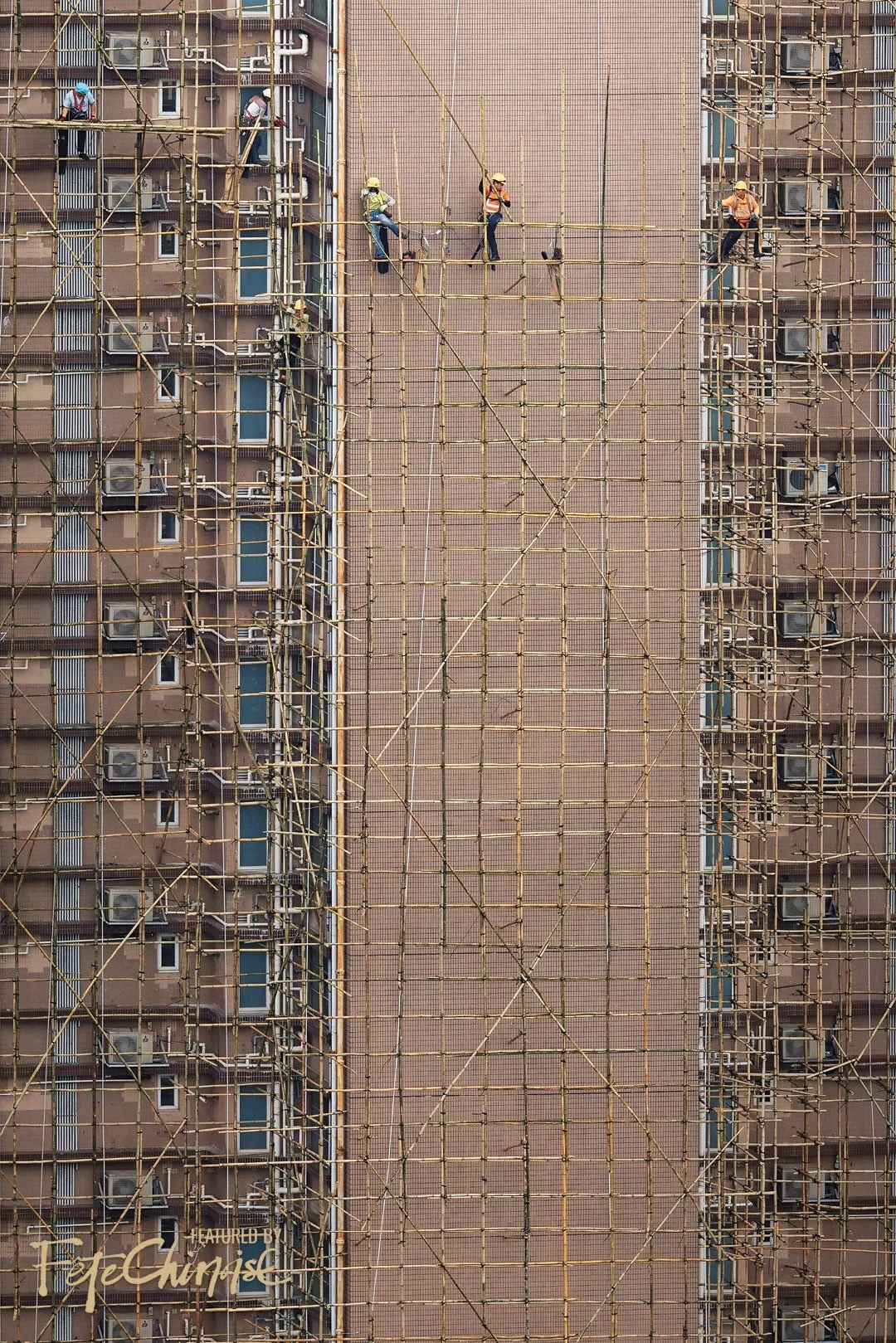
Bamboo Weaver #1, 2017. Photo Credits: Romain Jacquet-lagrèze
In nature, a bamboo forest grows tall by growing together. Individual culms emerge from a shared root system, interlocked underground, supporting each other’s vertical ambition. Take one away and the grove weakens. Add more and the whole structure becomes stronger, more flexible and more resilient. Hong Kong’s towers were built the same way: each length of bamboo tied to the next, the whole edifice only as stable as the integrity of every single joint. Nature did not merely witness the building of this city. Nature was the scaffolding upon which the city was built.
The bamboo scaffolders – 棚架師傅 – did not need anyone to explain this to them. Their craft, with origins traceable to the 棚閣 performance structures of the Han Dynasty nearly 2,000 years ago, was not merely technical. It was relational, involving not only bamboo but also people. Their knowledge was hard-won and formally recognized: registered tradesmen, certified by the Construction Industry Council, approved by the Building Authority. Yet certification took them only so far. The rest sat in their hands and bodies, in habits and instincts shaped by years on the scaffold – things not learned from any written test. They learned by watching, then by doing, their life in the literal hands of the man who taught them. There is no more serious form of transmission.
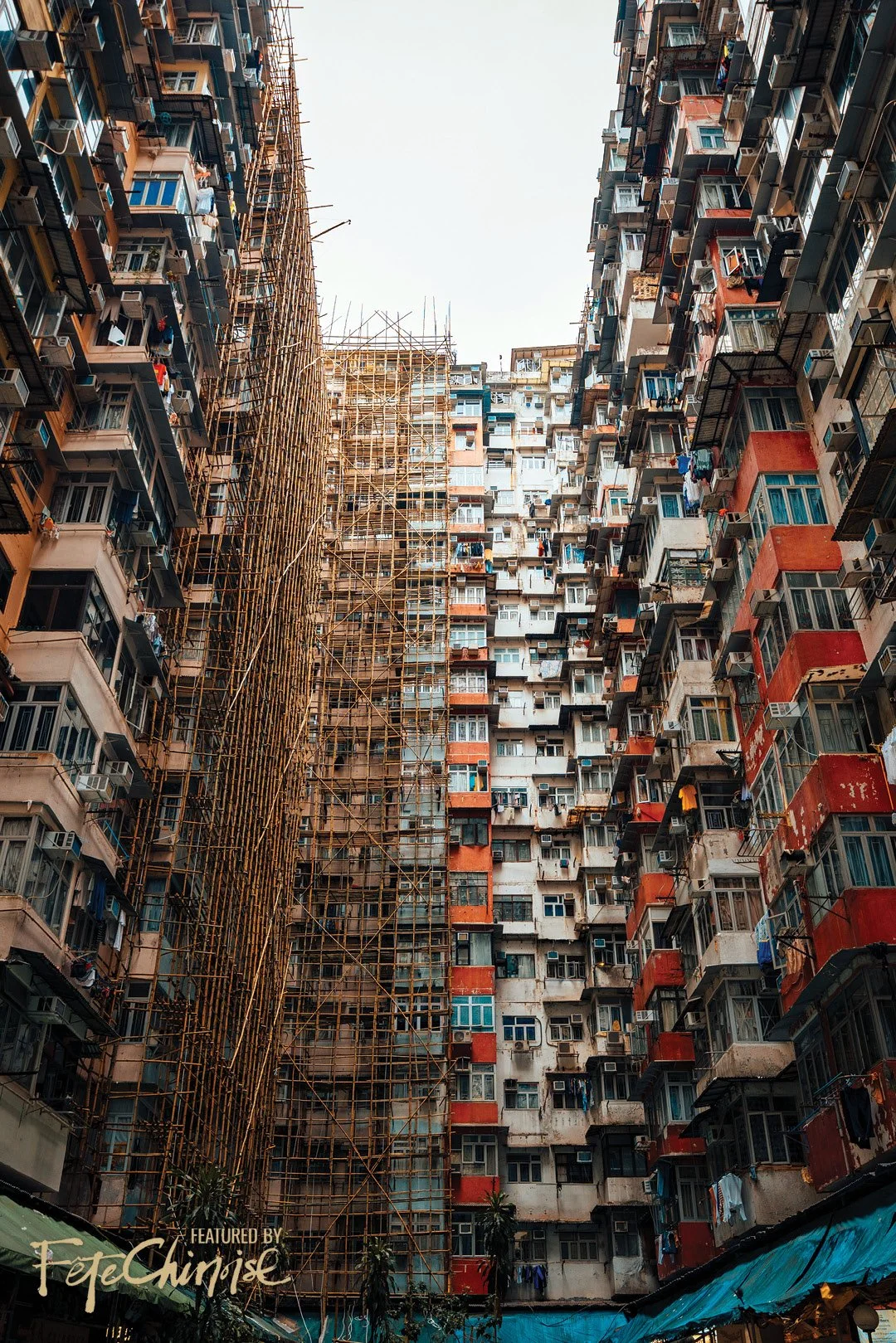
Photo Credits: Dixon Kwan
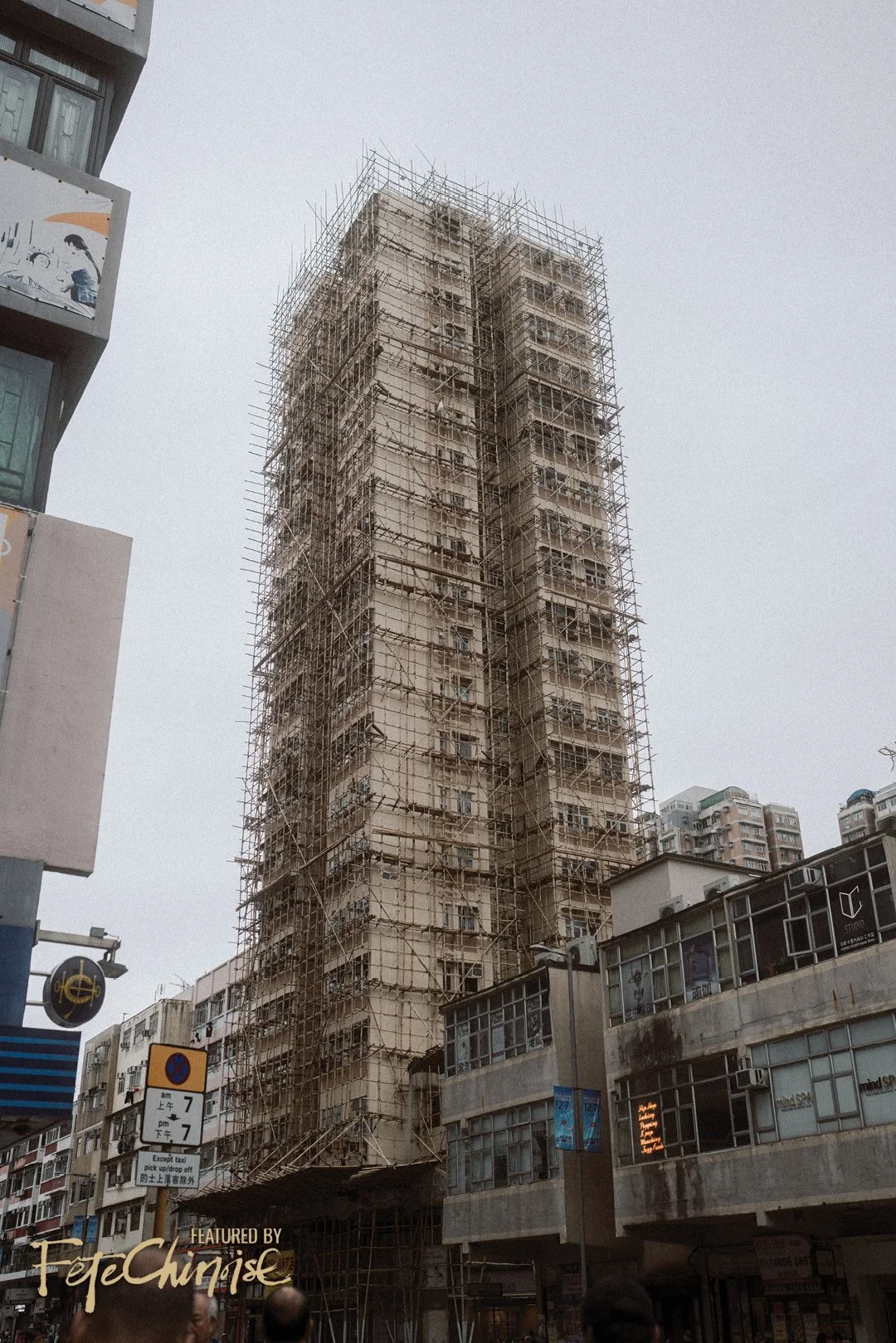
Photo Credits: Yu Sin Tung Kathy
百變竹棚 展現都市魅力
竹子強韌有力,除了可以製作成生活用品與工藝品,也是建築界的強力後盾。像香港,無論大街還是窄巷,竹棚隨處可見;在棚架下穿插、穿梭,一直是港人習以為常的日常。而在高空像蜘蛛俠般遊走「出棚」的搭棚師傅更是膽識過人。他們在高空中如履平地工作,完成一項項讓人歎為觀止的工程,活現港人剛直、勤勞、認真、可靠的精神。
近年不少竹棚大型建築作品在國際舞台上大放異彩,令人嘖嘖稱奇。2000 年,香港當代建築師嚴迅奇的作品《竹亭》於德國柏林文化節展出,揚威海外。
當代竹藝家林嘉裕(Inkgo Lam)亦以其藝術創作,展開一場關於記憶、空間與文化傳承的跨時空對話。林嘉裕師承九十四歲老匠人呂明師傅,習得嚴謹工藝與細緻編織技法。從輕盈疏朗的「六角編」到繁複緊密的「菊花編」,她將傳統竹藝轉化為大型場域性裝置,先後受邀展出於香港故宮文化博物館、茶具文物館、香港藝術館、成都藝術館及威尼斯 Homo Faber 雙年展等國際知名藝術機構。
在《箭(一)》與《箭(二)》中,她運用竹材的張力與彈性,呈顯出「平衡」與「爆發」兩種型態;在《香港茶》中,她則結合包漆竹篾技法,致敬傳統漆藝與開光美學。而在個展《五臟》中,林嘉裕更展現了對竹材的靈活駕馭與物性實驗:貫穿展場的大型竹編《轉化》展示了竹篾由疏至密的編織遞變;《發動》善用實驗失敗留下的傷痕竹材重塑形態;《吸收》則將動態機械裝置與竹藝巧妙結合。透過這些作品,她充分展示了如何將傳統竹工藝轉化為具備當代美學的藝術語言。
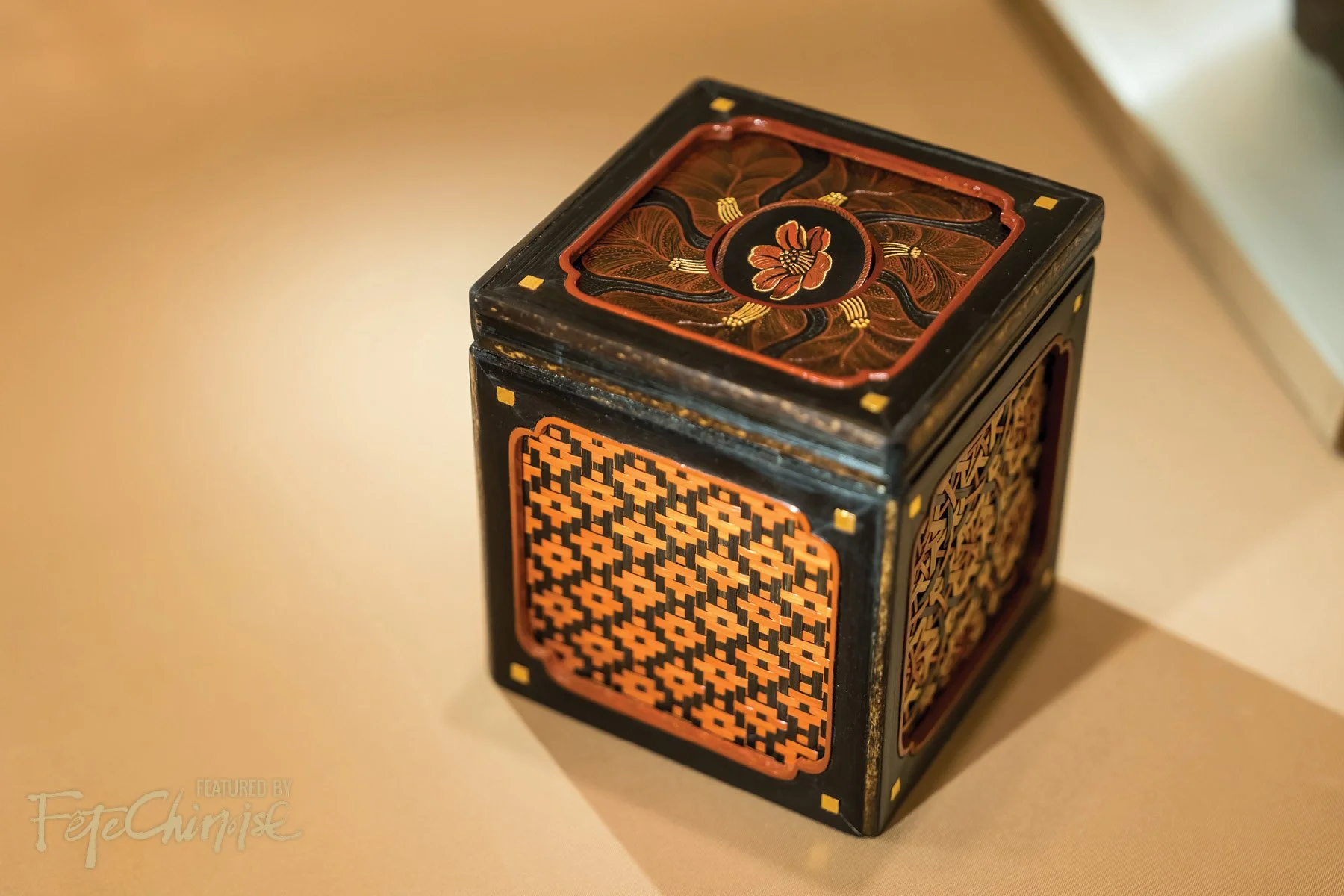
Hong Kong camellia five-wall bamboo woven tea caddy. Photographer: Arlevard.
What Bamboo Is
The Chinese literary tradition has long understood something that Western material science has only recently begun to quantify: bamboo is not merely a plant. In classical Chinese culture, bamboo embodies a particular constellation of virtues: honesty, humility and loyalty. Its hollow interior speaks of openness, a mind uncluttered by ego. Its segmented nodes suggest integrity – the capacity to hold one’s shape under pressure. It bends in a typhoon but does not break. Generation after generation of Chinese scholars and painters have returned to bamboo as the supreme metaphor for what it means to be a person of character. 竹 appears in poetry, in ink wash landscapes, in the names parents give their children.
In some forms, its tensile strength can exceed that of some steels. The same material a child in a village might weave into a fan can, in the right hands, support the construction of a 40-storey building. This paradox – delicate and titanically strong, humble and structurally sovereign – is perhaps the deepest thing bamboo teaches. Resilience is not the same as hardness. The tree that will not bend is the tree that breaks.
The bamboo used in Hong Kong’s scaffolding – primarily 篙竹 and 毛竹 – is not freshly cut and immediately deployed. It is aged. The culms grow for three to five years, then dry vertically indoors for at least three months to enhance durability and reduce fire hazard. The material must be ready. The lashing – every joint wrapped a minimum of five turns, pulled tight, crossed, looped through itself in a technique passed from master to apprentice across lifetimes – is what holds the whole structure together. Each individual element is bound to the next by human hands, human knowledge, human care. You cannot truly learn bamboo scaffolding without first entrusting your life to someone who already knows it.
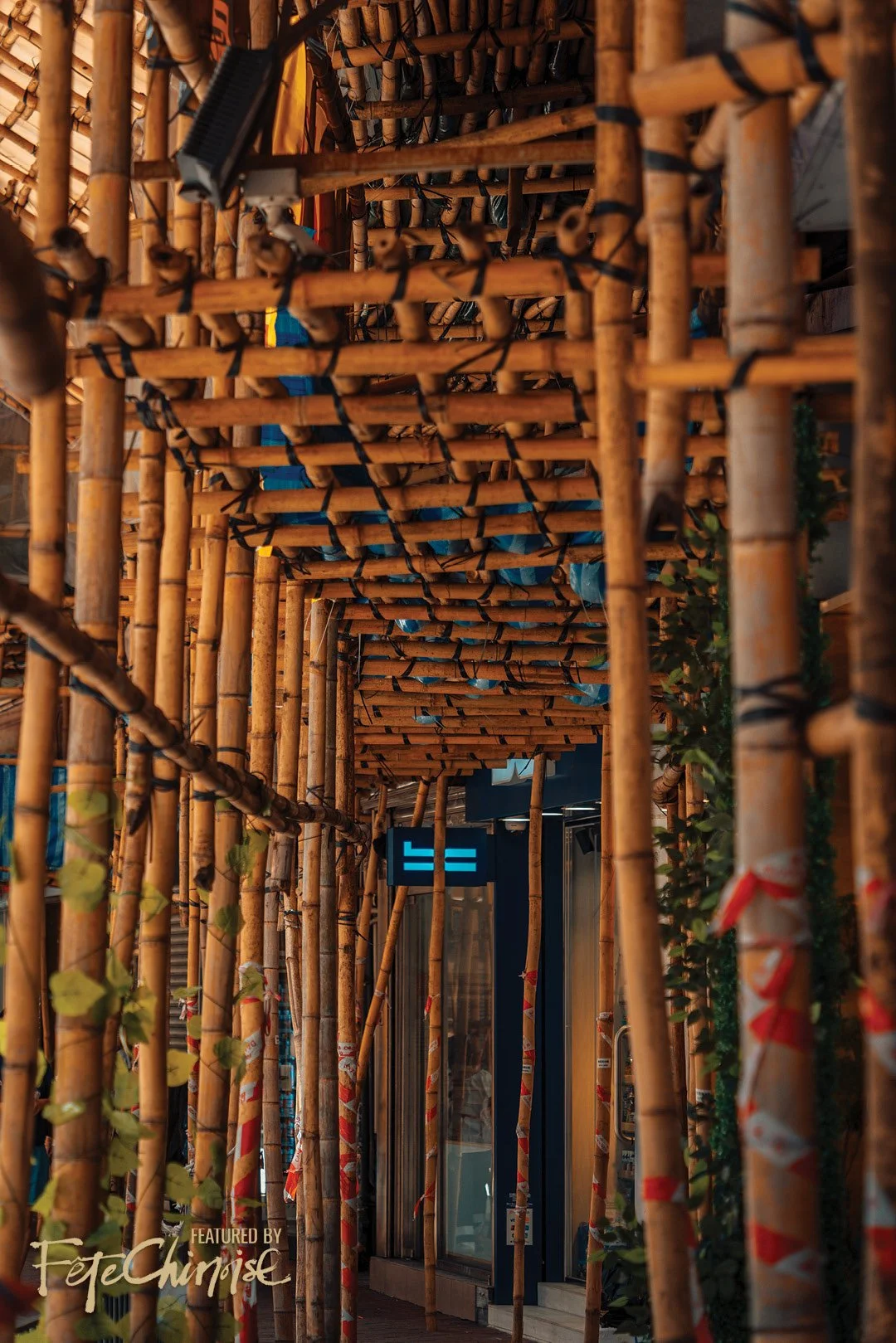
Photo Credits: Dixon Kwan
三萬竹支建錦田醮棚
十年一度的元朗錦田鄉酬恩建醮於 2025 年舉行,村民用三萬竹支搭起佔地逾四萬平方呎、高逾三十米的醮棚酬謝神恩,獲《健力士世界紀錄》認證為「全球最大臨時竹構祭壇」。
醮棚內外放眼盡是豐富的民俗色彩:大紅花牌紥作、舞獅表演、紥作祭品、樸實的竹木渡河橋,統統運用竹材製造,展現紮作的精湛技藝。
A Year Prior
I have spent many years in real estate – an industry that lives or dies on what holds and what lasts. You come to develop an eye for how things are built. For years, I found myself watching Hong Kong’s bamboo scaffolders with a reverence I could not quite articulate to colleagues who had grown up elsewhere.
Our brokerage holds an annual gala and that year the real estate market was in the grip of one of its periodic storms: rising rates and uncertain sentiment. Real estate is built on the premise that tomorrow will be more valuable than today, and that premise was under strain. I wanted to say something true about resilience without resorting to a motivational poster.
I decided to build a 12-by-12-foot bamboo scaffolding installation, using traditional methods and authentic materials. A real structure, small in scale but assembled according to the same principles that had once held up the Hong Kong skyline. It stood in the middle of the room as guests arrived – an anomaly, a disruption, a question mark. People stopped. They touched it. They asked about it, triggering a conversation I had hoped to have. About how things are built. About what holds when the wind comes. About the difference between structures that look strong and structures that truly are strong because every joint, every connection, every individual part within them has been made with care and intention.
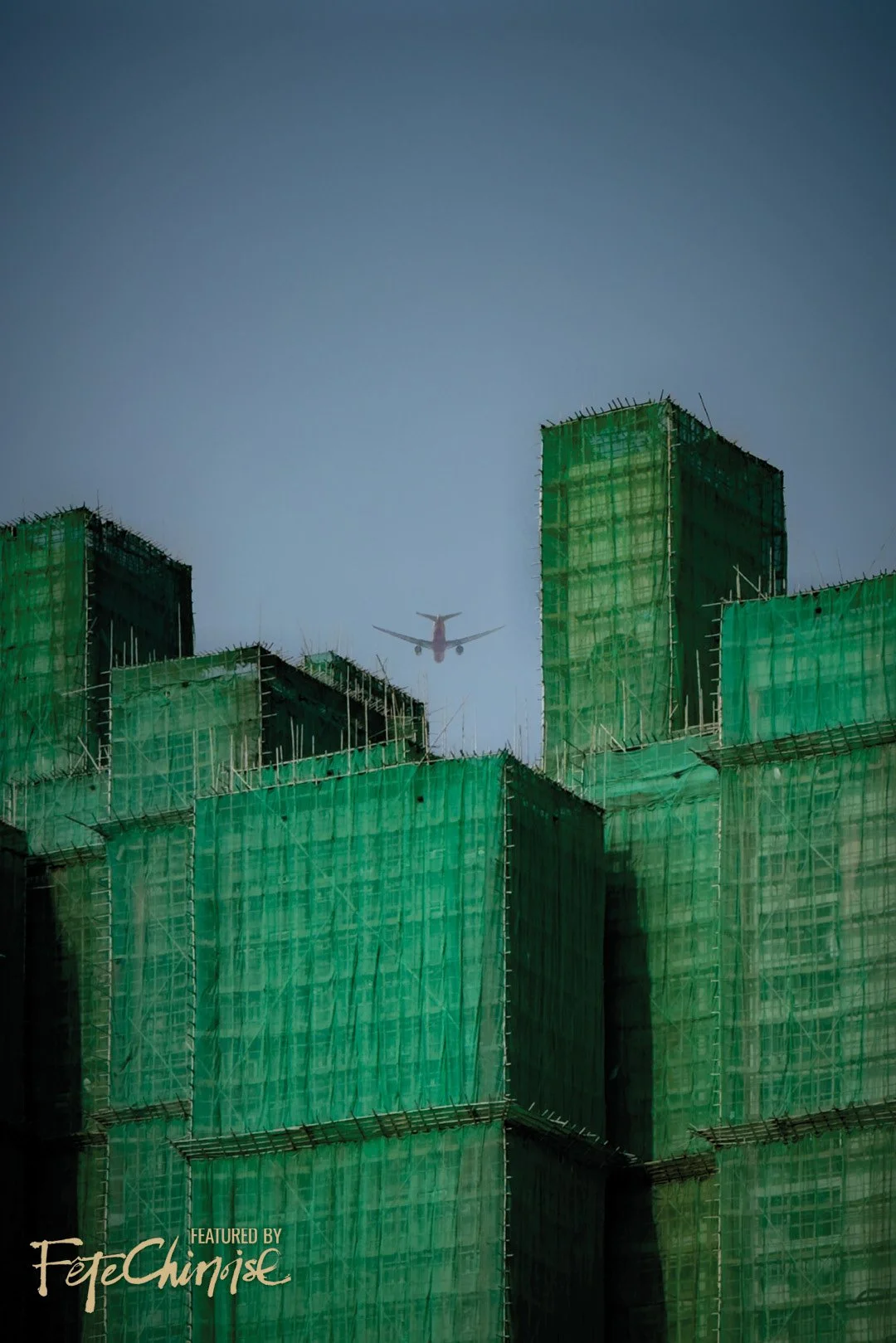
Photo Credits: William Shum Photography
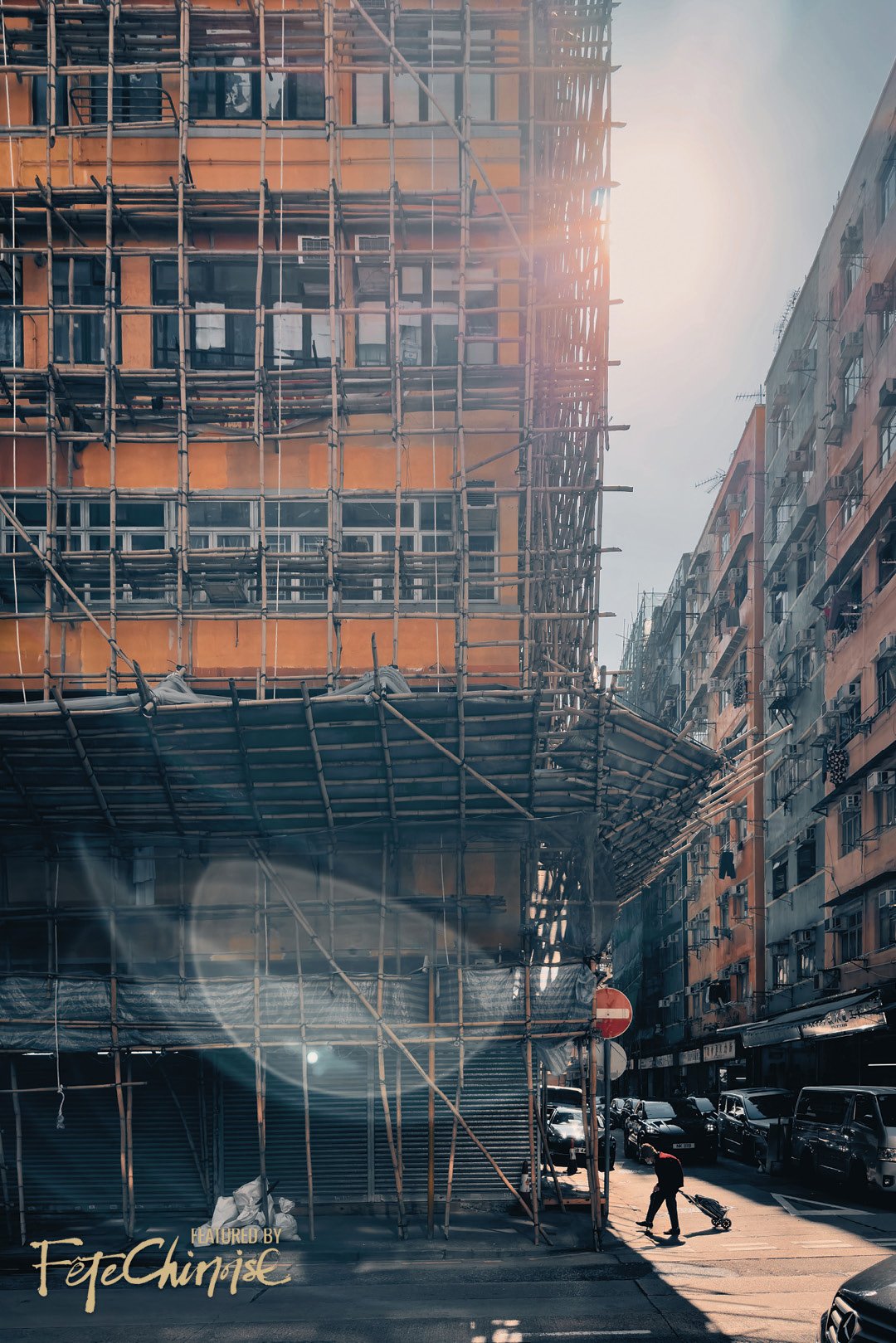
Photo Credits: William Shum Photography
搭棚要拜師 恐成絕唱
搭棚技藝源遠流長,竹棚雛型早見於中國漢代百戲表演的「棚閣」,有近二千年歷史。目前香港主要使用的竹材分別是篙竹和毛竹,一般竹齡為三至五年,標準長度是六米,必須垂直擺放在室內風乾至少三個月,才可使用。
搭棚師傅憑純熟技藝,將篙竹和毛竹以尼龍篾打結,牢牢扎緊。竹棚結構穩定,大部分穩固程度抵得住十號風球的風吹雨打。每條尼龍篾強度也有要求,最低不少於0.5千牛頓,所有扎結須用尼龍篾至少來回繞緊五個圈,再把兩端交叉編成一個梢,之後穿過扎結兩次,得出一個圈狀的圓結才能繫牢。
A Cultural Symbol of Strength
Hong Kong had been bamboo scaffolding’s last real stronghold. The reason was almost comically practical: in a city this dense, bamboo could be delivered by truck and carried up stairwells and threaded through gaps no aluminum frame could easily navigate. The economics worked. Its adaptability was hard to replace. An ancient craft survived in the most modern of cities almost by accident, because the city had grown too complicated for anything simpler to handle.
Now its survival is being put to the test. Will it endure or will it disappear? Beyond a construction method, it is the last living daily practice of a craft tradition nearly 2,000 years old. What will happen to the rarest professional cohort of men who know how to read a building’s structure through bamboo, who can look at an irregular facade and know intuitively how to make it safe? Pedestrians enjoy the visual poetry of walking down a narrow street in Sheung Wan or Sham Shui Po and having the light fall through bamboo scaffolding overhead, dappling the pavement the way light falls through a forest canopy.
Bamboo bends. It does not break. It kept that promise through 10-typhoon winds that would have shredded lesser things. May the beautiful, the ancient and the irreplaceable remain resilient through the flames of narratives that often distort what is good.
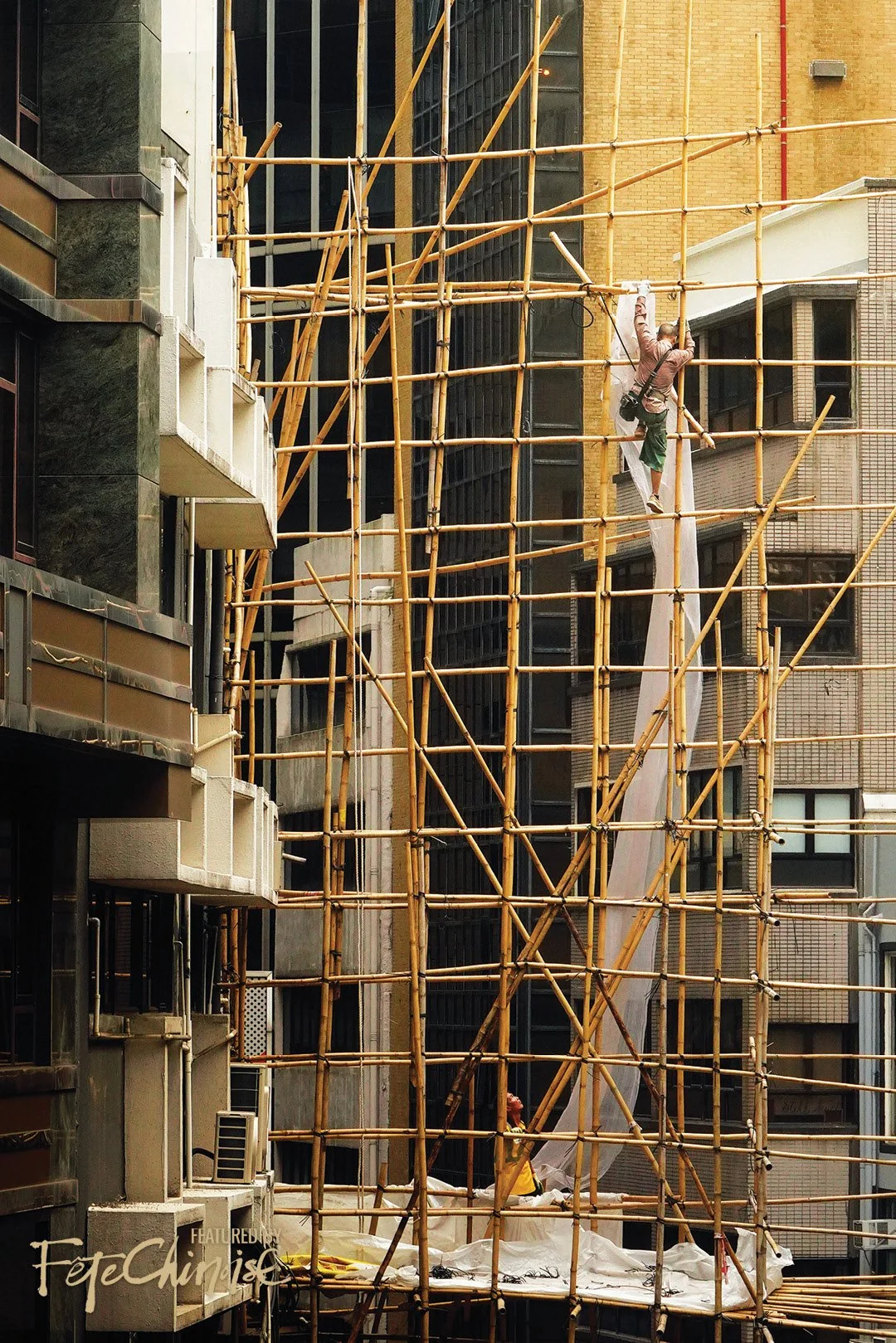
Ascending Bamboos, 2025. Photo Credits: Romain Jacquet-lagrèze
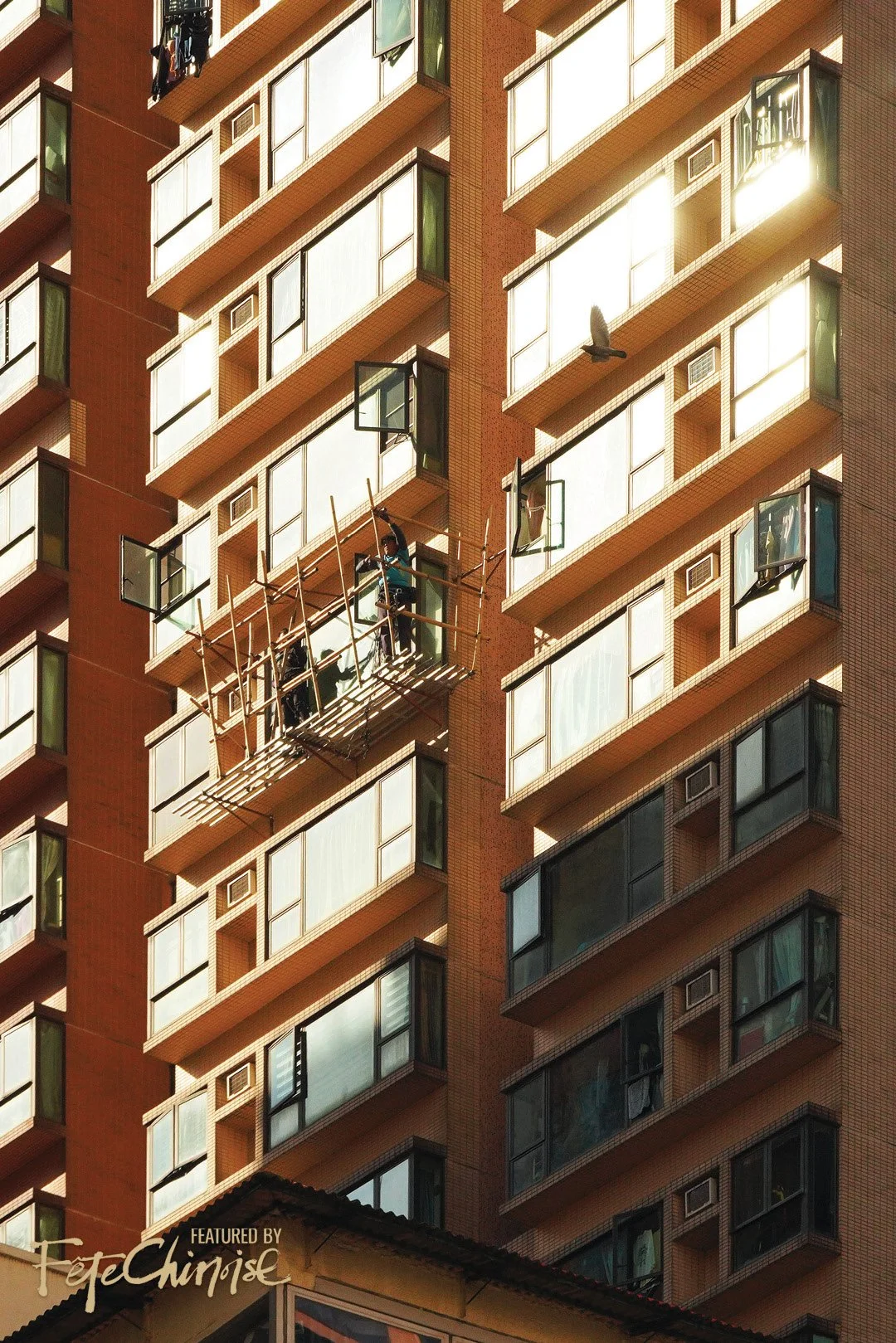
Birds and Men, 2025. Photo Credits: Romain Jacquet-lagrèze
棚架穩定關乎工人、工程以至普羅大眾的生命安全,因此技術要求非常高。搭棚師傅需要拜師學藝,當中的技藝和判斷,往往就在幾十米高空中,靠以生命相互交託傳承下來,代代相傳。雖然很多地方現以金屬棚架為主,然而香港城市空間擁擠,竹棚施工靈活且運輸成本低,因此這項古老技藝得以一直沿用,成為城市景觀的一部分。
Steadfast Cultural Memory
In 2000, the Hong Kong architect Rocco Yim built an installation called 竹亭 – the Bamboo Pavilion – for the Berlin Cultural Festival. It was a temporary structure, like all scaffolding. Yet its design was a meditation on the tensions bamboo embodies: curved and straight, temporary and permanent, traditional and modern, East and West. The pavilion used bamboo lashed in traditional fashion, structured on triangular principles that turned straight lines into arcs and rigidity into grace. It won the Hong Kong Institute of Architects award. The world came to admire it, seeing in bamboo something that had always been there to see.
Contemporary bamboo artist Inkgo Lam also uses her art to engage in a cross-temporal dialogue about memory, space, and cultural inheritance. Apprenticed under 94-year-old master craftsman Master Lui Ming, Lam acquired both rigorous discipline and delicate weaving techniques. From light, airy hexagonal weaves to dense, complex chrysanthemum patterns, she transforms traditional bamboo craftsmanship into large-scale, site-specific installations. Her work has been exhibited at internationally renowned art institutions, including the Hong Kong Palace Museum, the Flagstaff House Museum of Tea Ware, the Hong Kong Museum of Art, the Chengdu Art Museum, and the Homo Faber Biennial in Venice.
In Arrow (I) and Arrow (II), she harnesses the natural tension and elasticity of bamboo to express two distinct states: balance and explosive force. In Hong Kong Tea, she combines lacquered bamboo strip techniques to pay homage to classical Chinese lacquerwork and kaiguang framing aesthetics. In her solo exhibition ORGANs, Lam further demonstrates her mastery over the material through structural experimentation: Transmute, an expansive bamboo sculpture spanning the exhibition space, illustrates a weave transitioning from sparse to dense; Activate repurposes scarred bamboo strips from a failed experiment to reshape new forms; and Absorb integrates kinetic mechanical devices with bamboo art. Through these creations, she demonstrates how traditional bamboo craft can evolve into a dynamic, contemporary visual language.
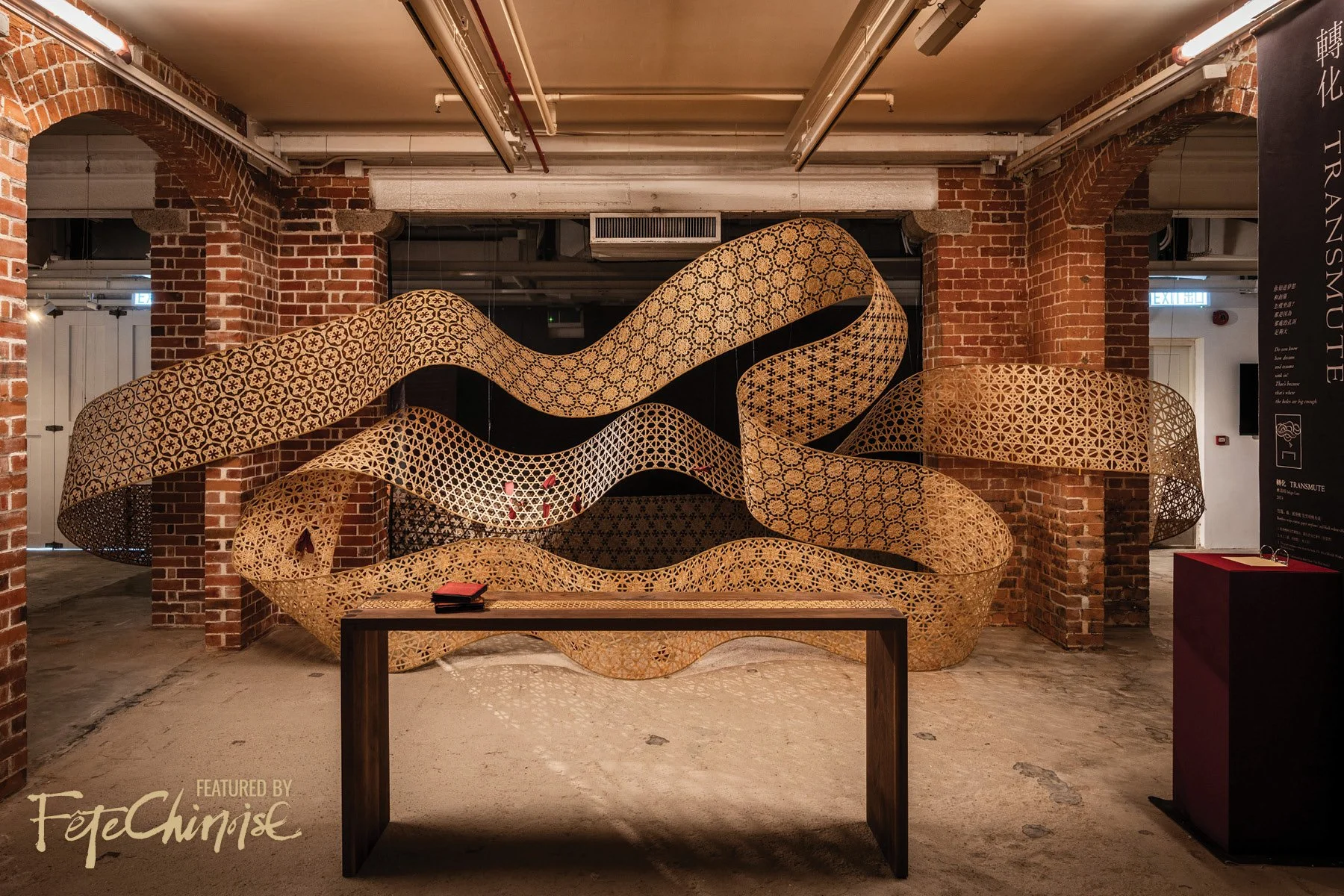
Transmute. Photography Courtesy of Inkgo Lam.
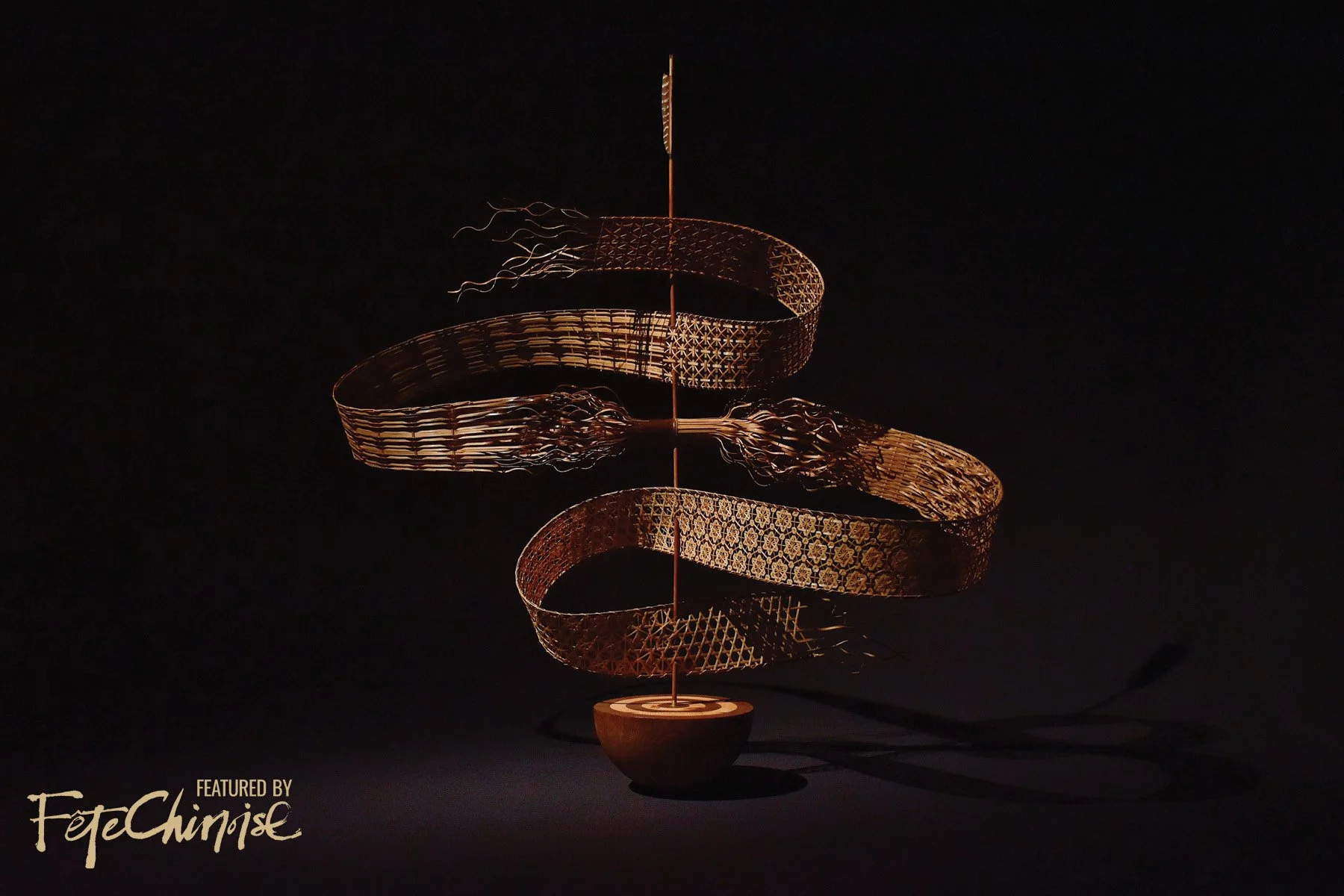
Arrow (1). Photography Courtesy of Inkgo Lam.
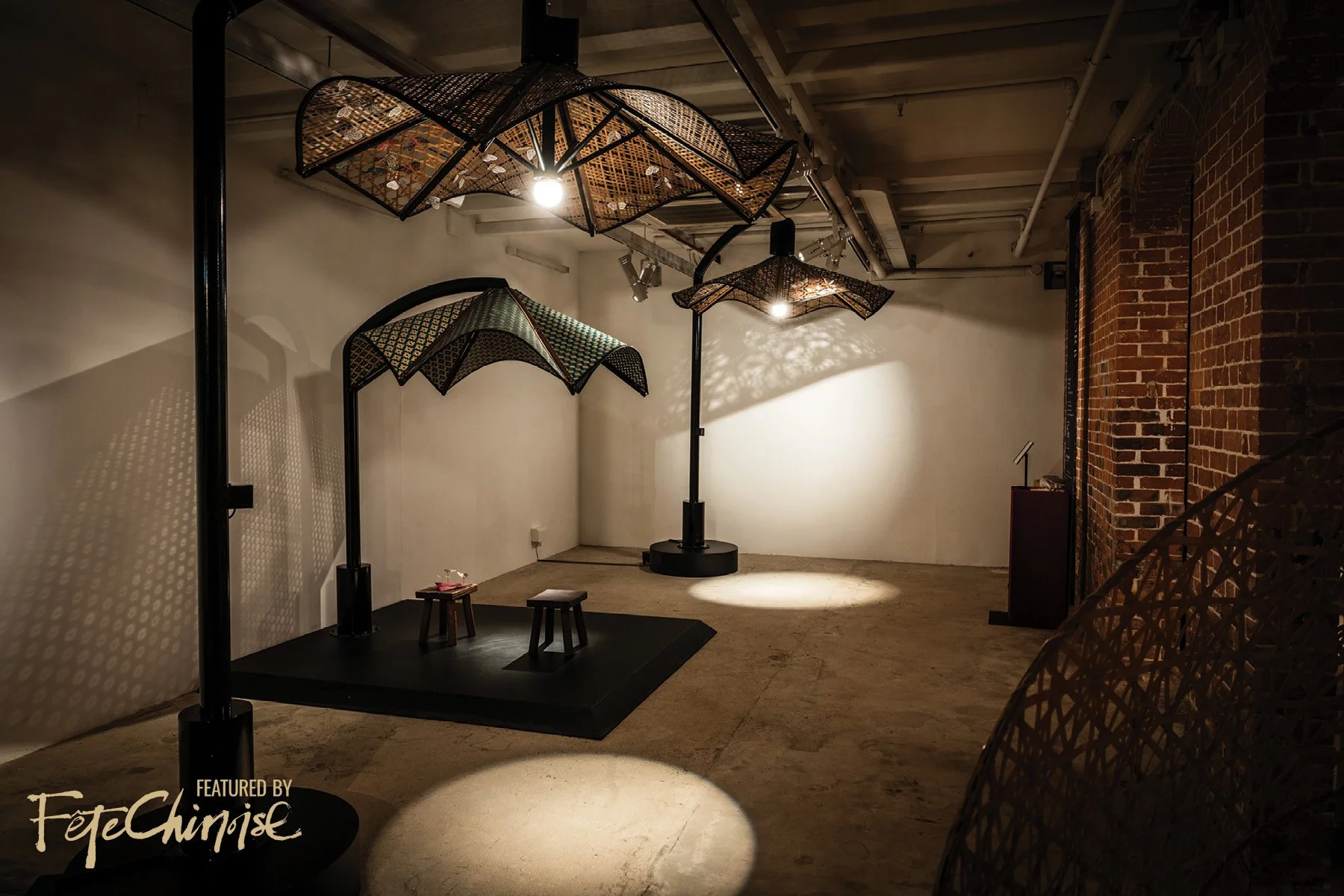
Absorb. Photography Courtesy of Inkgo Lam.
In mid-2025, the villagers of Kam Tin in Yuen Long erected the decennial 醮棚 – the ritual festival pavilion – using 30,000 bamboo poles, covering more than 40,000 square feet and rising more than 30 metres. Guinness World Records certified it as the world’s largest temporary bamboo structure. Inside, the full visual vocabulary of traditional Chinese folk culture was on display: elaborate flower plaques, lion dance troupes, paper offerings and bamboo foot-bridges. The entire immense structure was a single, living expression of what bamboo makes possible when knowledge, community and tradition are still intact.
These two moments – the architect’s pavilion and the village’s pavilion, separated by 25 years – frame a story. One says: look what this ancient material can become in new hands. The other says: look what this ancient material still means in the hands that have always held it. Together they argue, eloquently, for bamboo’s continued relevance not as nostalgia but as a living practice.
That’s an important thought to consider now when I think about Hong Kong’s scaffolders. Their work was never meant to last. A scaffold goes up so something else can be built or restored, and then the scaffold comes down. Impermanence was always the point. The scaffolders understood, perhaps better than anyone, that the purpose of a structure is not to endure forever but to hold things together long enough for the real work to happen.
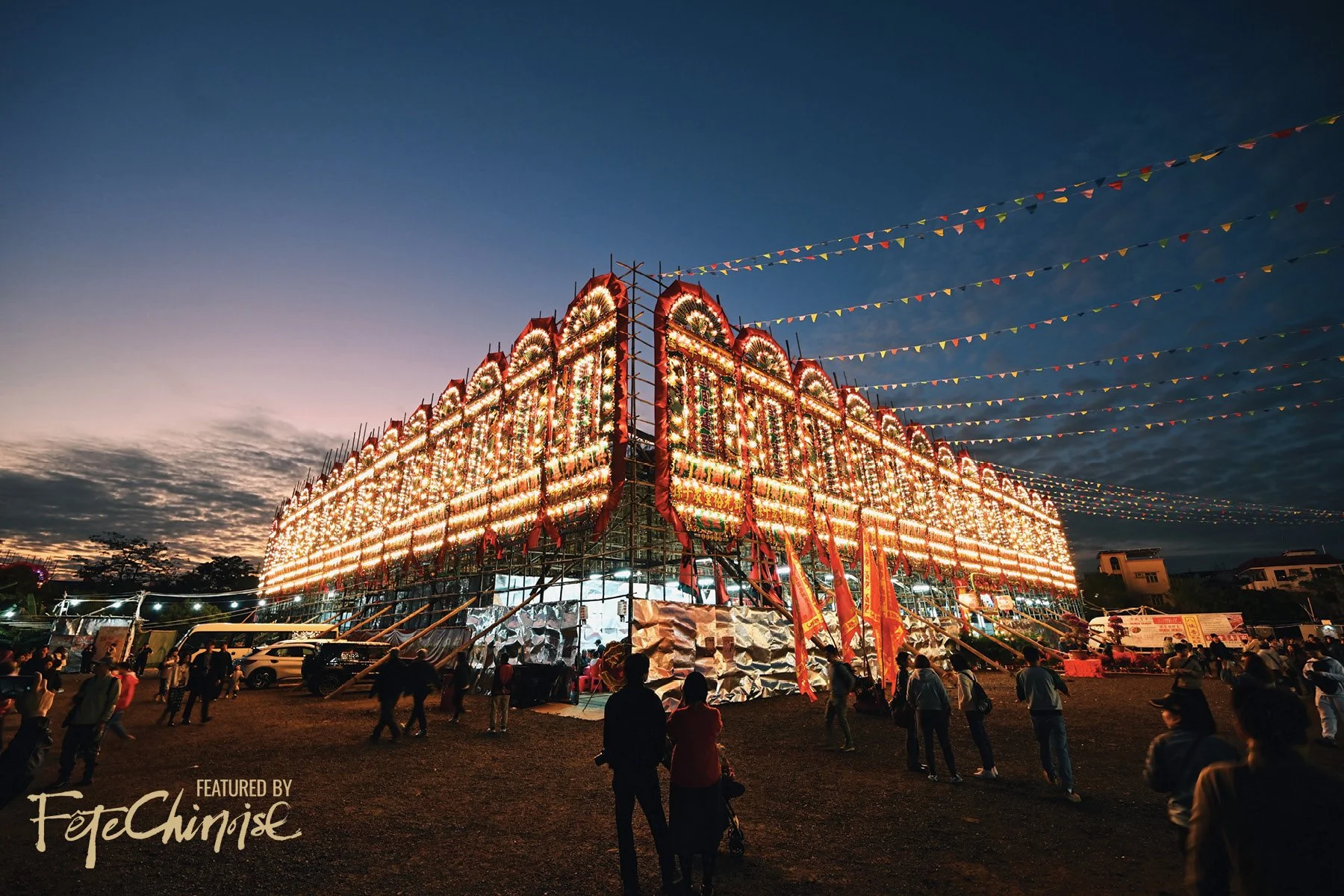
Photo Credits: Kit Chan
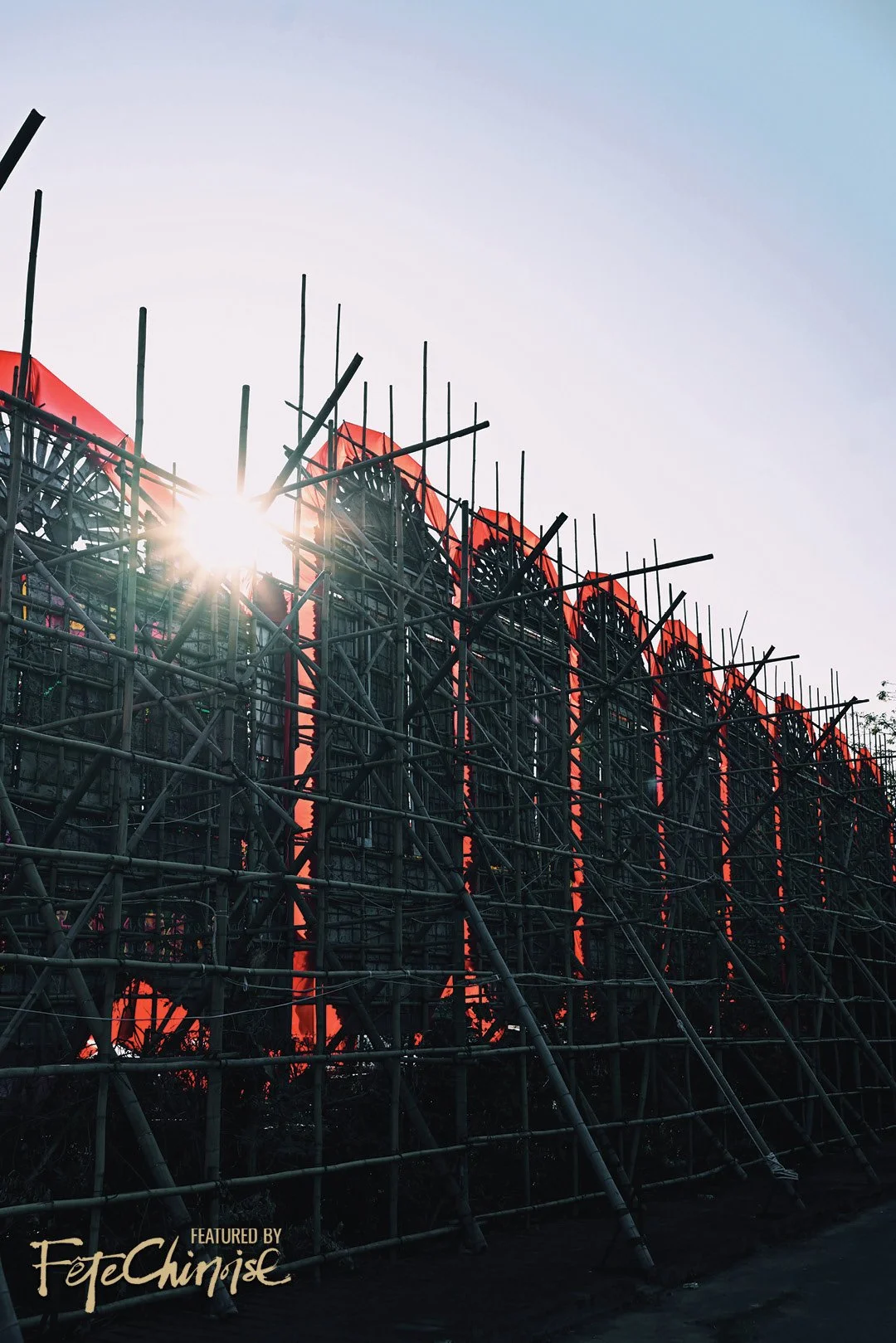
Photo Credits: Kit Chan
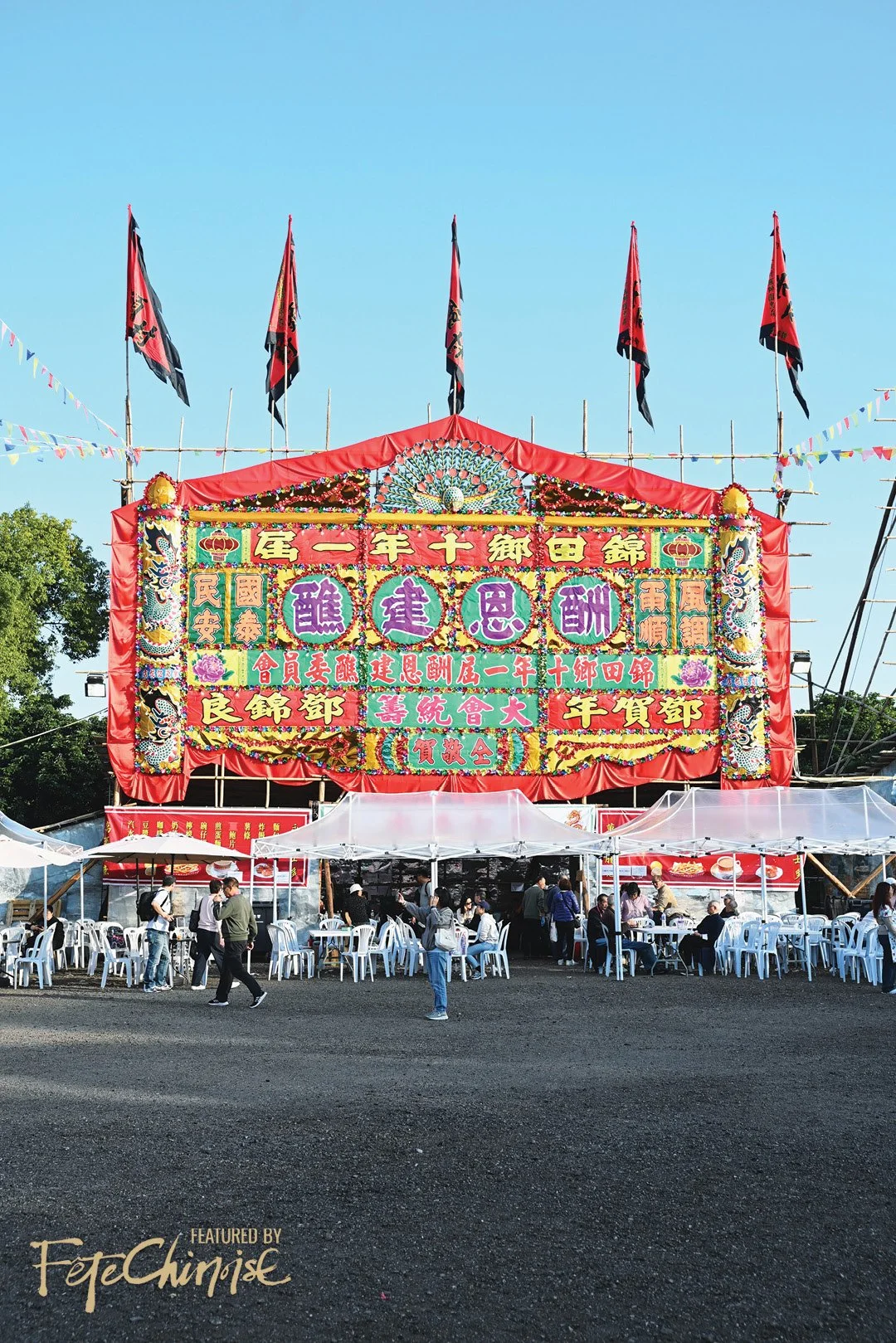
Photo Credits: Kit Chan
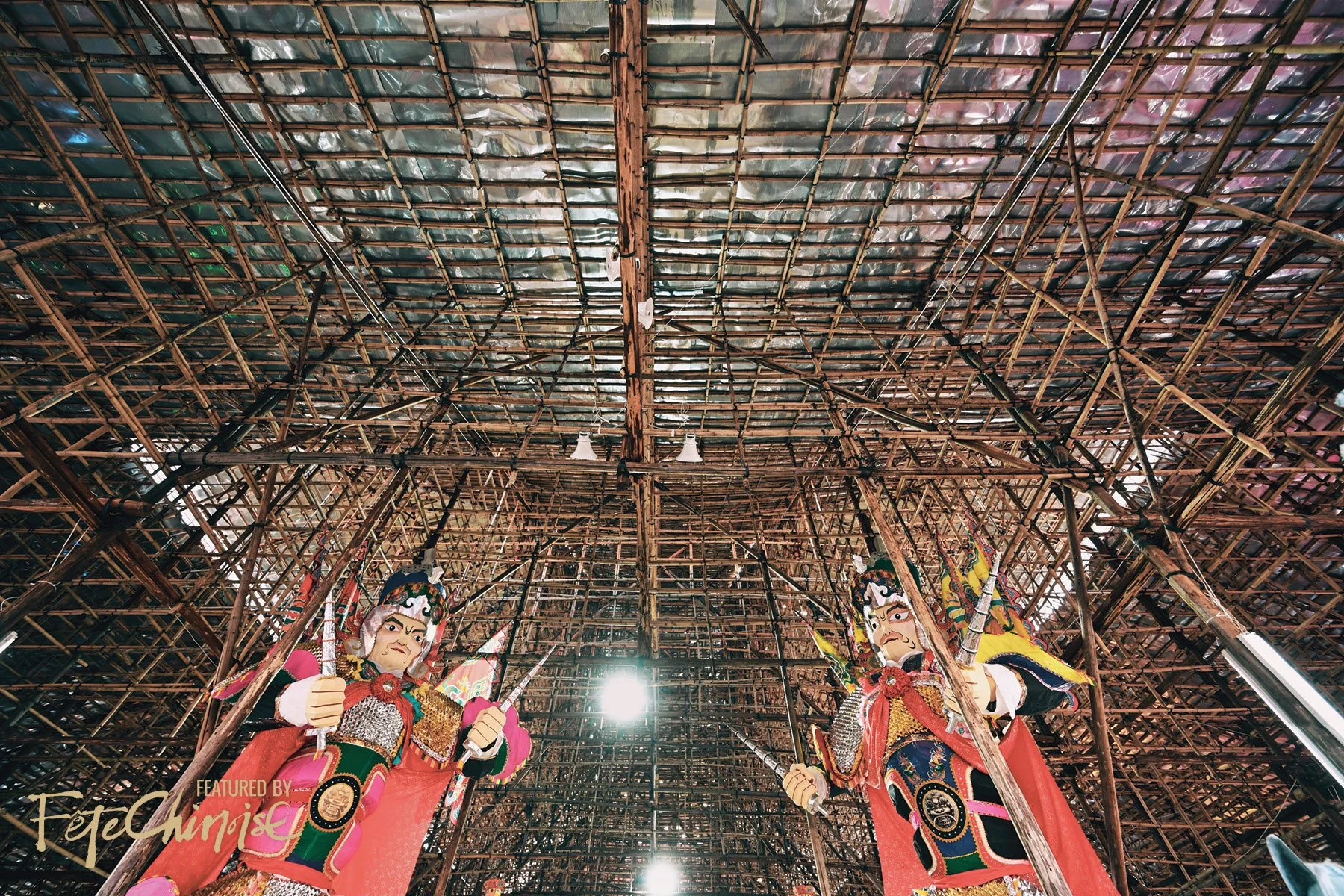
Photo Credits: Kit Chan
What they built – what they held up – was a city. What they transmitted – the knowledge, the technique, the trust between master and apprentice – was a civilization’s relationship with a plant that had fed it, sheltered it, clothed it and provided the material with which its music was made for 10,000 years.
月是故鄉明,茶是故鄉濃 。The moon is brightest over home.
The tea is richest from the land you come from. I have carried Hong Kong with me since the day I left at 18. It lives in how I move through a room, how I read a building, how I notice the way light falls through a scaffold and think: someone made this. Someone knew how.
The skyline will continue its upward ambition.
What will it be upheld by as it comes to life? Will it continue to be a forest of bamboo?
Bamboo was a part of the texture of many of our childhoods – there will always be a particular quality of light on the streets we are looking for on our evening and morning walks. Bamboo has taught us a particular way of understanding that strength and grace need not be opposites, that the most resilient structures are not the ones that refuse to bend but the ones built from thousands of careful connections, each one holding the next, each one trusting the next, all the way up. 無竹令人俗. Without bamboo, a man becomes vulgar.
May my home city never forget how to build the way bamboo taught it to be.
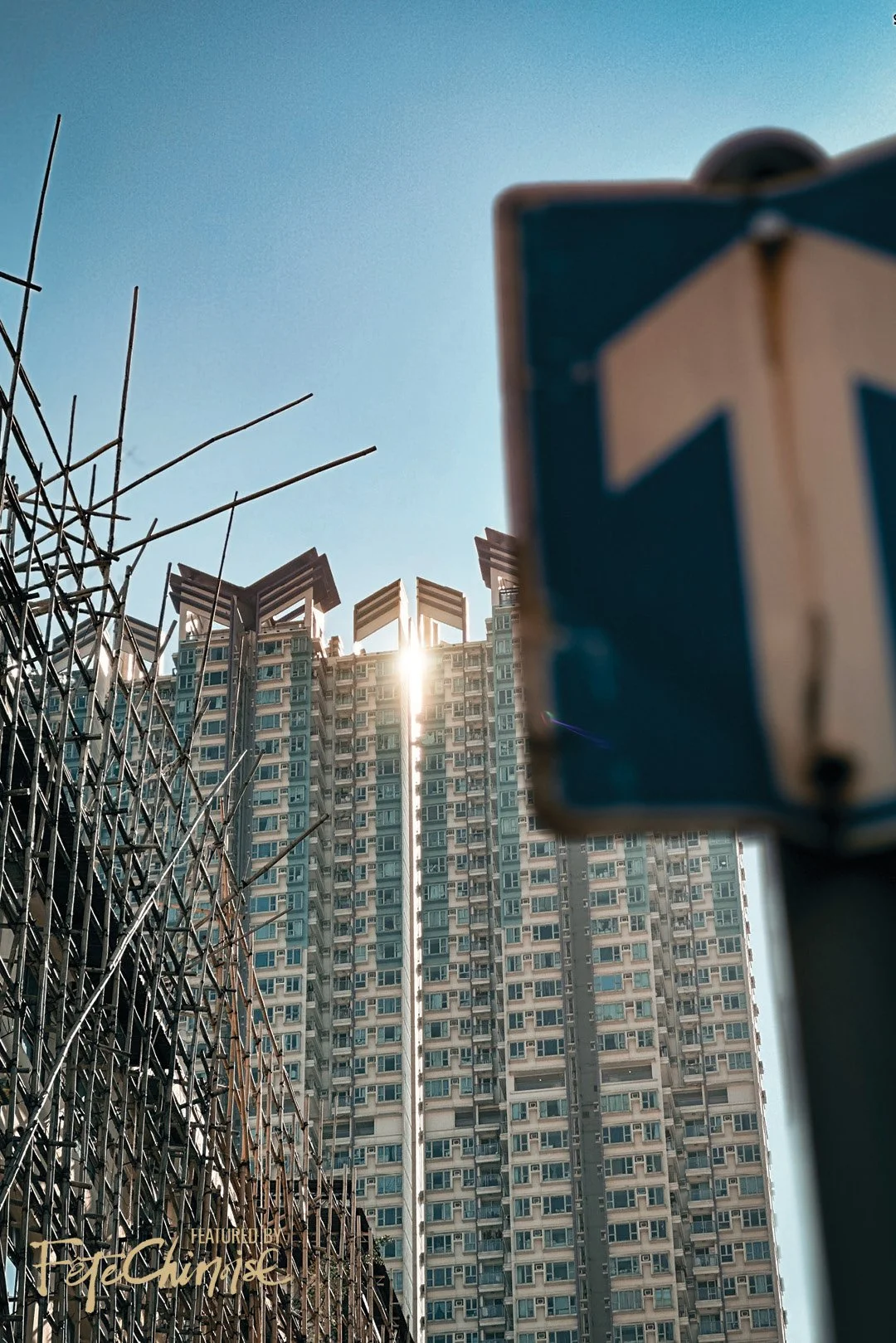
Photo Credits: William Shum Photography
More from Fête Chiniose
Hong Kong is well known as a concrete jungle of magnificent towers. But long before the concrete arrived, there was another kind of jungle—the bamboo groves that have for millennia colonized the hillsides of southern China, their hollow stems rustling in the wind like a thousand quiet conversations, captured in Ang Lee’s film Crouching Tiger, Hidden Dragon. It is one of the most beautiful ironies in the built history of our city: that the jungle of steel and glass rising from Victoria Harbour was erected, storey by storey, decade by decade, by a forest of bamboo.