Guangcai: Every Stroke on Porcelain Tells Stories 粵東磁廠:百年匠心瓷彩
English 英: Ophelie C · Chinese 中:曹逸雲
Photography: Mike Chan
As Featured in 2026 Fête Chinoise Design Annual

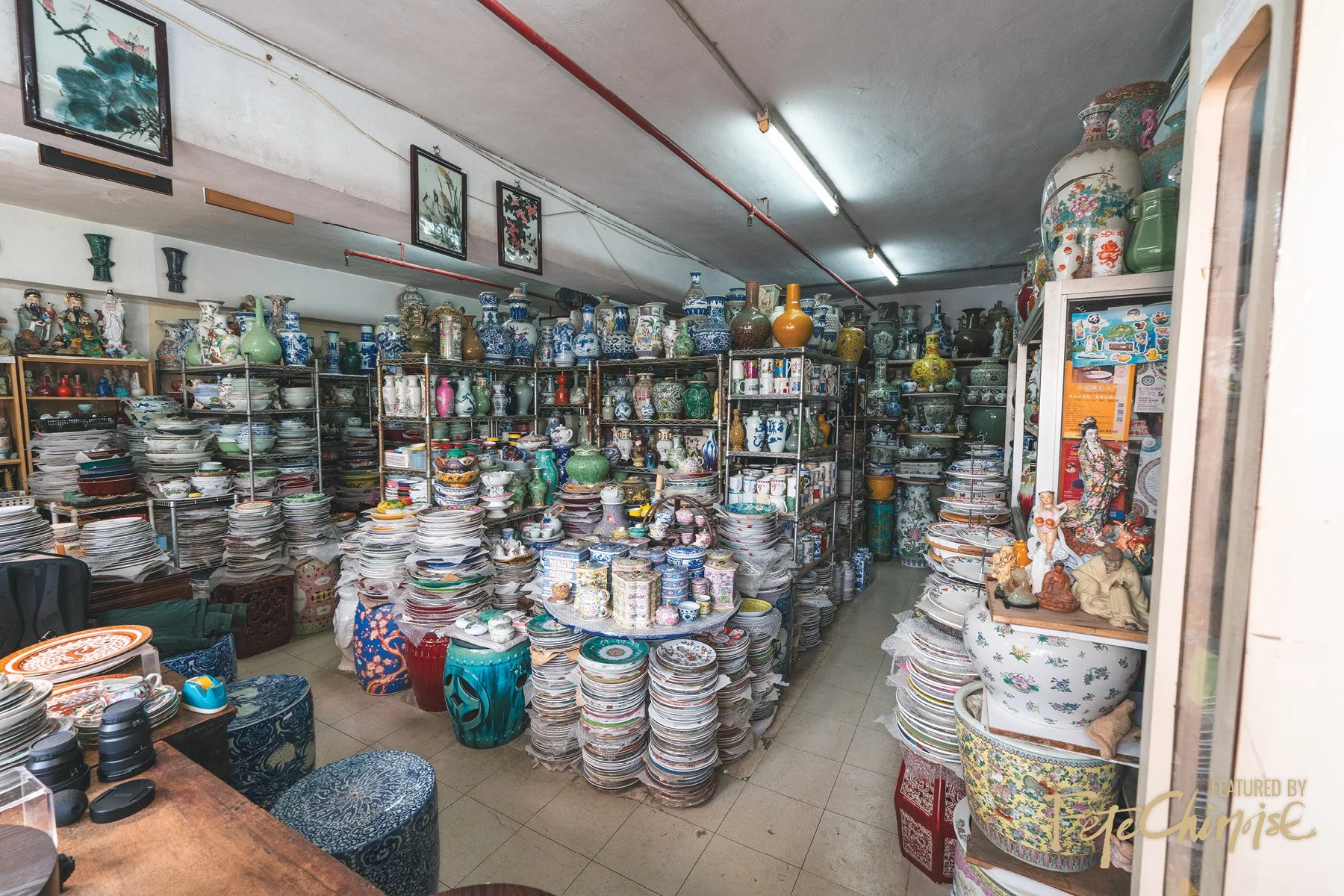
Showroom in Yuet Tung China Works
Established in 1928, Yuet Tung China Works has survived wave after wave of change in Hong Kong. Every piece of porcelain here has a long story to tell. The works not only reflect the opportunities and challenges of Hong Kong’s shifting relationship with the world over the past century, they also demonstrate the adaptability and flexibility of Hong Kong people.
“Appreciating the porcelain left over from my grandfather’s generation, I am really amazed by the old craftsmen’s skill. Their paintings are so beautiful. I feel that each one has its own characteristic, a kind of vitality,” says third-generation owner Joseph Tso, head of Yuet Tung China Works, the first hand-painted porcelain factory in Hong Kong and now the only one that remains. “I think the most important element of Guangcai (廣彩) is that kind of vitality, which records the craftsman’s ingenuity. Every stroke is drawn with a heart.”
瓷器餐具對華人家庭而言,是不可或缺的日常用品,一套「萬壽無疆」或者「青花米通」碗碟更是經典餐具。移民海外或是第二代的華人家庭,仍習慣使用這些瓷器餐具,這不僅是一種生活習慣,更是一種文化的延續與傳承。有些家庭一直珍藏着色彩奪目、全手繪製的瓷器套裝,只在節慶或宴請賓客時才慎重取出使用,代代相傳,成為家族記憶的一部分。
擁有近百年歷史的粵東磁廠,自1928年創建至今,為香港首間手繪瓷器廠,也是目前碩果僅存的手繪廣彩瓷工廠。它見證了香港彩瓷業的興衰變遷,更體現了香港人靈活應變、勇於創新的精神,並逐步發展出獨具特色的「港彩」風格。
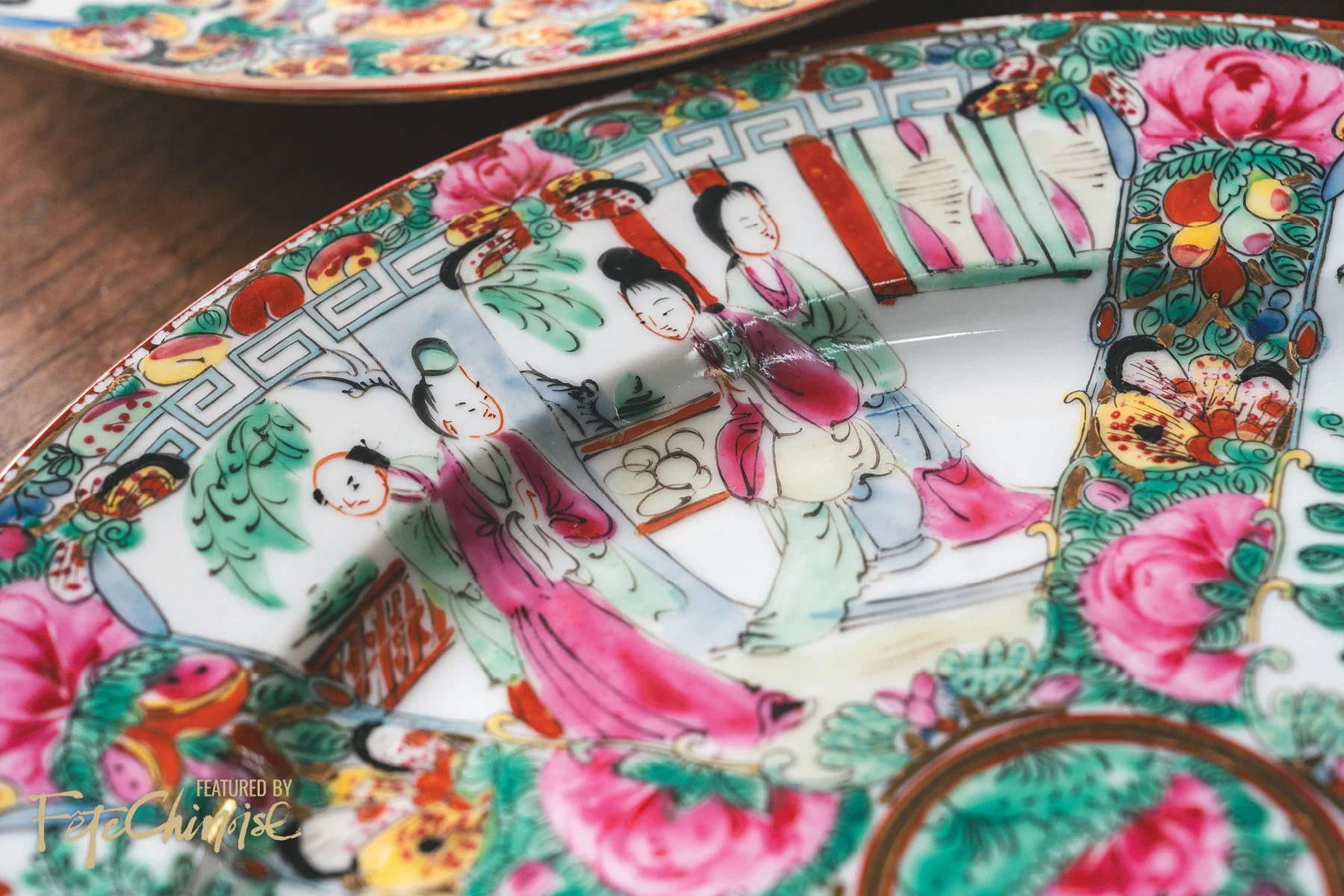
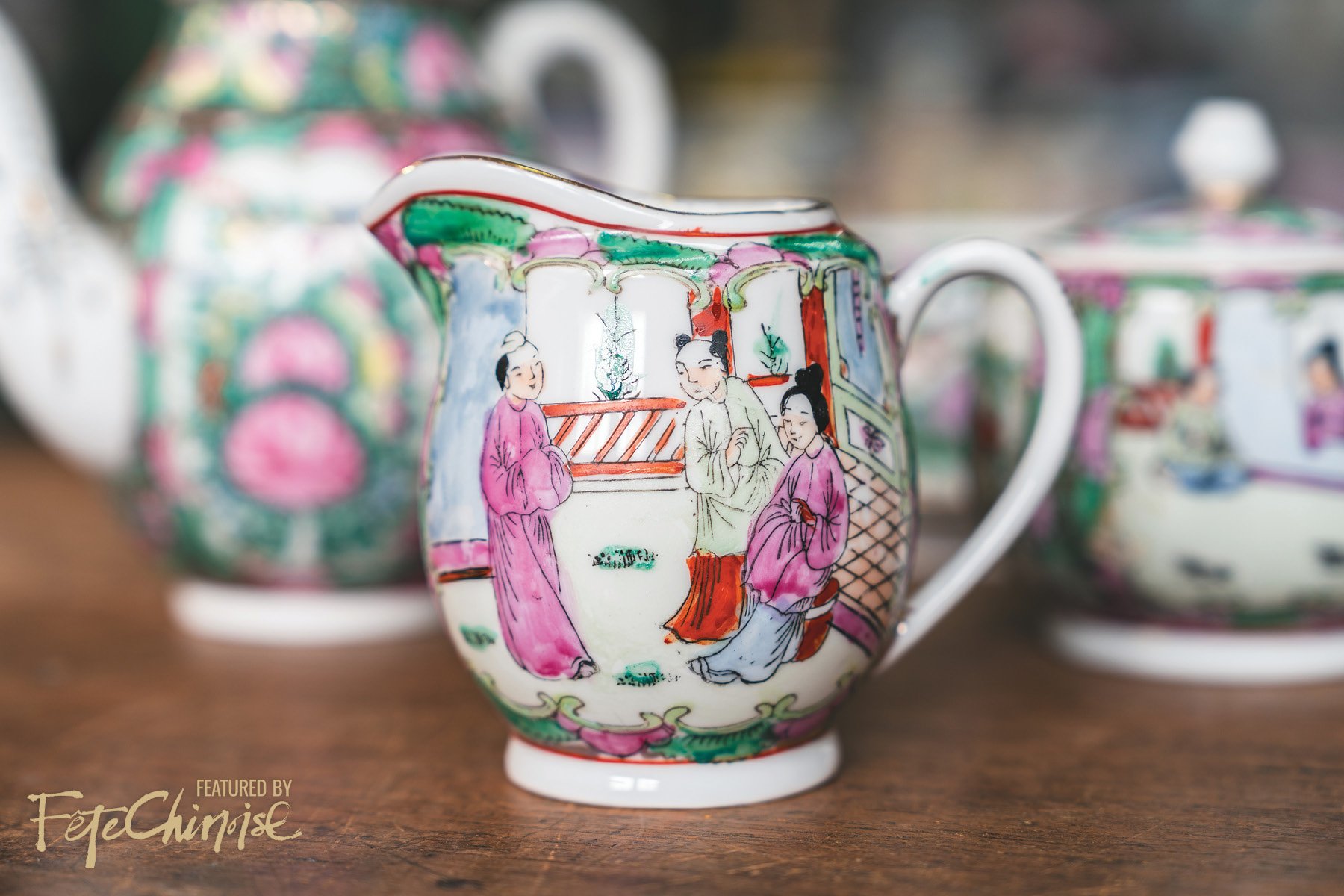
Canton PEOPLE, HAND-PAINTED IN 1950S
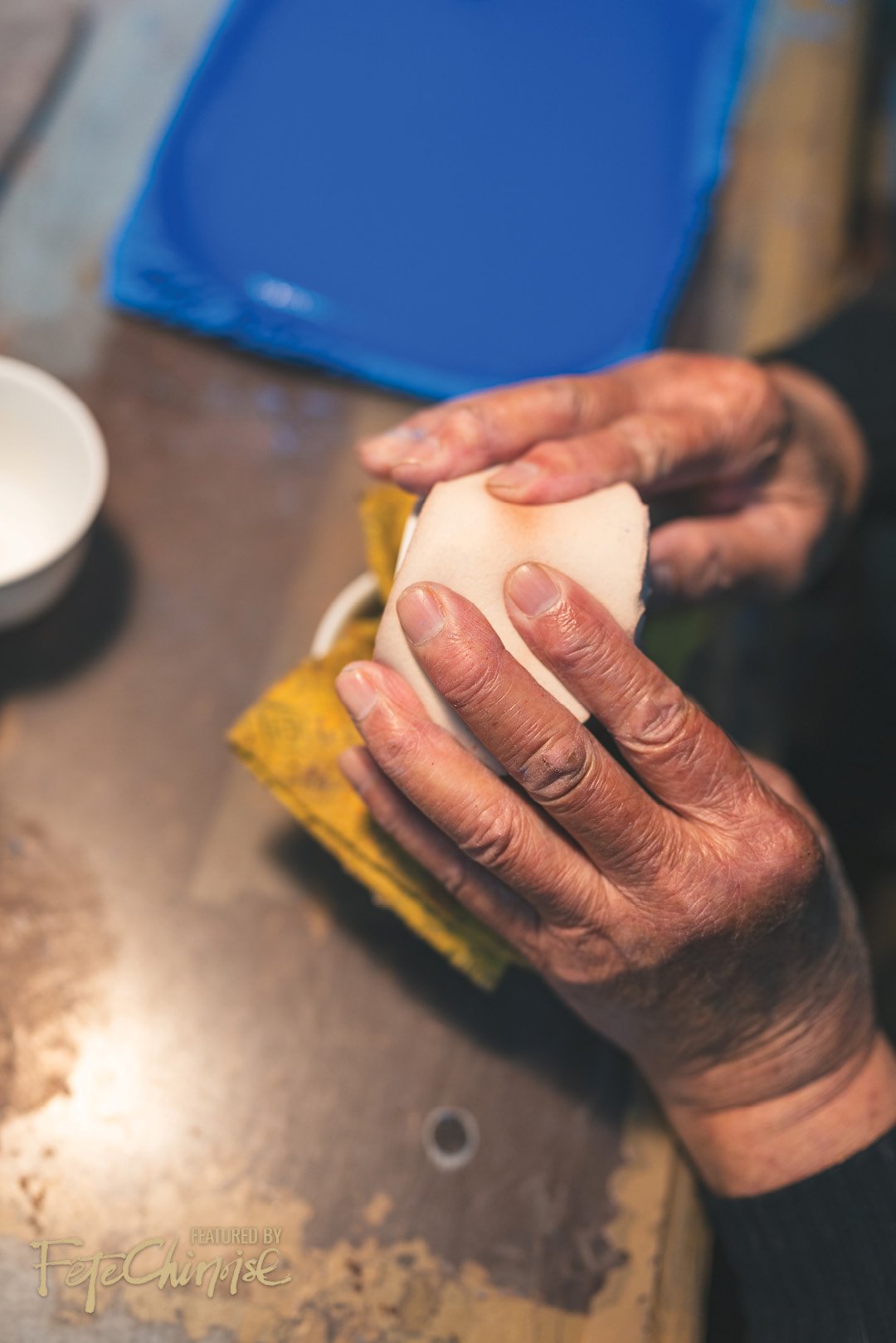
Now in his 70s, Tso still picks up his brushes to repair old porcelain and make it look as sharp as new. “This procedure is much more time consuming than making a new one, as the whole picture on the porcelain needs to be repainted and then re-fired. As my customers are buying them as a collection, I am doing my best to make every piece perfect.”
This sense of mission keeps him at the workbench. “The reason why I keep picking up the brush is, when I see that the colour of old china is fading, I feel it is such a pity,” Tso says. “When I repair it, someone will buy, appreciate and treasure it as their collections. And I know that old artworks are really worthy of being treasured. That represents the spirit of craftsmanship.”
從廣彩到港彩
「廣彩」是中國「廣州彩繪瓷器」的簡稱,屬釉上彩。工匠用毛筆在已上釉的素白瓷胎上描繪圖案,再進行低溫燒製,成品色彩層次分明,質感豐富。廣彩製作技藝可追溯至清朝初期,當時廣東省廣州市為外銷瓷器的港口,畫師按客人要求繪製圖案。至1920年代,廣彩技藝自廣州傳至香港,並逐漸發展壯大。
「廣彩已有三百年歷史,最初我們使用日本白瓷胎,因為品質穩定釉面細滑,瓷器薄身且觸感輕盈,成品質素高,款式多樣化符合外國人的口味,不像江西省景德鎮的瓷器造型較傳統。至八十年代後中國改革開放,我們慢慢將日本瓷器的造型轉至潮州楓溪生產,現時七成生產是在廣東省潮州市製造。這些白瓷胎加上工匠的手繪花紋、圖案或者家族徽章等等,融會中西文化的特色,因此很受外賓歡迎。早期粵東的客戶群主要是以遊客為主,也有許多本港紳士名流、大機構的老闆、各國領事垂青這些手彩瓷器。」粵東磁廠第三代傳人曹志雄娓娓道出。
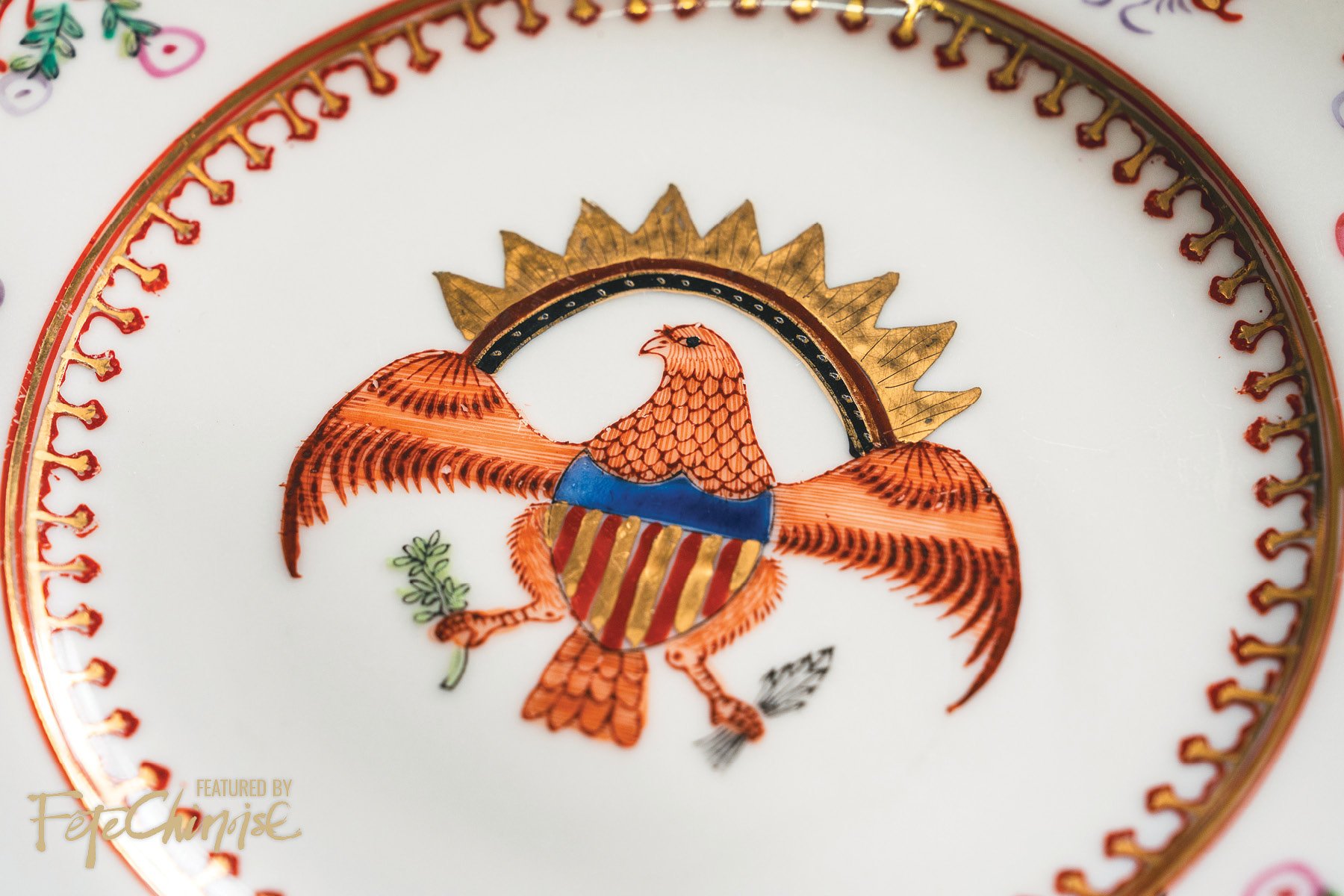
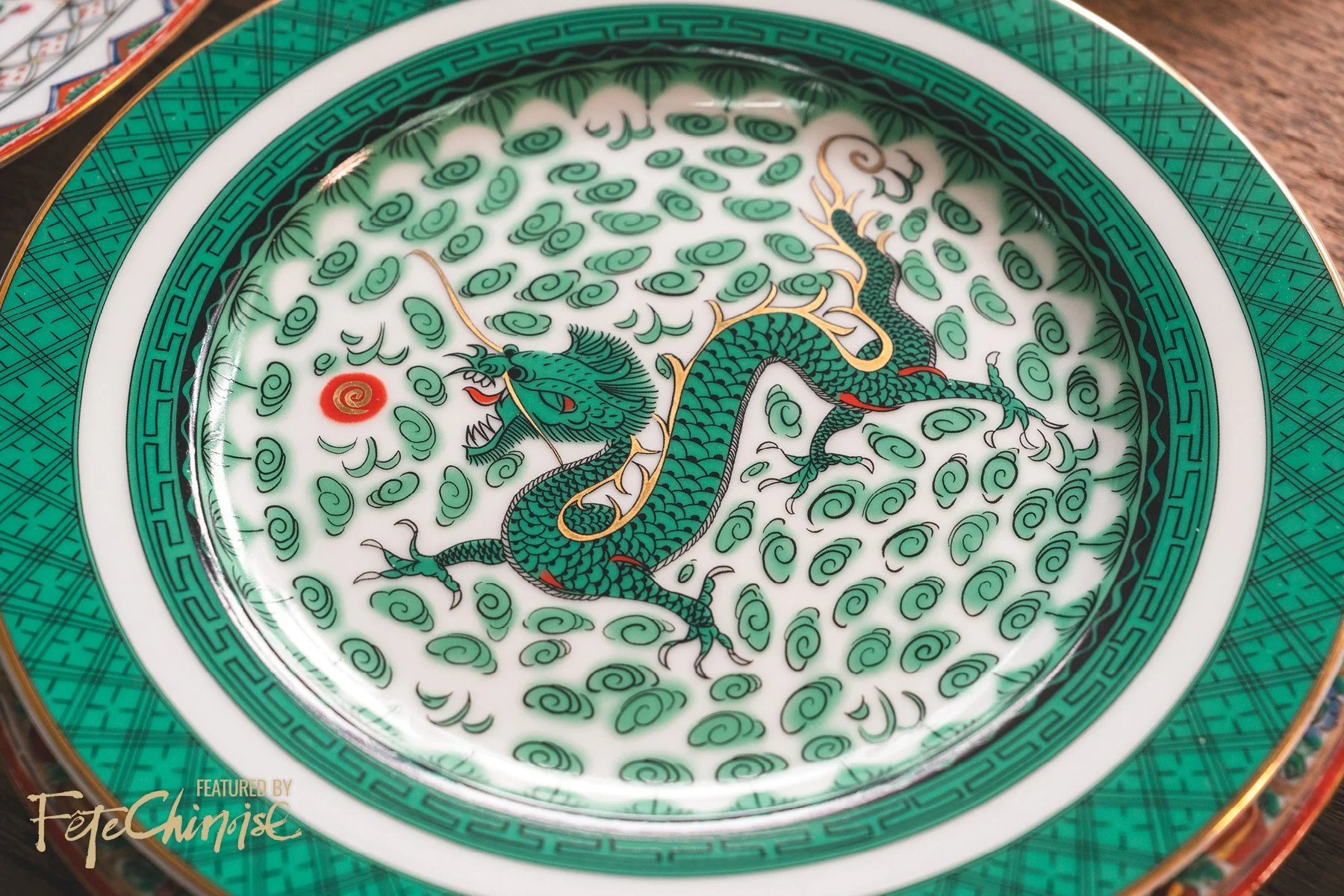
Growing up in the 1960s, Tso witnessed the changing challenges facing Hong Kong’s porcelain industry. Many experts and factories lost their footing after mass production took off in the 1990s. Yuet Tung China Works’ enduring success stems from maintaining impeccable quality. Targeting high-end customers, its pieces have become signature artworks representing Hong Kong culture. The factory supplies tableware to The Peninsula Hong Kong.
Former Hong Kong governors Chris Patten and Murray MacLehose and Lydia Dunn (Baroness Dunn, the first woman from Hong Kong appointed Dame Commander, DBE) are among their most notable customers. Their names are now part of the factory’s heritage. One emblematic example is the “Lady MacLehose pattern”(督花), a blue and white Hogarth-style motif created for Lord and Lady MacLehose in 1975 and still reproduced by Yuet Tung China Works. Patten leaves his mark as well. “When Chris Patten handed over Hong Kong, he bought these porcelain pieces from us and brought them back to England, saying it would allow him to reminisce about his time in Hong Kong,” Tso says.
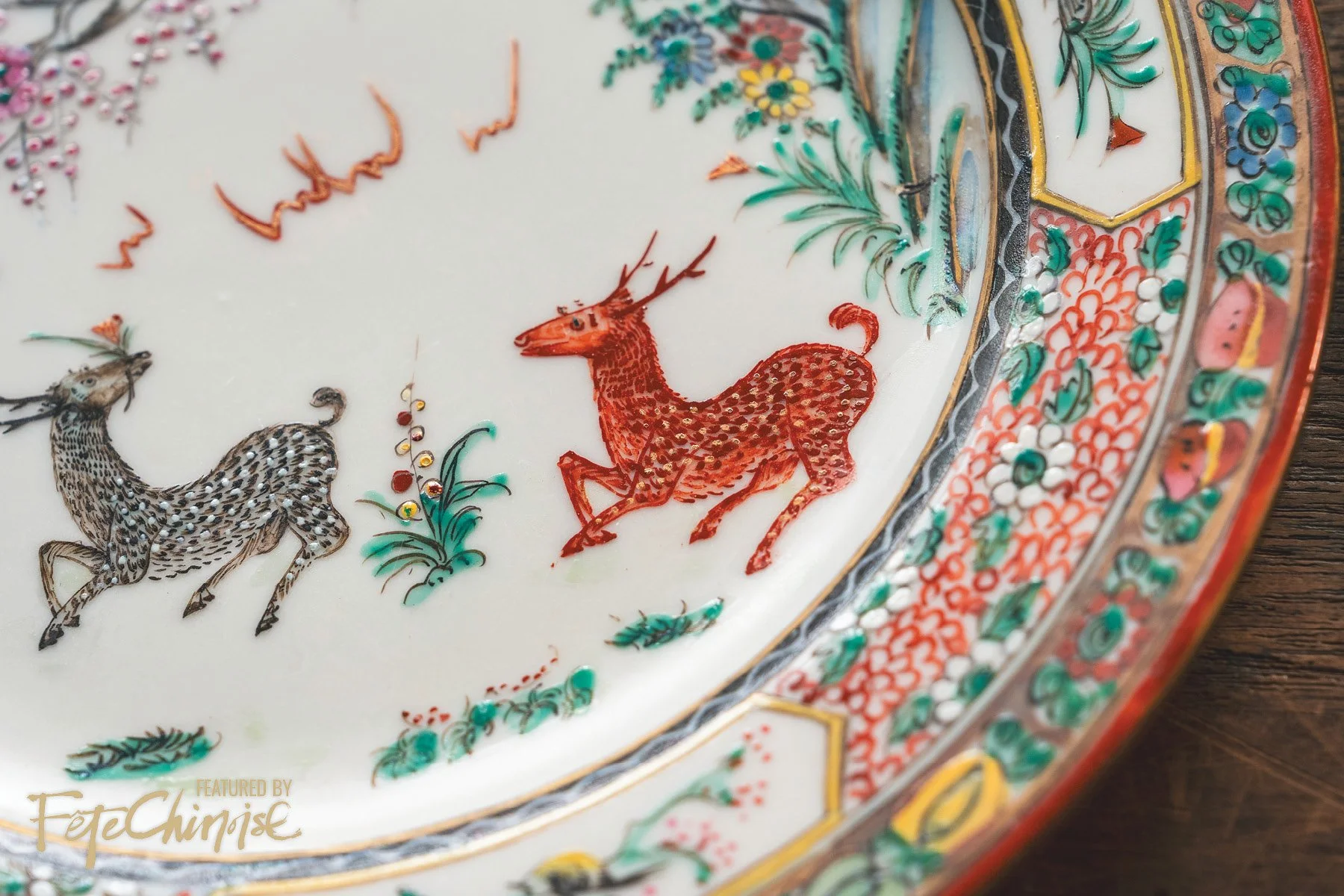
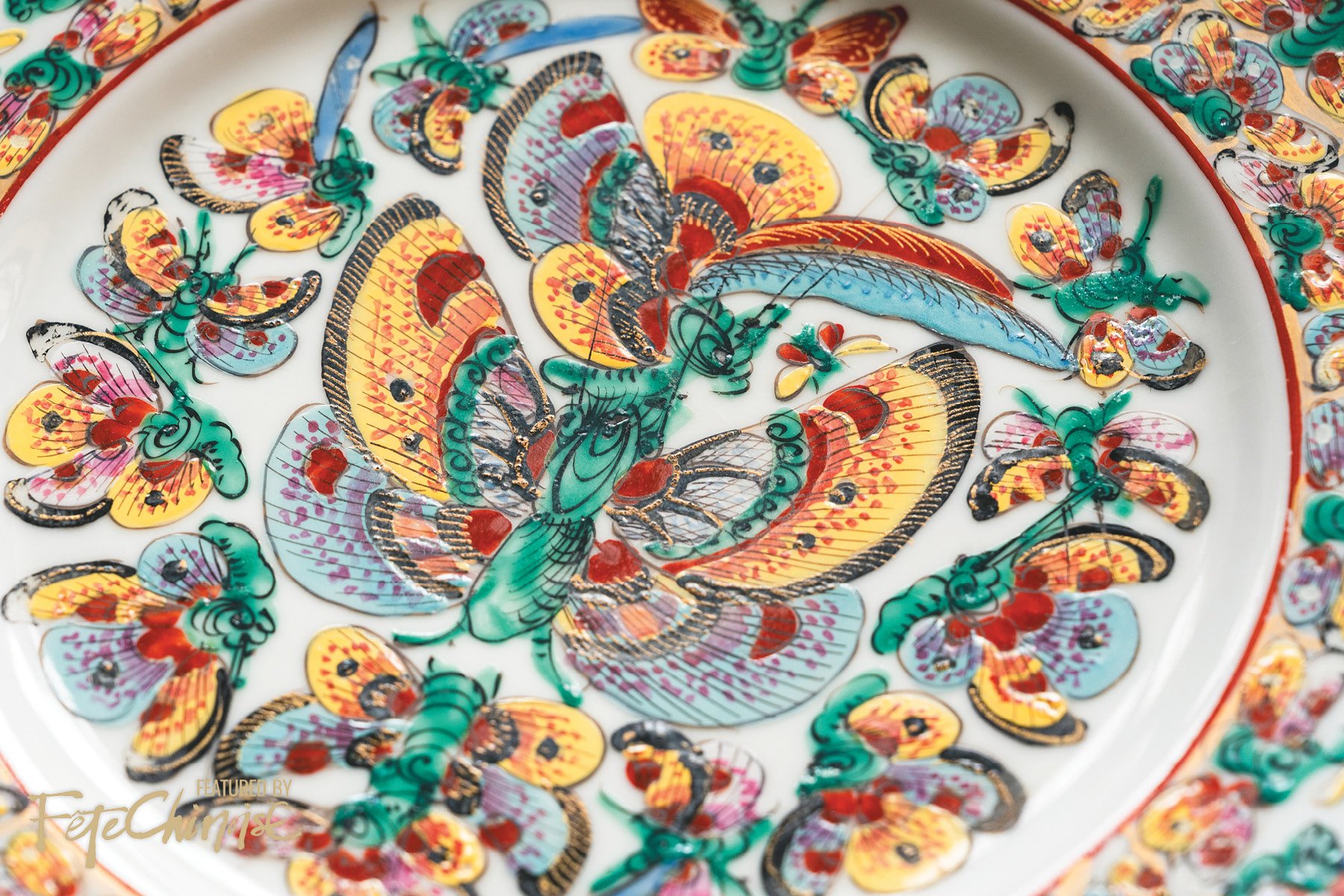
傳統廣彩圖案有二十多款,每款皆寓意吉祥,配以繁複花邊與金彩裝飾,鮮豔色彩填滿磁器表面,金碧輝煌,具「堆金織玉」的質感,故稱為「織金」。然而,這份華麗背後是極其繁複的工序。由工匠在瓷器上起稿、畫線條,其後填彩調色,色彩比例運用及配色搭配往往耗上數小時;最後還須燒爐師傅嚴格掌控溫度:過高,顏色就會冰裂脫色;過低,則色澤暗啞,不夠鮮明通透。一件全手繪製作的瓷器精品,需要多位經驗老到的師傅密切配合才能完成,因此價值自然較高,與一般超級市場及雜貨店所賣的機製餐具截然不同。
七十年代後,美國限制含鉛鎘瓷器進口,廣彩出口減少,很多香港廣彩磁廠被淘汰或轉移至國內發展仿古瓷。粵東得天獨厚,仍然有很多外國客戶、酒店餐館向他們訂貨;客源多流量大,一支獨秀,故此,仍然留守香港,堅持供應本土市場。很多來訂製瓷器的客人都帶來指定的圖案,這些新穎的意念融合傳統手繪藝術,創造出中西合璧的文化元素,形成具有香港獨特色彩的「港彩」風格。
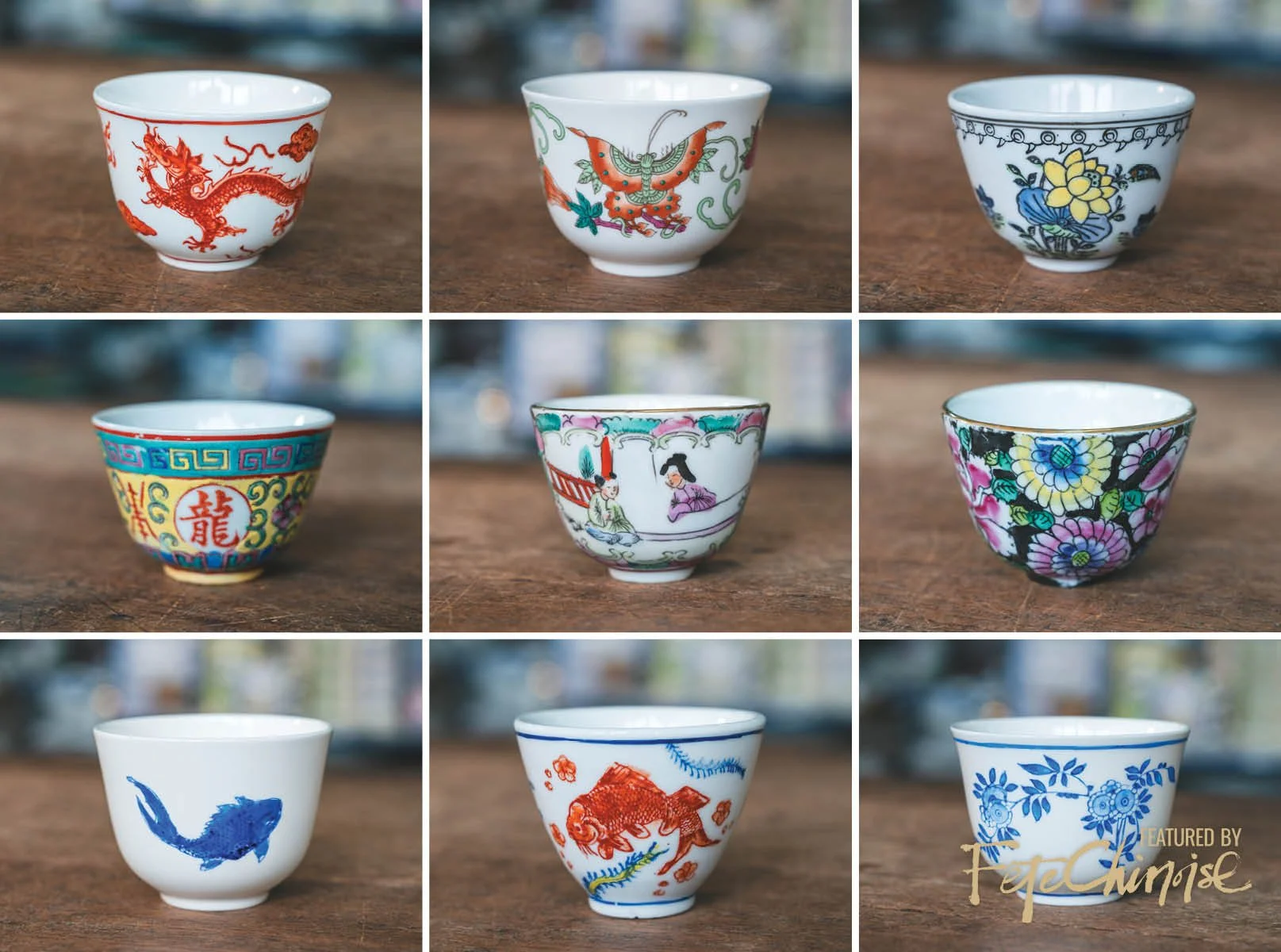
Assorted Design on Chinese Tea Cups, hand-painted in 1970s-1990s
It is no surprise many families in Canada still own hand-painted porcelain bought when they first immigrated, or pieces passed down from the previous generation. Tso says that from the 1960s to the 1980s, their porcelain was much better known overseas than in Hong Kong.
“We did not do much promotion, as most of our porcelain was for export. And our porcelain was rather expensive, so our customers were mainly wealthy. There are much cheaper choices, such as Jingdezhen porcelain, but when wealthy buyers want something special and unique, they come to us.”
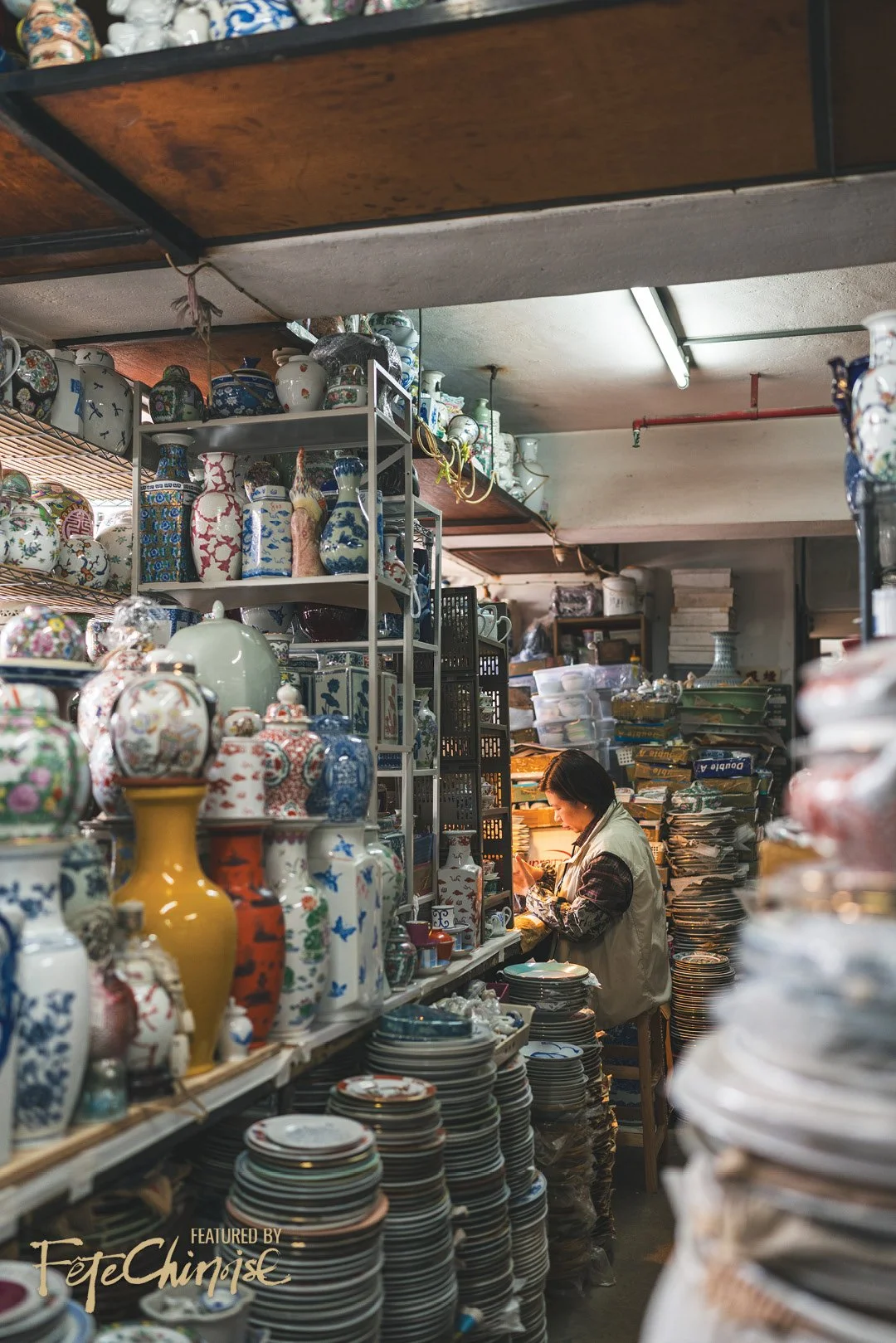
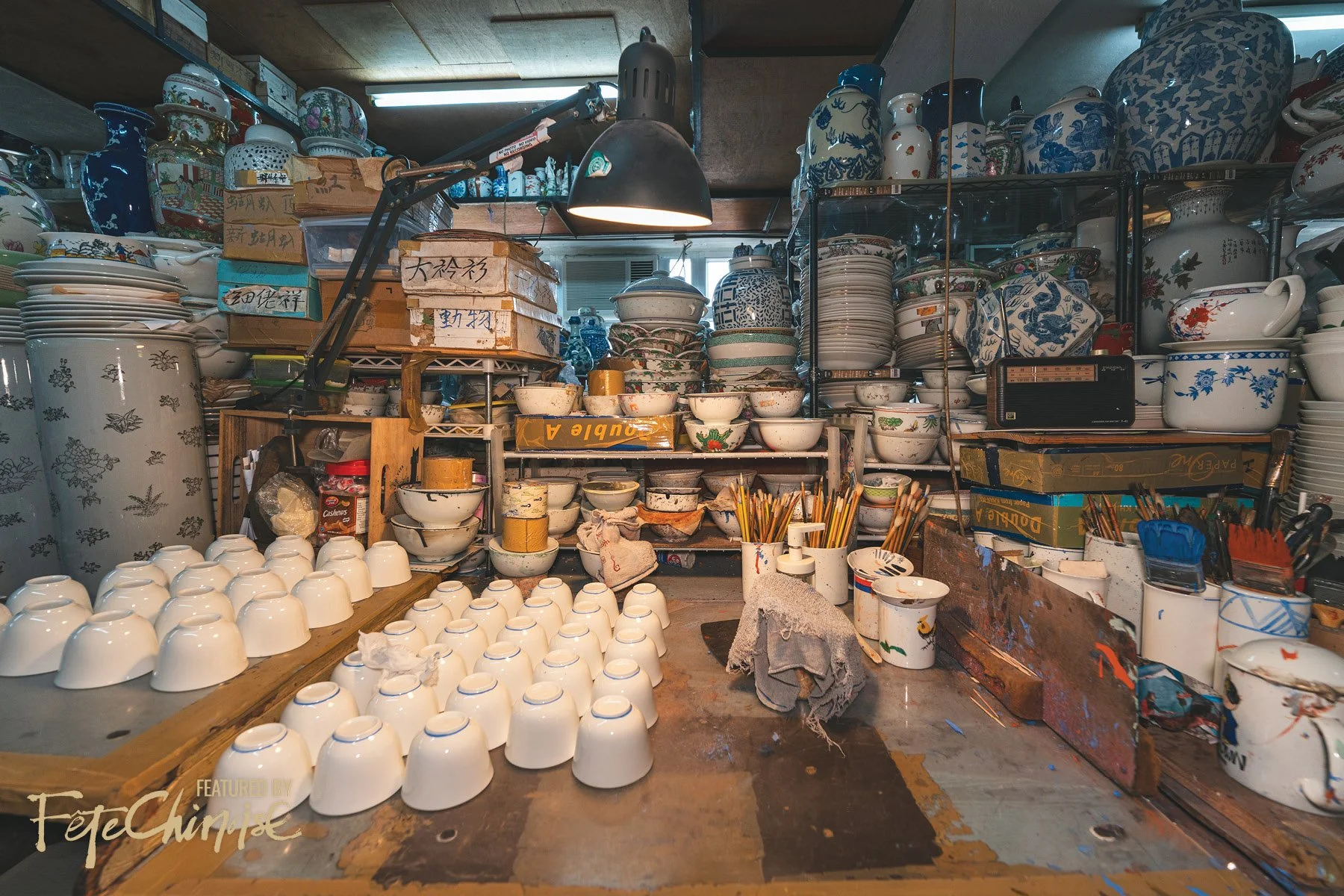
Workshop
Speaking in his factory showroom, stacked with plates, bowls, tea sets and vases, Tso recounts the stories behind different pieces. One plate, for example, shows a figure with braided hair and a long gown. “In the French customer mind, this is Chinese traditional clothing. I know it is Mongolian traditional clothing indeed… But we welcome all custom designs. I think Guangcai is so special and unique because it truly represents the fusion of Chinese and Western cultures. Sometimes they give us their own design to hand-paint on porcelain or write their name on it. In fact, since the 1970s, our motifs have mainly been custom-made.”
新世代接捧傳承
曹志雄原本就讀香港浸會學院,因略曉英文而協助父親(粵東第二代曹榮樞)接待外商,帶領他們到廣州交易會辦貨,認識不同商家、了解貨源及生產方式,幫助粵東拓展人脈與供應鏈。雖然非美術出身,但他對圖案美學有敏銳觀察力,並常參考外文瓷藝書籍;每當看到值得發展的圖案,就請工匠仿畫、起版;同時,他也常往博物館、拍賣行等地查考適合的圖紋,注入新思維,使磁廠逐步開發出幾百款新圖案,為粵東注入創新動力。
粵東磁廠近百年的發展歷史裏,經歷過戰爭的洗禮、政治經濟大時代的風浪起跌,曹志雄認為最大的挑戰是搬廠房。「我們全盛時期有超過三百位員工,曾在長洲及坪洲設廠。隨著時代變遷,工廠三度搬遷,由萬呎廠房縮減至現時四、五千呎的單位,員工亦減至十數人。搬廠房十分勞民傷財,更損毀不少珍貴的瓷器。」曹志雄回想起仍感慨不已。
At that time, Hong Kong, nicknamed the “Pearl of the Orient,” is truly a galaxy of Chinese and foreign talents. Guangcai is characterized by vibrant colours and sophisticated brushstrokes and its noble feel comes from its magnificent use of gold. The process demands many skills, including colour pigment grinding (磨顏色), outline hand painting and colour application(起稿), filling and gold gilding(織填與織金) and threading, or painting the edges(車線). Every step is meticulous. The porcelain is then fired at 750 to 800 degrees Celsius. When the pigments are heated, they transform into coloured glazes on the pure white porcelain that has already been glazed(白胎)—a process called overglaze decoration(釉上彩). Tso says this heating process can ruin all the effort that comes before, as underheating or overheating will destroy the colour.
“Previously, it relies on the experience of the master craftsman and their naked eye to judge the heat; now, a thermometer can be used.” He shows an imperfect piece, which looks very dim. The pigments they use carry another story of integration. “Chinese pigments are the best, but there was a trade embargo of the U.S. with China at the time, so Japanese pigments were used. However, in the 1970s and 80s, foreign countries notice the potential of the Hong Kong market and produce many high quality pigments. Then half of the pigments we use come from Japan and the other half come from Britain and Germany.”
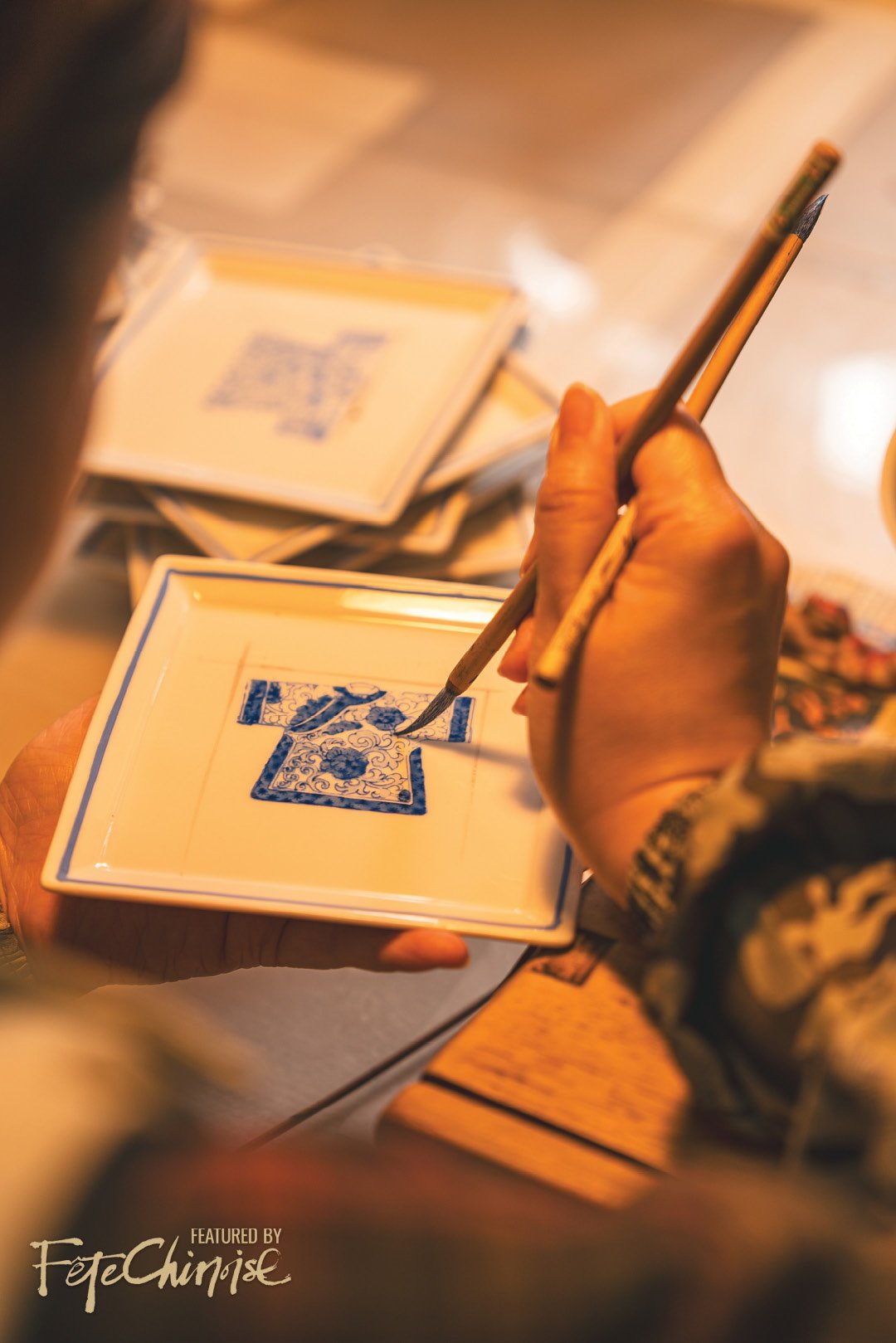
Blue Chinese Dress by Handpainting
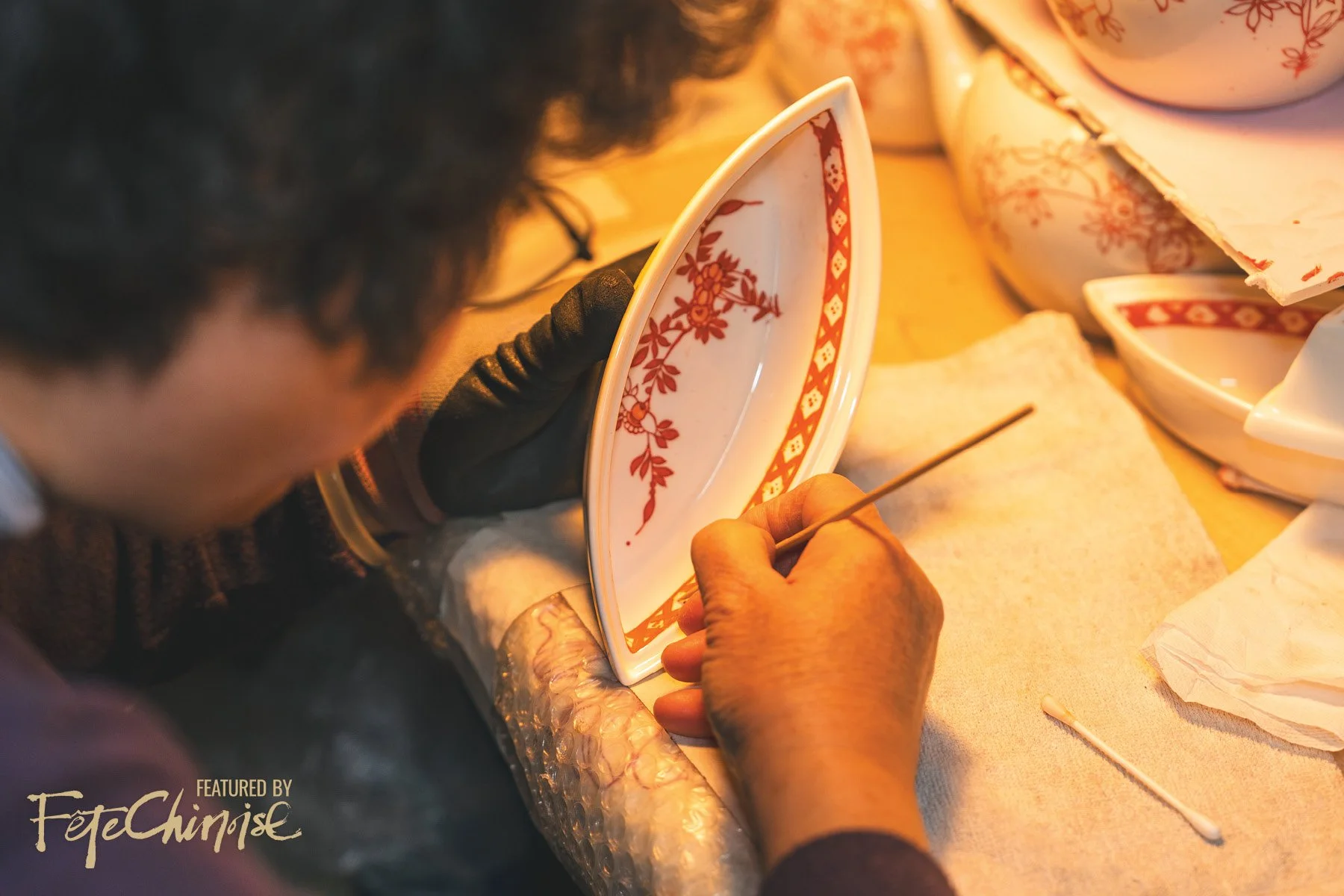
Coral crest on Candy dish, hand-painted in 2026
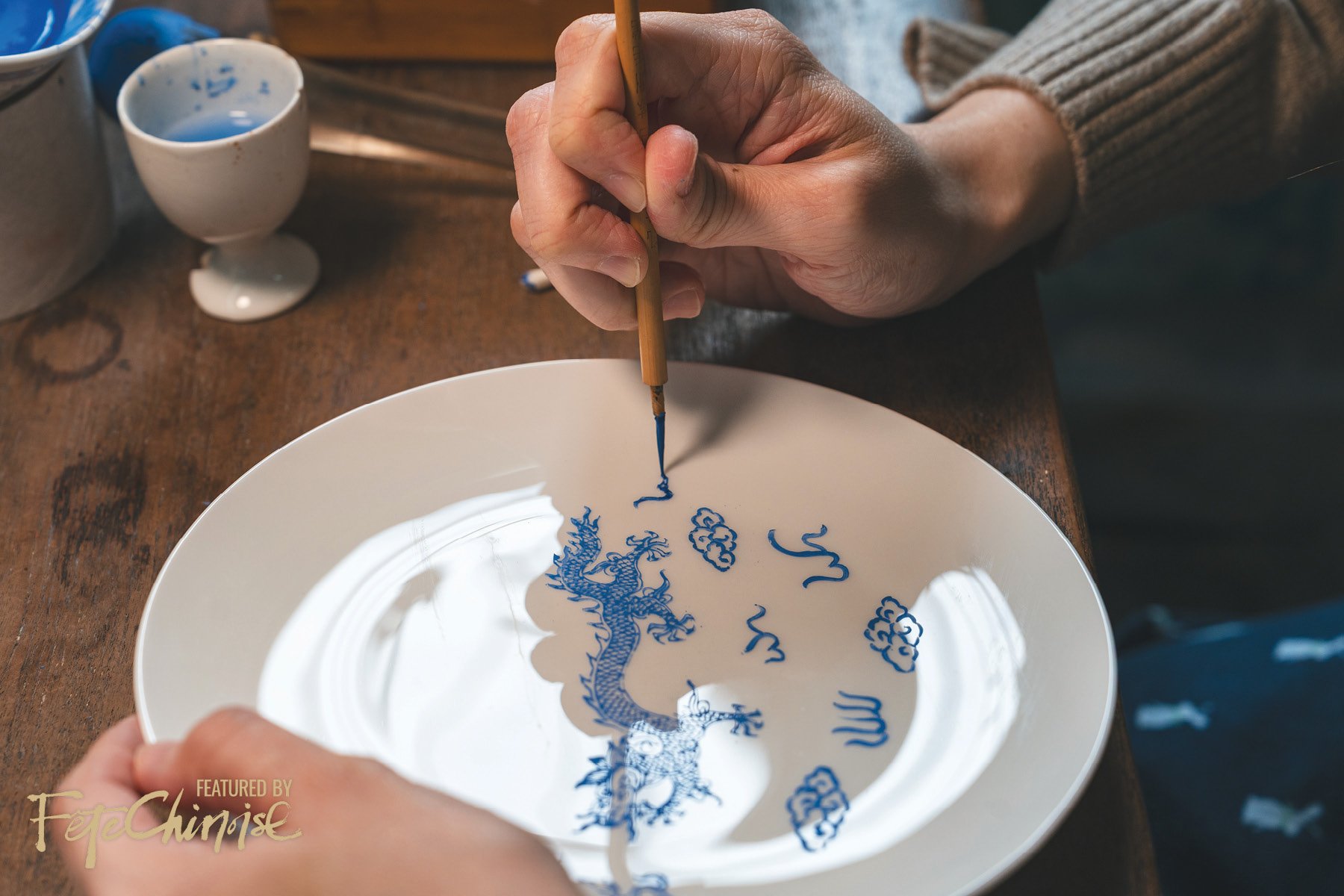
Martina Demonstrates the drawing Procedure of blue dragon pattern
Times change and their hand-painted craftsmanship keeps evolving to adapt to the modern world. “In my grandfather’s time, everything was hand-painted, but the craftsmen’s skills are limited because some only know how to paint chickens, fish and so on, and do not know how to paint other things. So my father feels that time management is a problem, so he comes up with a solution: adding a stamp(蓋印). After the outline stamping is done, everyone only needs to fill in the colours, which makes production much faster.”
全手繪工藝耗時費力,加上老工匠陸續退休,曹志雄見後繼乏人,自己亦屆退休年紀,本想賣完手頭上的瓷器貨品便作罷。然而,粵東廠房四個單位裡的瓷器擺設與貨品,大至花盆、小至匙羹,總計超過百萬件。遊客慕名探訪,常常在這片瓷器森林中流連,兩三小時後才再度現身。平日工藝瓷器多半陳列於櫥窗內,只供觀賞;但在粵東廠房裡,顧客可以細看、觸摸,直至找到心頭好。這份熱情,讓他重新思考粵東的未來。
「廣彩」於2024年被列入「香港非物質文化遺產代表作名錄」,經過政府及社會廣泛宣傳和定期舉行工作坊,逐漸為市民大眾認識。
曹志雄的女兒曹嘉彥(Martina)最初也沒想過會承接粵東的衣缽。她在大學修讀視覺傳達設計及比較文學,後從事電視編劇與製作。因為要照顧年幼的孩子而暫別事業 ,爺爺曹榮樞見她有設計天份,便召喚她回來幫忙。
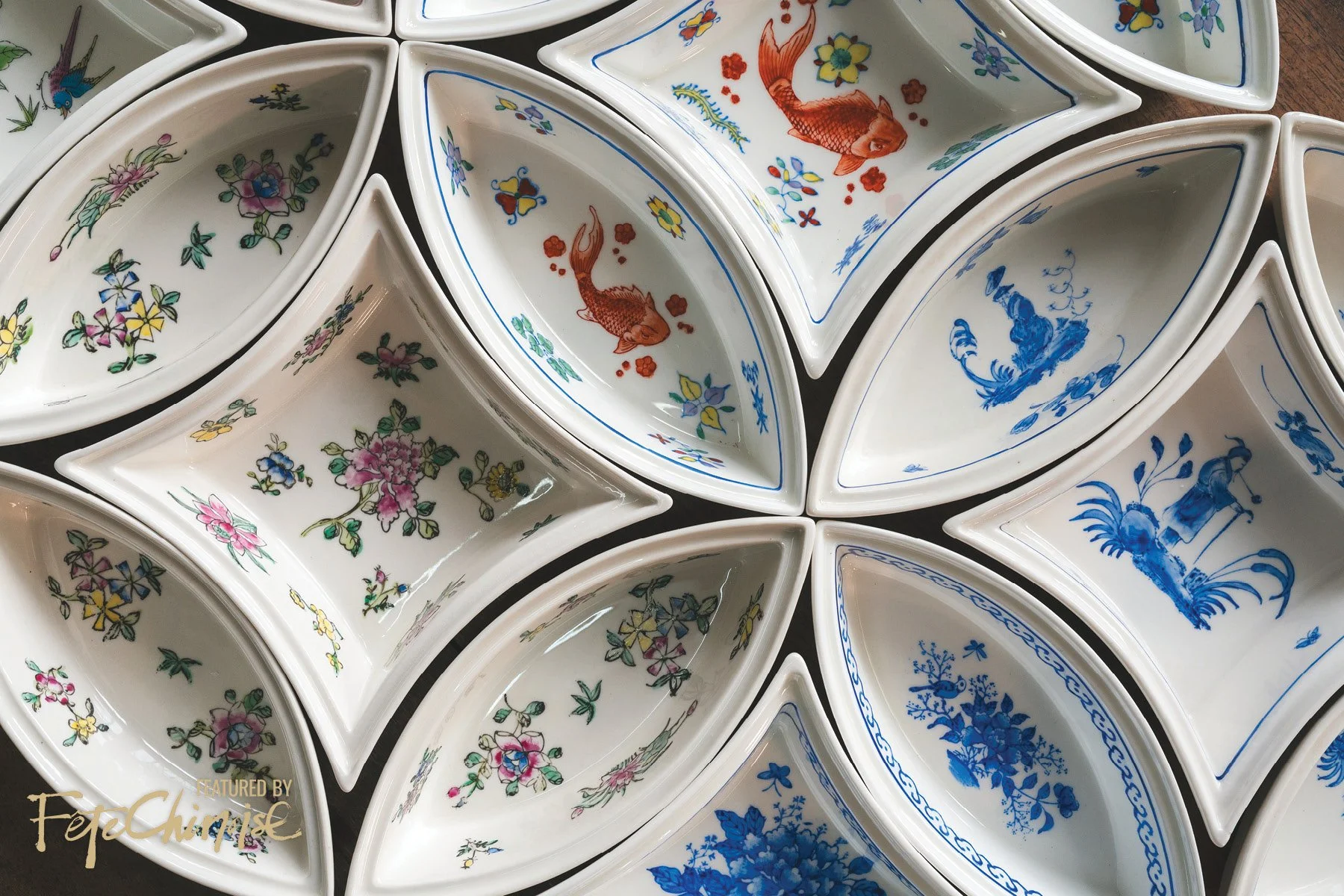
Assorted Design on Lazy Susans, Hand-painted in 2026
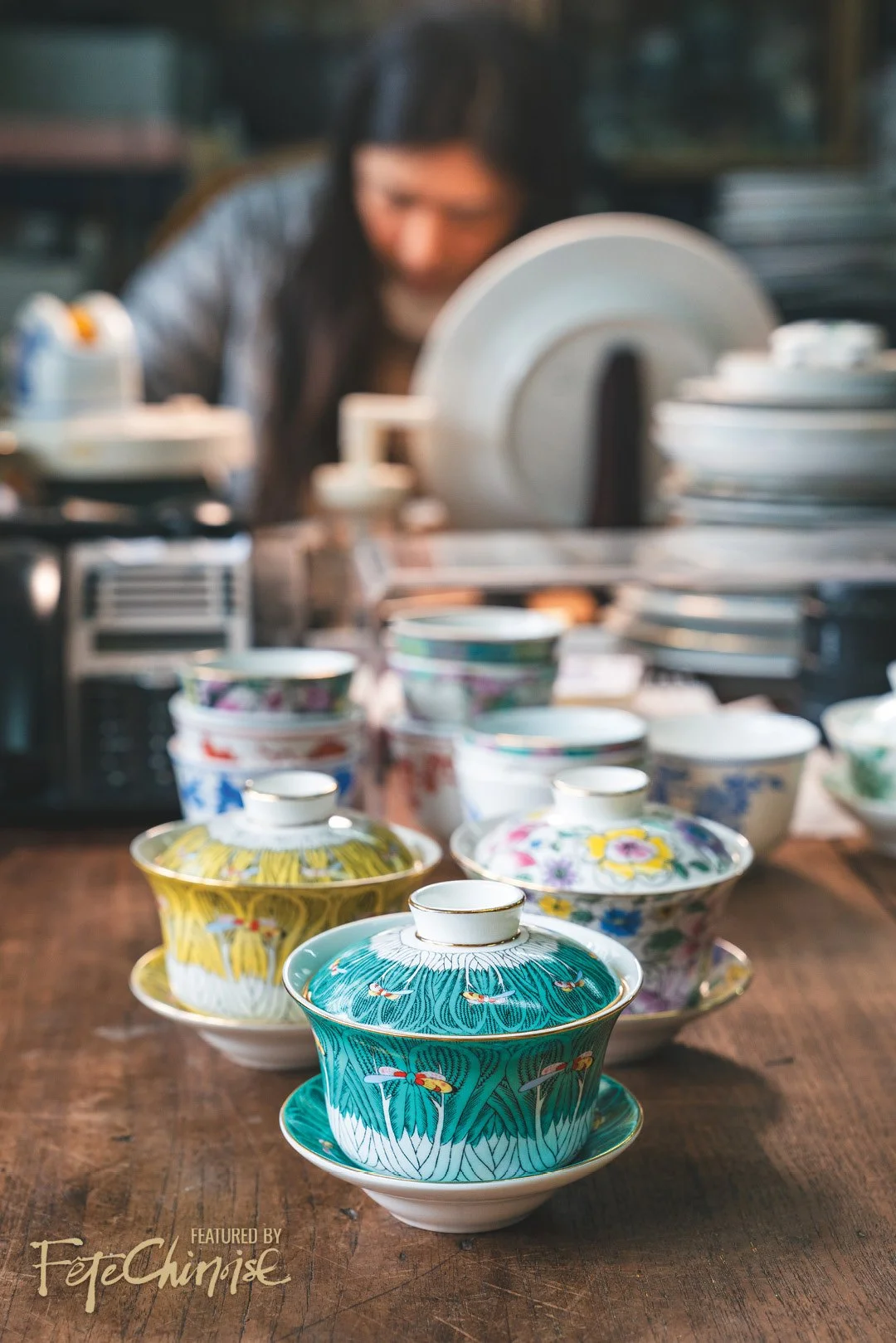
Tea Bowl Set in Cabbage and Thousand Flowers Designs, Designed by Martina Tso
In the 1990s, they adopt transfer paper(移印花紙)printing. Tso explains: “It would take a craftsman several hours to draw the design at my grandfather’s generation. But if we use a stamp, the design outline can be completed in half an hour and the craftsman can hand draw the lines on the edges. Now the transfer paper can be used to make a full-body copy. The design and even the colours can be filled in just five minutes.” Still, he insists on keeping the hand-painting process. “As our customers appreciate our craftsmanship, and the colours have a certain texture. So now, after applying the transfer paper and first firing, our craftsmen will hand-paint colour on top, ensuring a textured surface just as traditional.”
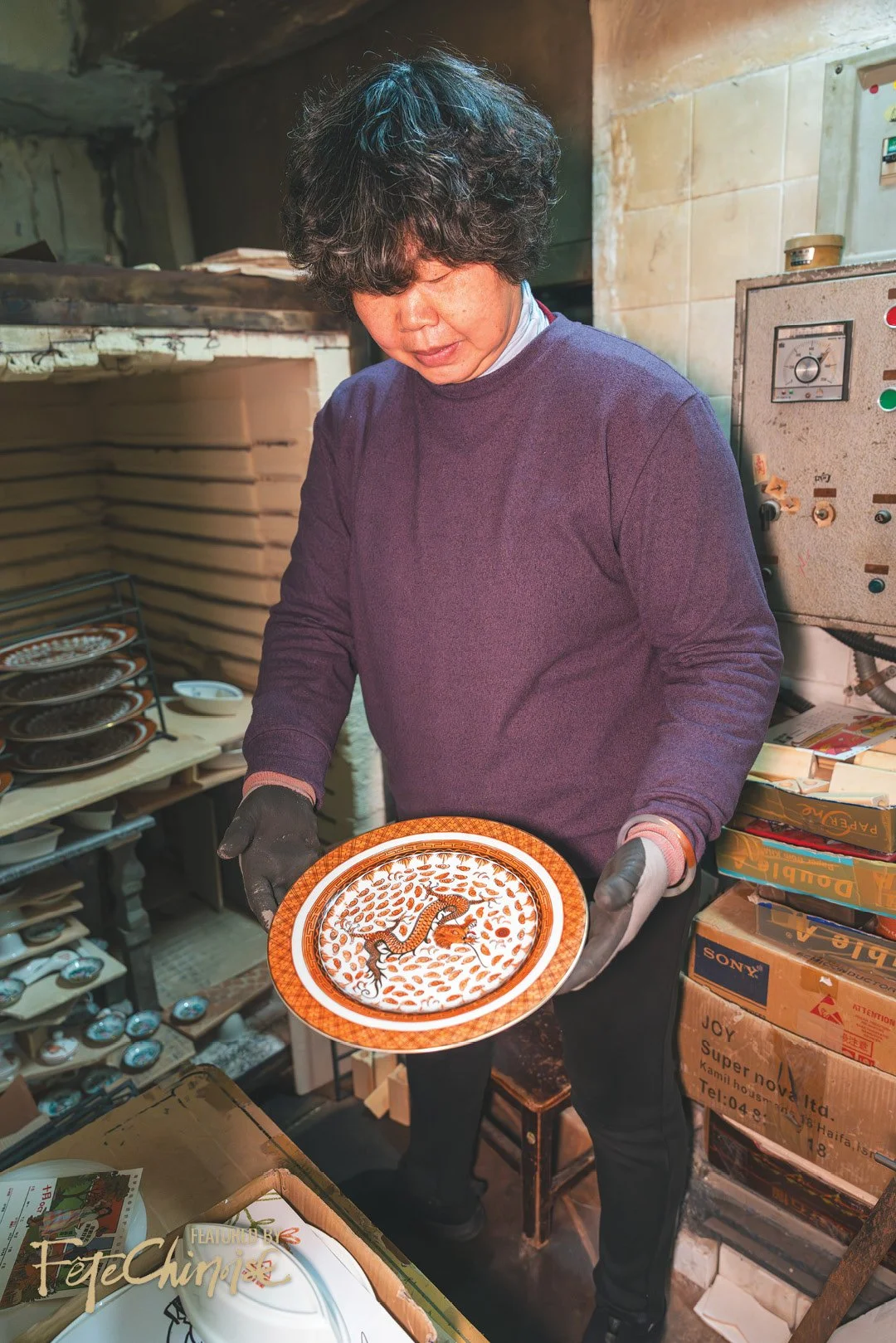
Throughout the interview with Fête Chinoise, Tso’s daughter, Martina, helps demonstrate the porcelain they are proud of. She studied visual communication design at university and originally worked in media. After learning the family history, she felt it would be a great pity if the craft disappeared, so she took on the responsibility of passing it on and became the fourth-generation inheritor of Yuet Tung China Works. Now she mainly uses new technology to bring back old patterns that had ceased production. She shows a dragon pattern as an example.
“It had been out of production for at least 30 years,” she says. “My grandfather asked me to redraw and reprint it using a tablet computer and add colours. Although it is made entirely with transfer paper, it still feels like a hand-painted texture.”
雖然是家族生意,但入行前 Martina 對廣彩認識並不深。 2018 年康樂及文化事務署邀請粵東舉辦大型展覽,學者透過研究及訪問包括她父親曹志雄在內的三十多位老行家,為展覽蒐集資料,並於香港文化博物館展示研究成果。Martina 在參與導賞的過程中重新認識廣彩,也意識到這門工藝正逐漸式微。她認為,如果能開發新產品,這門工藝仍有機會延傳下去,便立志入行幫忙。
新科技、新生產線
「釉上彩瓷器洗得多會脫色,以前師傅全手畫的傳統花紋,雖然手工粗糙,但一筆一畫充滿生命力,很有特色,令很多外國人趨之若鶩。」曹志雄笑言。「尤其是日本人,他們很尊重全手工製作,覺得是一種藝術。日本瓷器都很工整仔細,他們最初不屑廣彩手繪的粗糙、堆厚、畫過界等缺點,但後來開始欣賞及尊重廣彩工匠手繪的精神及生產程序,近年更常特地前來選購收藏。」
為了在保留傳統手工質感的同時提升生產效率,粵東引入絲網移印與印花紙技術。Martina 先在平板電腦重新手繪圖案線條,再透過絲網移印花紙技術將圖案線條貼印到瓷器上,大幅縮短起稿工序的時間。瓷器經過第一次燒製後,再以人手上色,保留鮮明色彩及觸感層次。 印花紙技術則能快速將整幅圖案移印在瓷器上,適合大量生產。即使經過貼花紙加色燒製,瓷器仍呈現立體凹凸的紋理,保留了客人偏愛的手工質感。
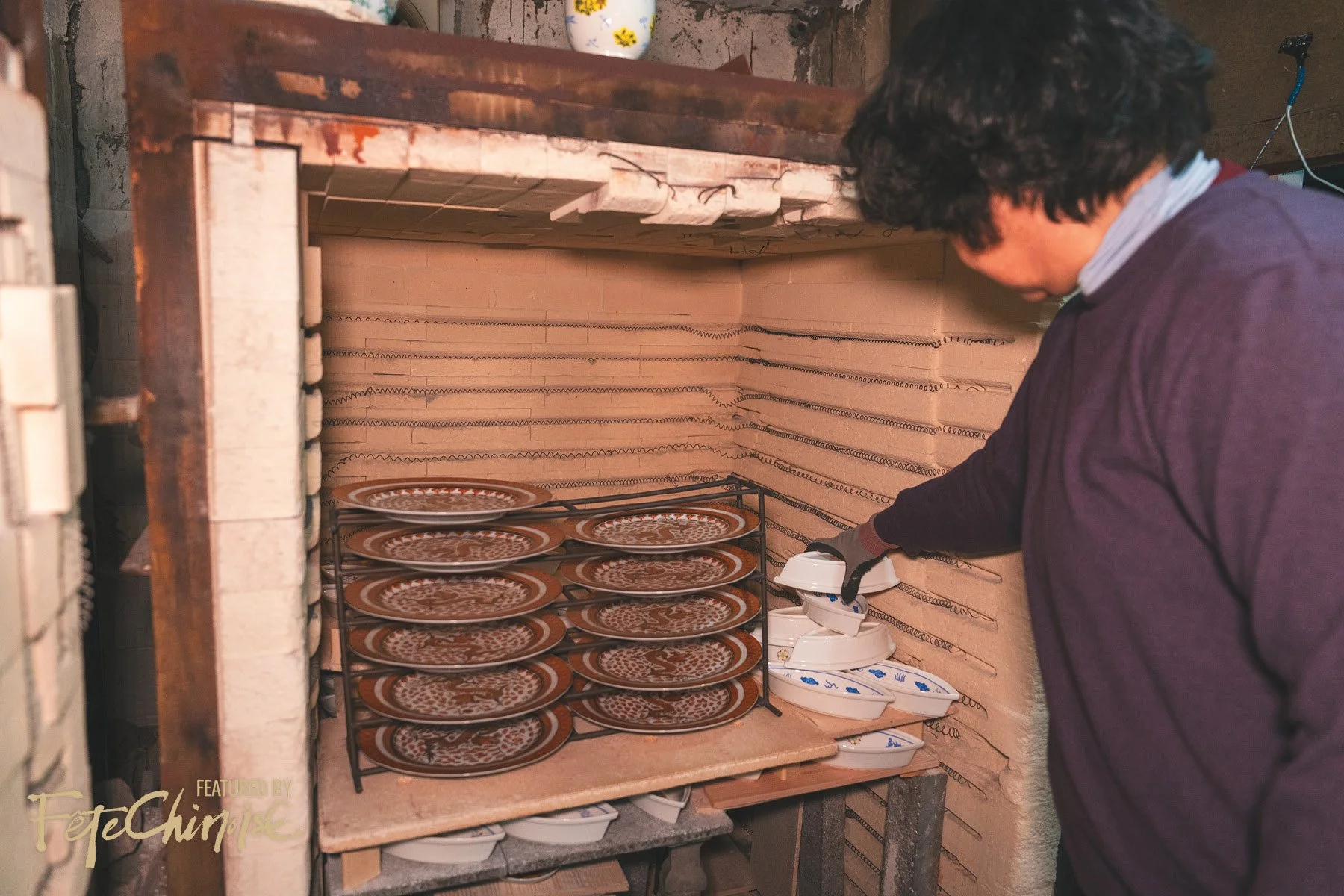
Electrical kiln Firing
Her new porcelain designs have been exhibited at the Palace Museum Cultural and Creative Products Hong Kong Space in Beijing, organized by the Cultural and Creative Industries Development Agency (CCIDA). The series incorporates elements of the Hong Kong skyline and blue and gold tones and lines, marking a new chapter for Guangcai.
Today, Guangcai is being revitalized with government support to preserve intangible cultural heritage (ICH). Tso and his daughter are sharing their heritage through media interviews, talks, workshops and exhibitions in Hong Kong. “I originally planned to retire,” he says, “but the government promotion has been a great source of motivation. I have become busier than ever. People’s appreciation is the biggest driving force.”
粵東歷來吸引許多名媛望族專程訂購,如前港督麥理浩和彭定康。為半島酒店訂製的客房茶具,更吸引外國遊客前來搜購;加拿大名廚 Susur Lee(李國緯)亦曾為其餐廳訂製餐具。近年,粵東更與多個品牌如橡子共和國、景福珠寶等聯乘製作產品,將廣彩圖案延伸至潮流商品與時裝設計,使品牌形象更年輕、時尚。「我們接到很多特別設計訂單,例如香港立法會的官方紀念品、大專學院紀念瓷器等。最近受香港文創處邀請,設計了一套具有香港特色的廣彩瓷器,於『香港文創薈萃』北京故宮文創香港空間展出。」Martina 補充說。新設計獲各方肯定,也令她深受激勵。
從戰亂歲月到經濟轉型,從外銷鼎盛到本土堅守,配合科技融合創新,粵東磁廠跨越近一個世紀,始終未曾熄爐。每一件廣彩瓷器,既是東方美學的凝結,也是香港匠人精神的象徵——對傳統的敬重,對創新的勇氣,在一筆一畫之間,延續百年光彩。
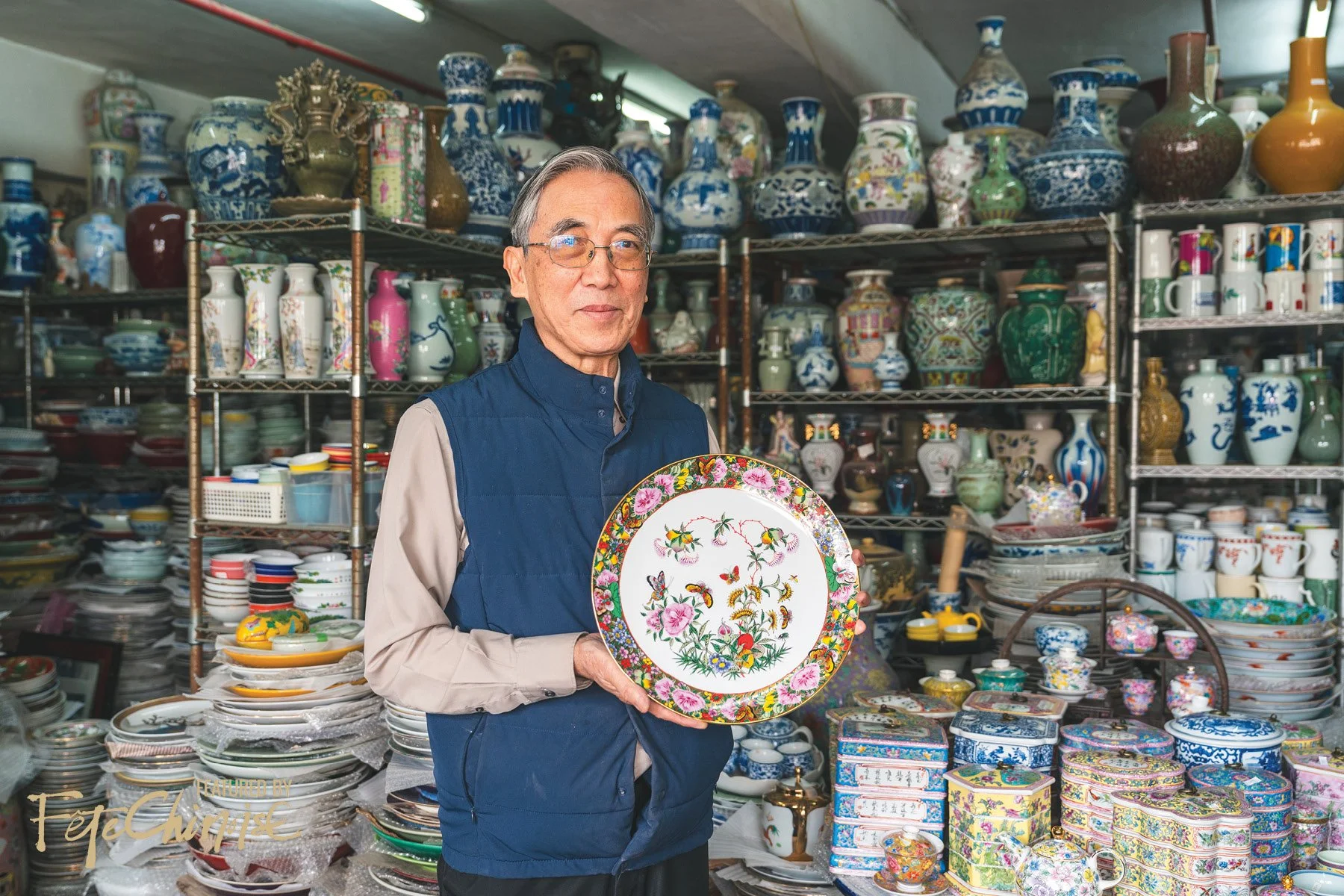
Joseph Tso, the 3rd generation owner of Yuet Tung China Works
More from Fête Chiniose

Established in 1928, Yuet Tung China Works has survived wave after wave of change in Hong Kong. Every piece of porcelain here has a long story to tell. The works not only reflect the opportunities and challenges of Hong Kong’s shifting relationship with the world over the past century, they also demonstrate the adaptability and flexibility of Hong Kong people.